
Welcome Back!!
After health issues, Papa has returned to give you the best in horticultural information!
There will be more to come! Stay tuned!
Papa

Welcome Back!!
After health issues, Papa has returned to give you the best in horticultural information!
There will be more to come! Stay tuned!
Papa
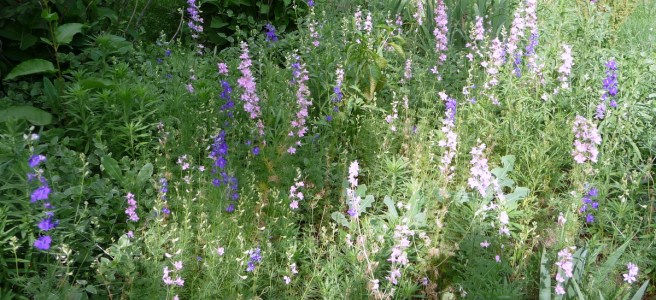
Larkspur was planted three (3) years ago. The seed pods let go of their seeds and new plants come up every year!!! These self sown plants are an absolute joy!
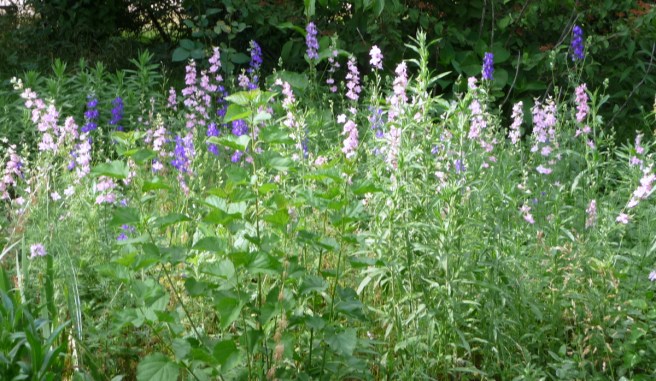
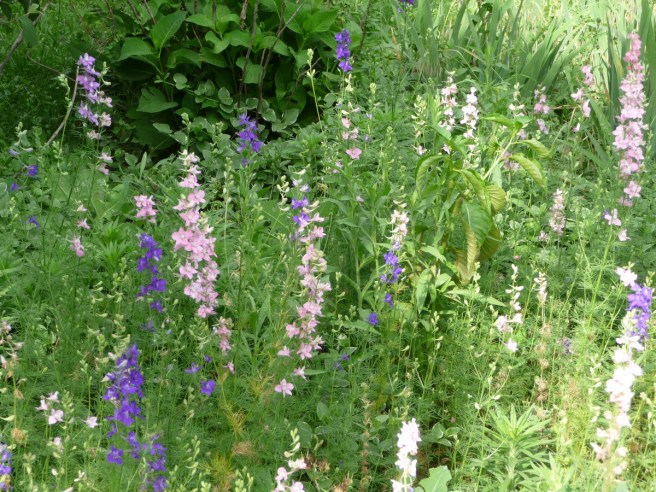
What beautiful tall plants with flowers of white, pink, lavender and purple. The plants look so fragile yet they are very sturdy! I look forward to seeing them every year.
What volunteers do you have in your growing spaces? What an encouragement that will be!!!
Papa
The Common Milkweed (Asclepias syriaca) was a familiar sight in the Missouri Ozarks. Between mowing and spraying herbicide this beautiful plant has become more scarce.
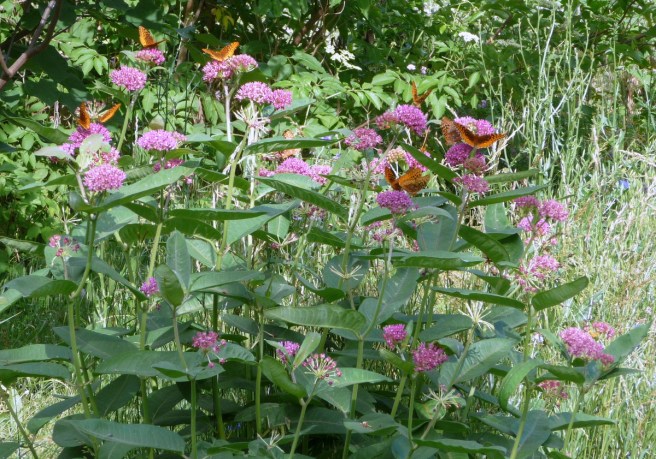
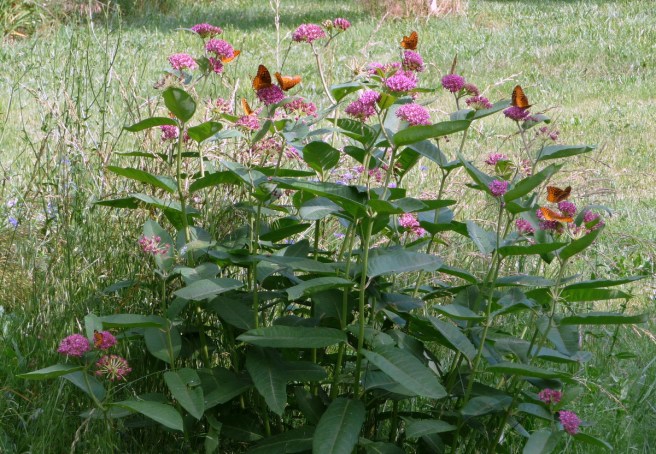
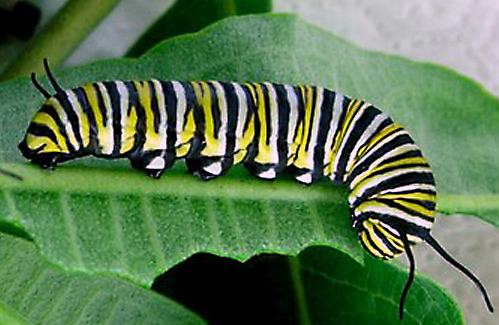
This particular milkweed can grow very large (up to 6 1/2 feet tall). The profuse flowers vary from pinkish to purplish in color. The coveted Monarch Butterfly caterpillars are the chief consumer of the leaves and stems. The caterpillars prefer the more tender newer smaller leaves.
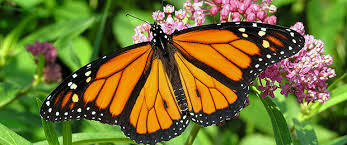

The Great Spangled Fritillary adores this plant! Today I counted 20 butterflies on one plant!

It is an amazing spectacle to see how the Fritillaries covet this “common” plant!
Do yourself a favor and plant as many of these special plants to perpetuate the threatened Monarch Butterfly and enjoy a truly beautiful perennial plant!
Papa

The Fall season is my favorite time of year! Leaves changing color, final summer harvest and cool, delightful weather. The Fall mums are in bloom. Time to enjoy!


I almost forgot, beautiful sunsets!!!!


There’s more to come.
Papa
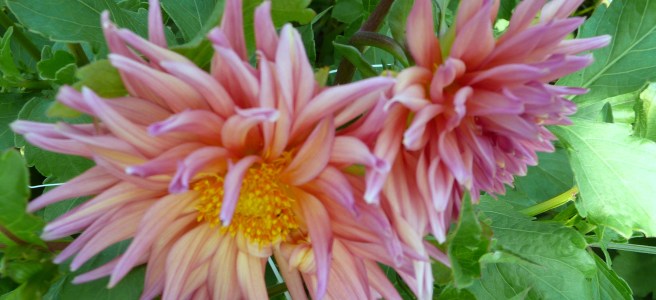
Absolutely amazing! 110° (F) heat and my dahlias are thriving. Originally from Mexico, dahlias can take it to a sultry 120° (F). These two heirloom seed varieties (Double flowered & Cactus flowered) will grow to a height of 6 feet.
From this:


To this!!


I love the colors and shapes. Check out this collage!


These beauties will be great for cut flowers. Make sure you have 15 to 18 inches of stem. Immerse the flower stems in 160° (F) water until water cools off. Place the flowers in new water with a floral preservative and they will last for 4 – 6 days. I hope to have enough to sell by mid-August.
Zinnias are up next to sell in the Fall. Florists love the bright colors when you can’t get them!
See you soon!
Papa

Check out the third cut of our Sweet Peas.
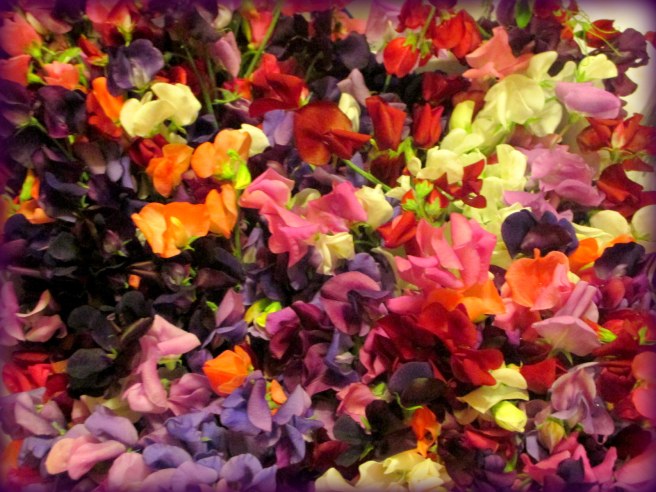
Visits with local florists have been encouraging and enlightening. Apparently Sweet Peas have not been offered for decades in this area. Many younger designers did not know what they were.
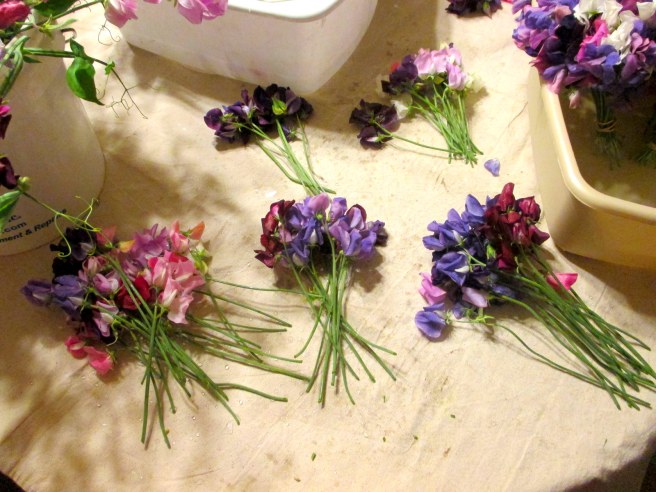
Grading in bundles.
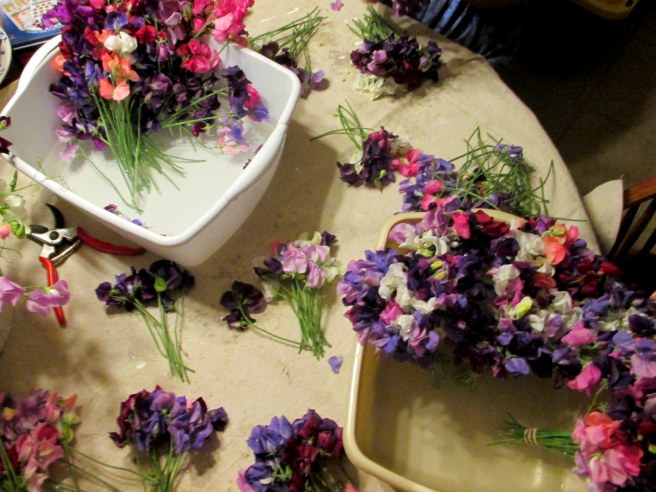
This process allows us to offer the very best of color and freshness. The fragrance fills the room.
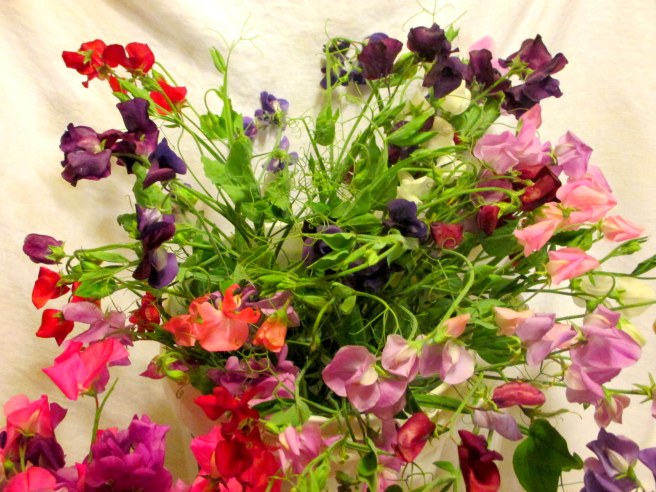
More sweet peas on the vine for floral arrangements.
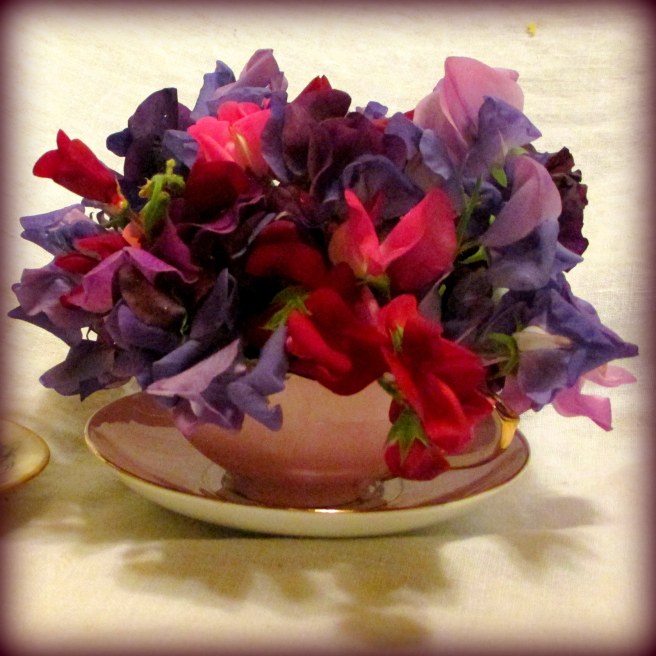
A simple arrangement from irregular and short stems. A tea cup and saucer provided the perfect “look”.
Aren’t they beautiful?
Papa
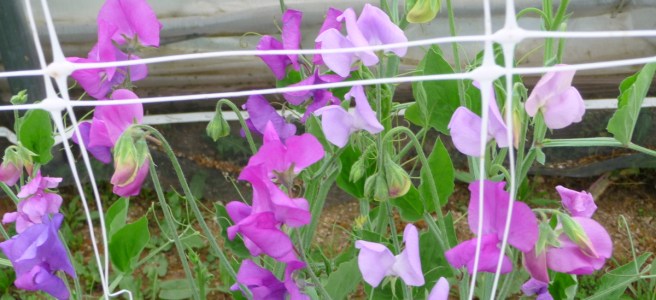
Sweet Peas are definitely worth the wait. I walked into the hoop house the other day and was overwhelmed by an incredible sweet fragrance. Whoa!


The range of colors, diversity and the heady fragrance, are quite a combination! This experience is quite a learning curve. The Elegance Mix and Spencer seedlings were started in cell trays using a compost enhanced potting mix. The seeds best germinated at 60° to 65° (F). The seedlings were placed 6 inches apart in a raised bed with plastic netting to allow the peas to climb to a potential height of 8 feet.
Next year I plan to direct seed some of the sweet peas for a comparison. I believe the plants and subsequent blooms will be stronger.


Next up are seedling dahlias. Started in cell trays with well nourished potting soil, cactus flowered and double flowered mixed colors should be a delightful opportunity for our local florists. The amazing fact is dahlias can grow in 120° (F) heat. Originally from Mexico, dahlias are a natural to grow in a hoop house. I am looking forward to a plentiful harvest.
We will keep you posted on our progress!
Papa
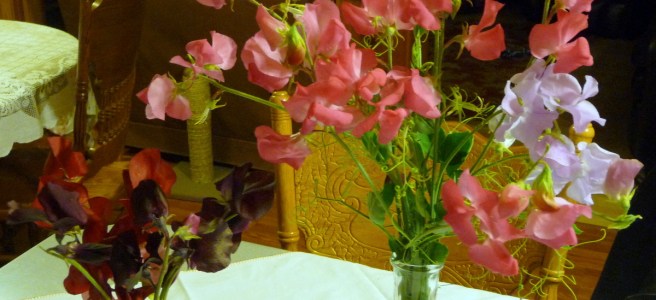
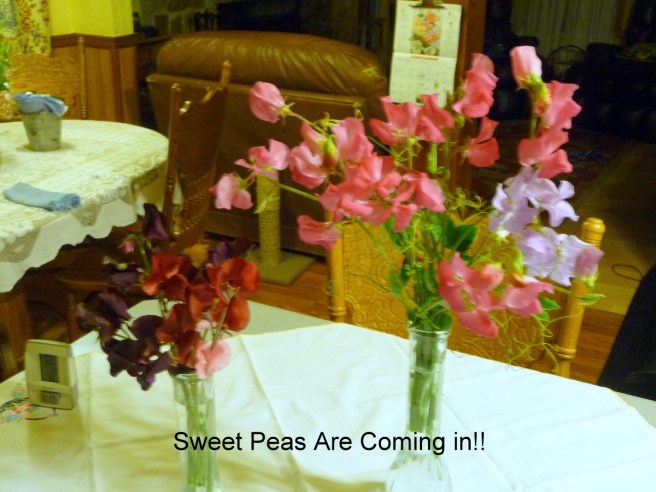
I am so excited!! My Sweet Peas (Lathyrus odoratus) are blooming. What fragrance!
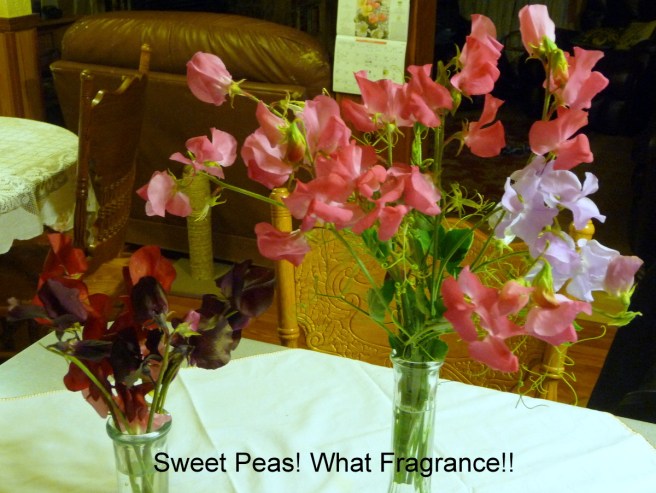
These blooms are from the Winter Elegance Mix. This variety does well early and late. Even Miss Kitty likes our Sweet Peas.
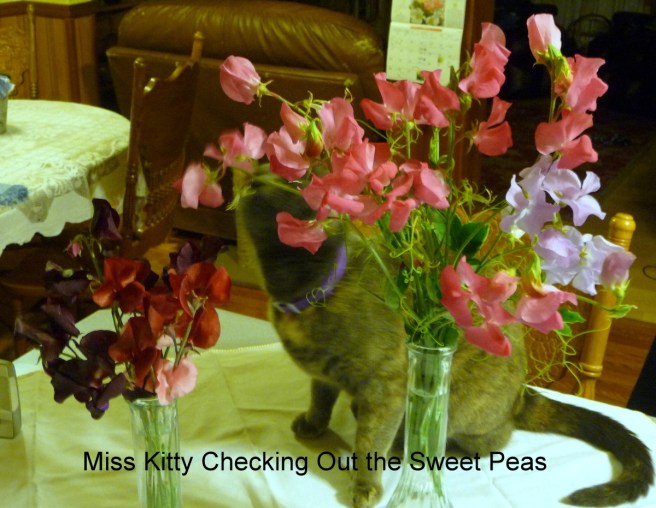
It was well worth the wait. Stay tuned for more adventures with Sweet Peas!
Papa
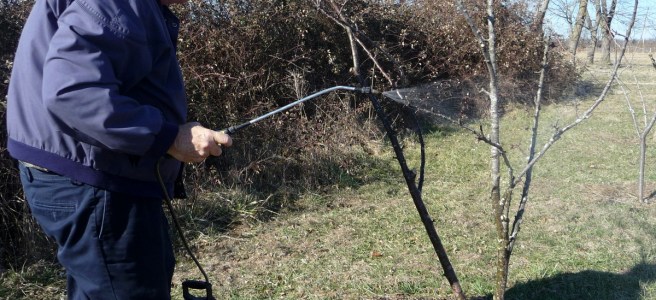
Amazing, 60° (F) on January 15th in the Missouri Ozarks. The flower buds are swelling due to the warm weather. It is definitely time to start spraying your fruit trees.
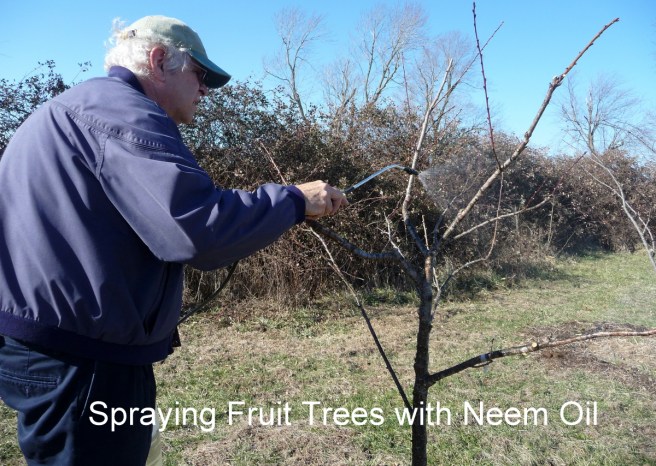
Neem Oil is the perfect choice to spray fruit trees. Neem oil is both a fungicide and an insecticide. 100% Neem Oil tends to solidify in its’ container. Place the container in a bucket with hot water to liquefy the oil to use in a sprayer. Two tablespoons per gallon is the usual rate to get the job done.
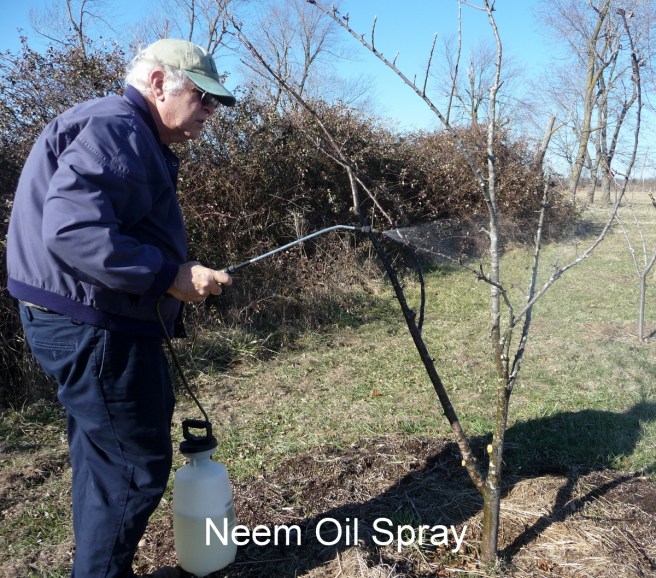
Neem oil is made from the seeds of the Neem Tree (Azadirachta indica). The oil mixed with water and dish soap is sprayed at temperatures below 80° (F). Neem oil has fungicidal and bacteriological properties to either prevent or control certain types of bacteria and fungus.
Neem oil is effective to control fire blight which is a major issue on apple and pear trees.
Neem oil offers good control against powdery mildew, black spot, downy mildew, scab, anthracnose, rust, leaf spot, botrytis, tip blight and alternaria. These are a sample of fungal diseases which plague fruit and ornamental trees.
As an insecticide, Neem Oil is detrimental to aphids, mealybugs, scale, different types of beetles, true bugs and caterpillars by disrupting their growth patterns. Most of the above insects will not reach adulthood and therefore no offspring. The oil itself smothers some of the insects by cutting off their air supply and eliminating insect eggs.
While standing upwind, spray the fruit trees from ground level to the branch tips.


Make sure the entire tree is thoroughly covered to insure control and effectiveness.


In a week to 10 days the trees will be sprayed again, using wettable sulfur.
Continue the process in another 7 to 10 days using elemental copper.
Spraying between intervals with seaweed emulsion and compost tea will strengthen the trees by building up the trees immune systems and handling stress.
The benefit is clear by enjoying healthy fruitful trees!
Papa
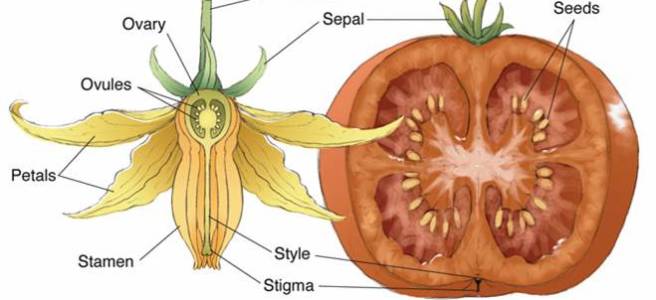
There is no more popular vegetable (fruit) than the tomato. The seed is easy to save and well worth the effort!!
There are steps to follow when saving tomato seed. Tomatoes are self pollinating therefore you need to recognize the flower types for successful seed saving.
Inserted stigma: the female part of the flower is encased inside the anther cone in the center of the flower.
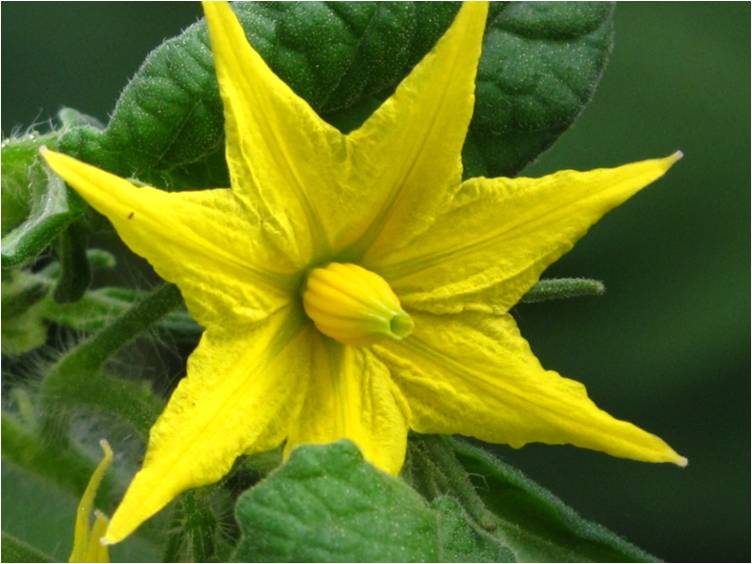
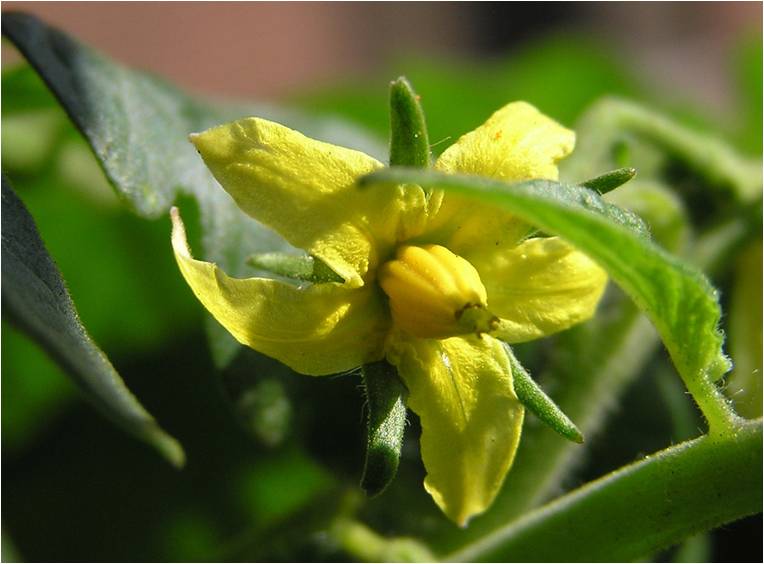
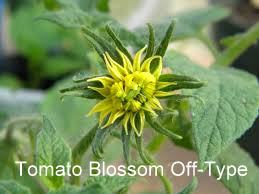
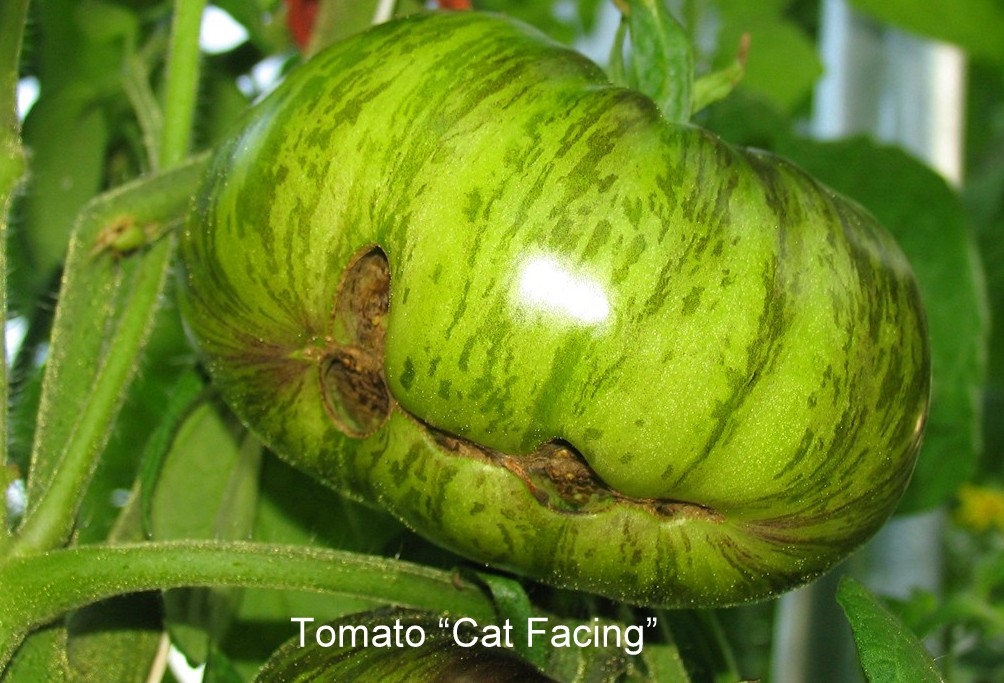
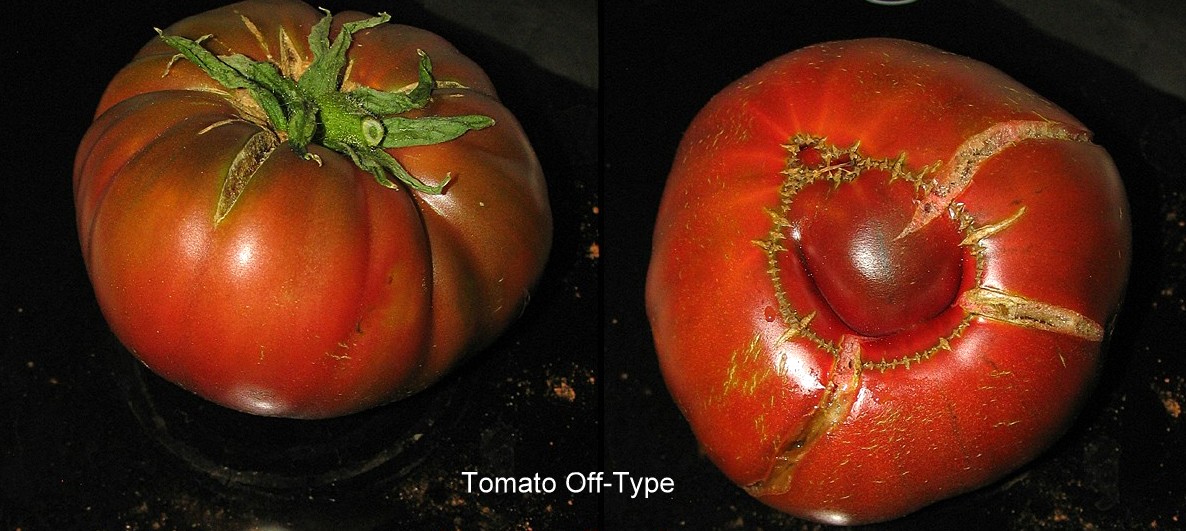
To insure the quality of seed, never save seed from the first cluster of tomatoes as they are off-type and not a true representation of the tomato you desire for seed saving. Usually you will notice your first tomatoes are much larger, misshaped, cat-faced (puckered seam on the blossom end), more prone to rotting and disease, the shoulders of the fruit tend to be hard, green and prone to cracking and slower to mature. You should reject this fruiting because they are not representative of the variety. Only save seed from the second through the fifth cluster. As the tomato plant continues to produce blossom clusters after the fifth cluster, you will notice the fruiting is producing a pointed blossom end (with the exception of Roma-type and Oxheart tomatoes). Again, you do not want to collect seeds from this tomato shape as it is off-type.
 Part 6 will cover tomato harvesting, seed fermenting and seed storage.
Papa
 Papas Gardens