Sunset at Papa’s Gardens

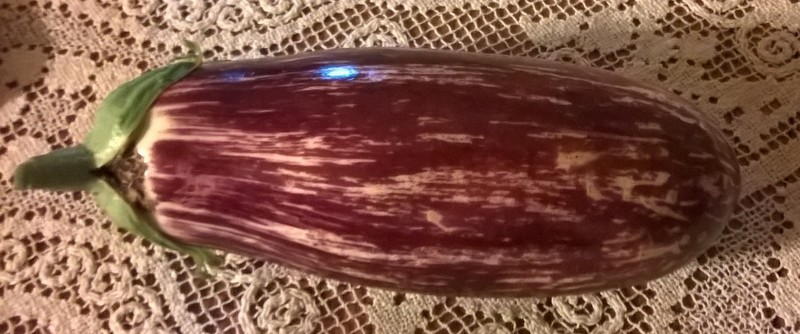
My grandbaby helped me pick peppers and eggplant in the hoop house before the sun went down. The pup is Victory, our 11 year old 4 legged grandbaby!

IMG_3027

The pepper she is holding is Etuida, a Polish orange bell pepper. I’ve been amazed they are doing so well in the hoop house with 110 degree temperatures.

IMG_9699

The cicada’s serenaded us as we went in for the night.

Papa

Create a hummingbird haven!

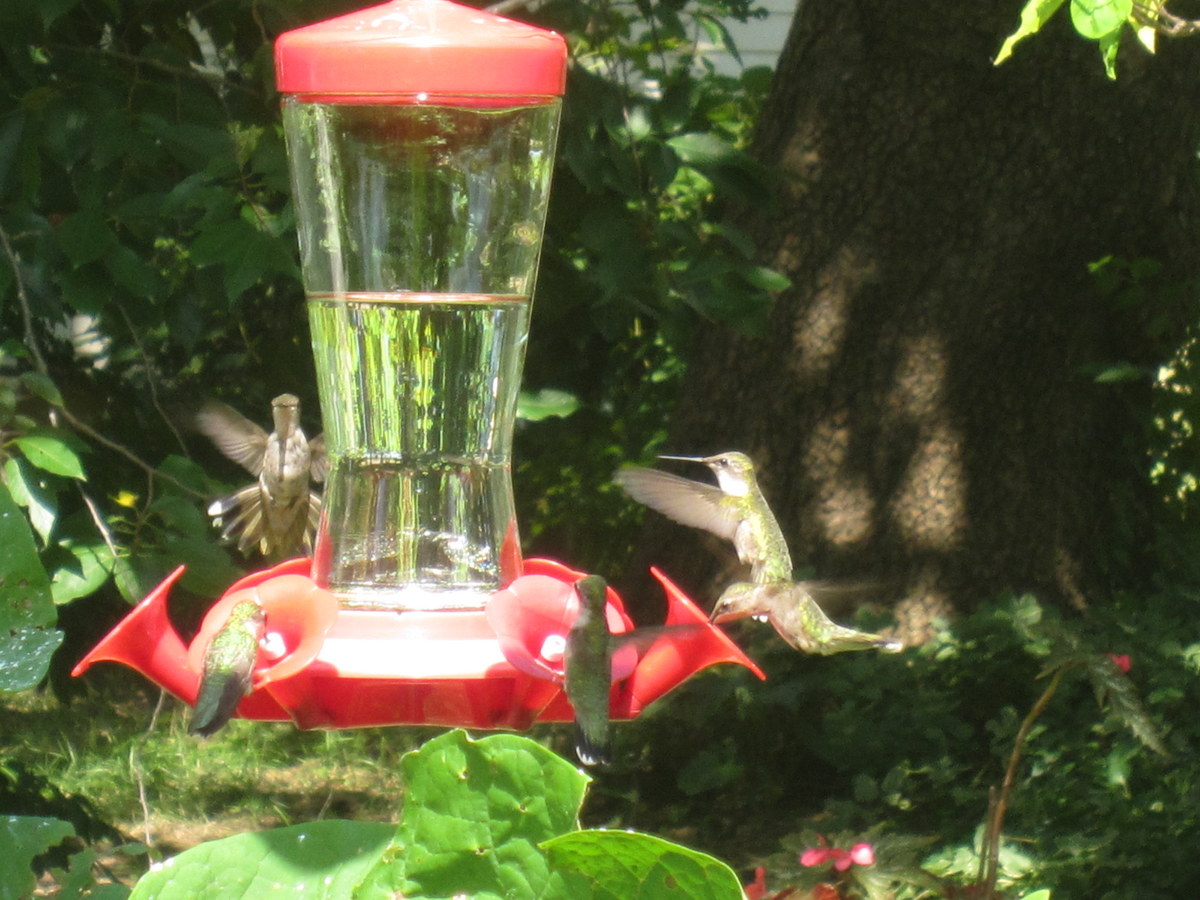
There are so many hummingbirds coming to the feeder this year. I am putting out 6 cups of nectar every 4 hours. Below are flowers in my yard that the birds are enjoying.

Leave a reply to share what flowers you have attracting hummingbirds to your yard.

There are so many hummingbirds coming to the feeder this year. I am putting out 6 cups of nectar every 4 hours. Below is a list of flowers in my yard that the birds are attracted to. Share in the comments what flowers you have that are attracting hummingbirds this year.

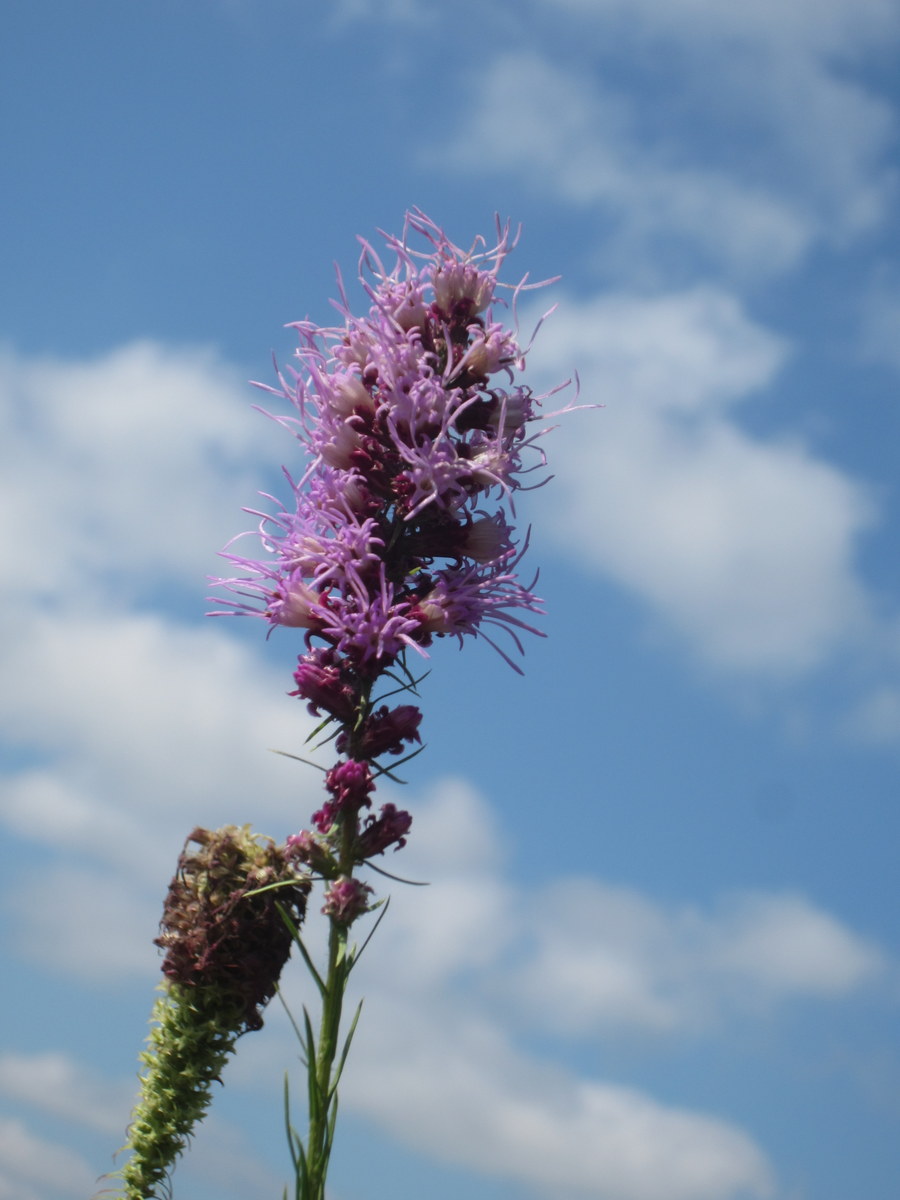
Liatris (Blazing Star)
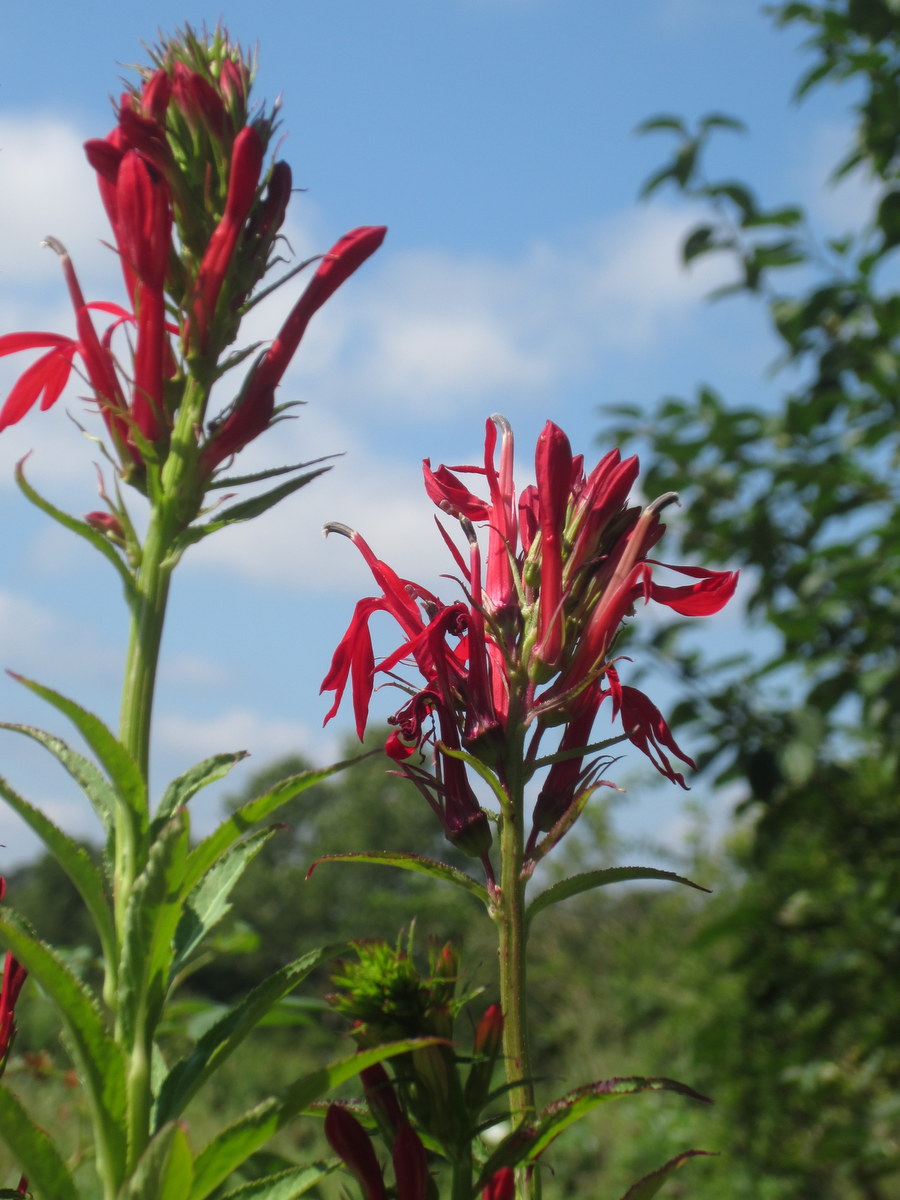
Cardinal flower (Lobelia cardinalis)
Althaea (Double Rose of Sharon)
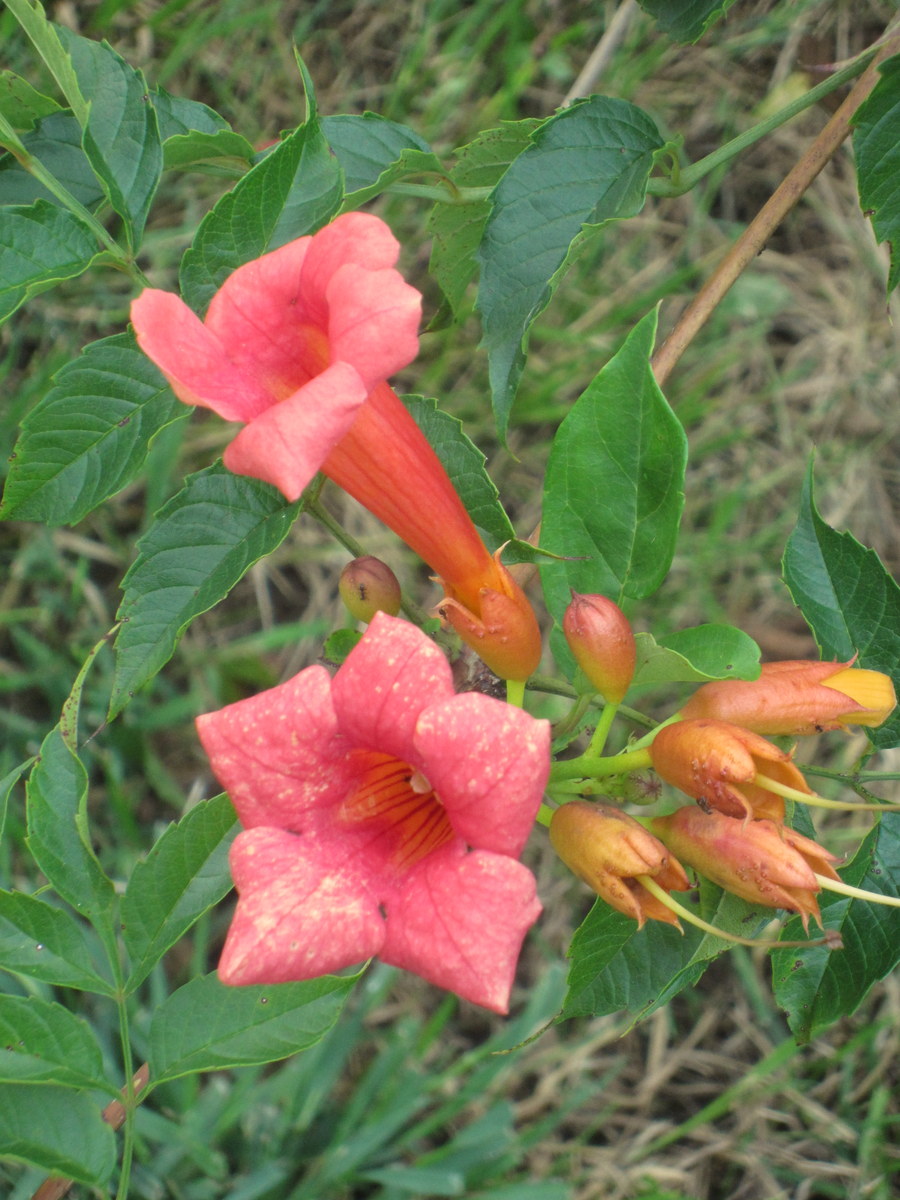
Trumpet vine (Campsis radicans)
Althaea (Rose of Sharon)
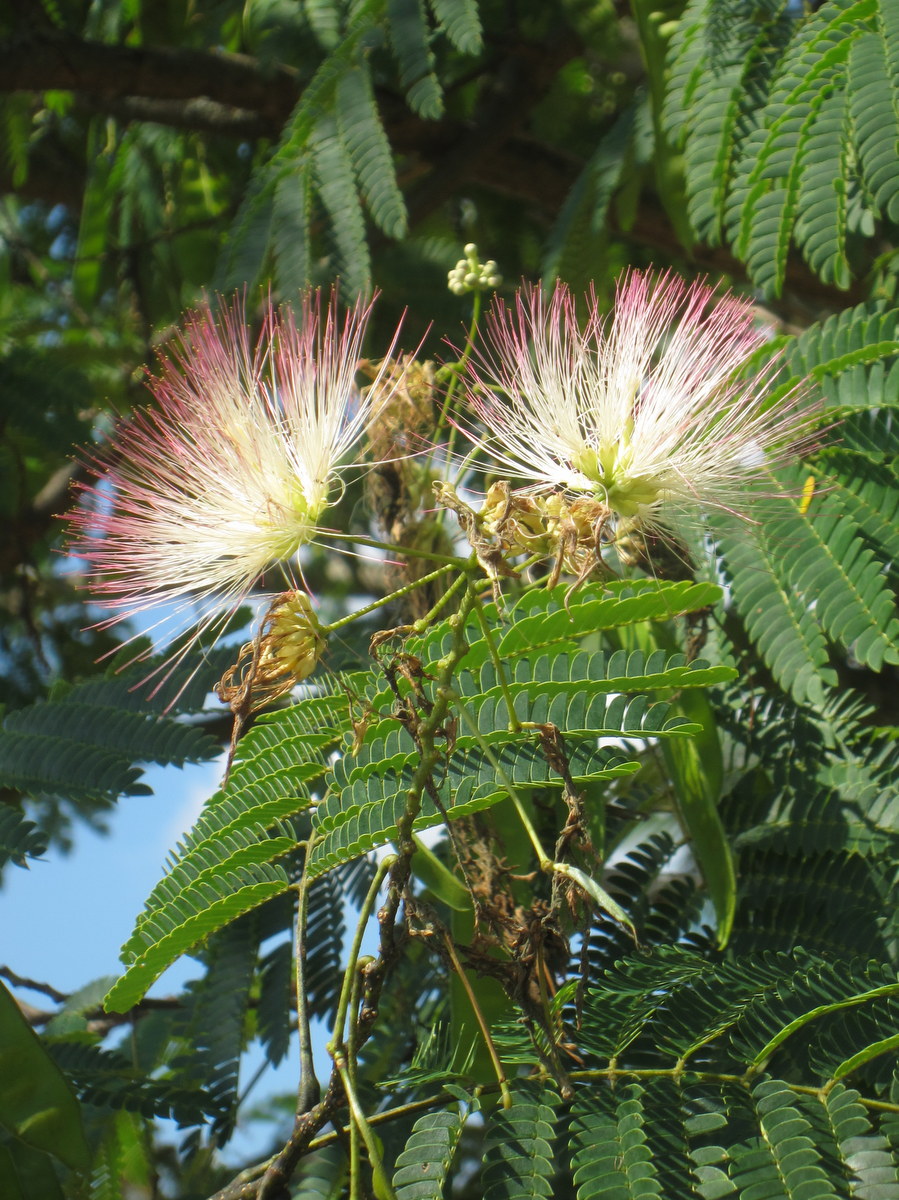
Mimosa or Silk tree
Mimosa or Silk tree
Tall garden phlox (Phlox paniculata)

Papa

Floating Row Covers? Let’s Learn How!

I just uploaded a new video documenting how to make and install floating row covers.

Supplies you will need:

  • Rebar – 3/8″ x 10′, cut into 5 – 2′ lengths
  • Electrical PVC – 1/2″ diameter pipe x 9′
  • Floating Row Cover fabric
  • Angle Cutter or equivalent for cutting lengths of rebar
  • Hack Saw or PVC Pipe Cutter
  • Gloves and Safety Glasses

Low tunnels using floating row covers is of great benefit  for several reasons.

  • Floating row cover is a light weight, breathable fabric that allows air, moisture and sunlight to pass through the material.
    • There are various fabric weights to meet different needs.
      • Agribon 15 is lightweight fabric that is used for insect protection and shading.
      • Agribon 50 is a heavy cloth used for freeze and frost protection. This cloth will protect a crop down to 26° (F)
  • Insect protection – when properly sealed, insects cannot penetrate the covering which protects the crop from damage and disease.
    • Problem insects such as Japanese beetle, squash bugs, squash vine borer, cucumber beetles and flea beetles are blocked from doing their usual mayhem.
  • Isolation chambers – Low tunnels are ideal for seed saving of crops such as squash, pumpkin, melons and watermelons. Bumble bee hives may be inserted at one end of the enclosure to insure proper pollination. Plus, there is not a chance of cross pollination. You may grow several varieties side by side. That is a huge advantage.
  • Season extension – row covers placed over a crop will allow for early planting by trapping 2° – 8° (F) higher temperature. Likewise using a row cover late in the season will protect the crop from early frost. By using this method you can easily extend your growing season by one month!!!!
  • Hoop houses, high tunnels and greenhouses – row cover gives added protection and benefits the grower with lower fuel costs. The insulatory value of the row cover will block some of radiant cold that may damage a crop.

This is another method and tool for your gardening arsenal!!!

Papa

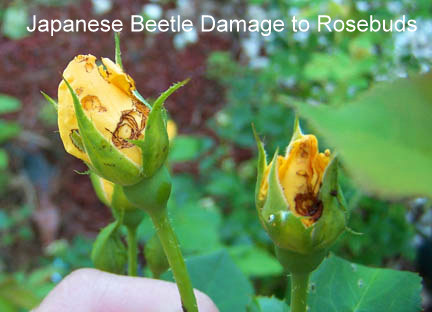
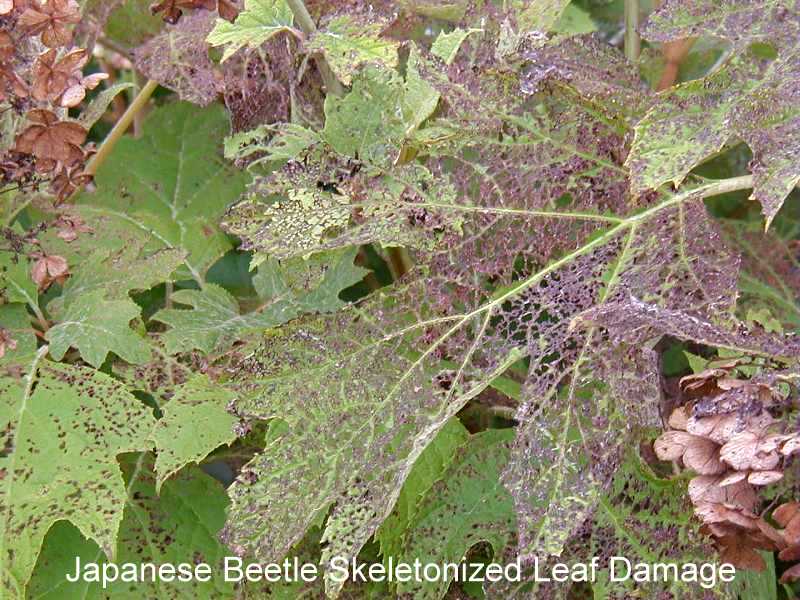
Skeletonized Leaves? Rosebuds with Chewed Petals? = Japanese Beetles (Popillia japonica Newman, 1841)

These beautiful creatures have metallic green bodies with copper colored wings. They are 3/8 inch long and 1/4 inch wide. Japanese beetles are quite unique!

beetle - Japanese Beetle (Popillia japonica) [MO 06]

It is amazing the damage these imported invaders can do!

WP_20150616_09_21_40_Pro       beetlerose

This is damage from one or two beetles. Imagine what a few dozen can do!

OLYMPUS DIGITAL CAMERA

Japanese Beetles (Popillia japonica Newman, 1841) came to our shores in 1912 on Japanese iris.

Stages of development are as follows:

  • Egg
  • Larvae (white grub)
  • Pupae (grub transforms into a cream colored/reddish brown cocoon)
  • Adult beetle emerge from soil May through June. It is a voracious eater for 30 to 50 days.
    • Once emerged it searches for food sources.
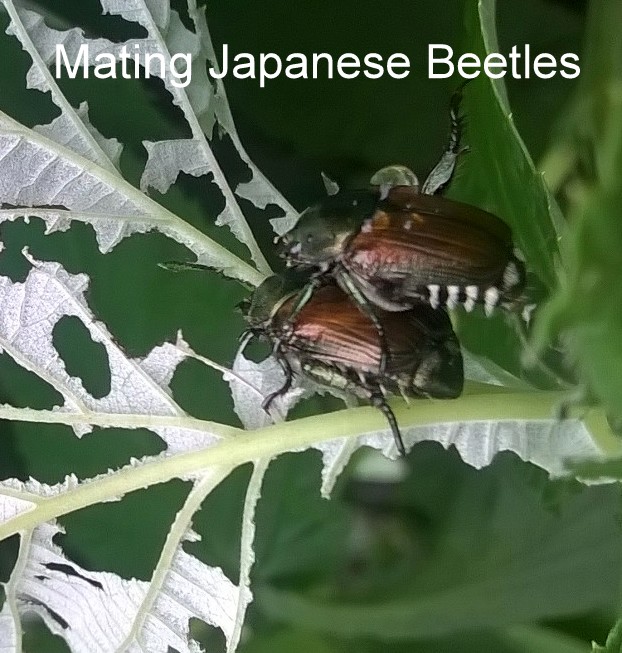
    • A pheromone (a scent produced by Japanese beetles to attract other Japanese beetles) is sent out to help other Japanese beetles find the food source.
    • Mating is soon to occur.
    • WP_20150616_11_41_10_Pro
    • Females feed for a few days on a plant food source and burrow 3 inches into the soil to lay eggs.
  • Once the eggs are laid the females emerge again to feed, mate and lay eggs again.
    • This cycle is repeated until their season is over, laying upwards to 40 to 60 eggs.
  • Eggs develop depending on soil temperature. The warmer the soil the quicker larval development.
  • Once they are larvae, they move upwards in the soil to feed on organic matter and roots.
  • Soil cooling moves the larvae (grubs) deeper in the soil for winter.
  • Soil warming moves the grubs upwards in the soil where they pupate and transform into an adult Japanese beetles and their life cycle begins again.

japanese beetle life cycle

The most effective natural control of Japanese beetles is daily, hand picking early in the morning as the beetles are lethargic.

  • Your arsenal of weaponry includes a bucket, soapy water and vigilant monitoring daily!
    • Early detection of the scout Japanese beetles is key to this strategy! This will reduce the following years population!!!
  • Place the bucket under the infested plant. Shake the plant and the beetles will fall into the soapy water.
    • Hand pick any beetles not falling into the bucket of soapy water.
  • This action reduces the pheremones of the exploratory first wave of Japanese beetles. This must be done daily!!
  • Leave the beetles to die and decompose in the bucket of soapy water. The odor of dying and decomposing beetles in the soapy water will repel/deter additional beetles from invading your area. (Many thanks to The Herb Gardener for this insight)
  • Place the bucket(s) near areas of previous Japanese beetle attack.
  • Insecticidal soap applied directly to the beetle will cause its demise.
  • Lemon dish soap sprayed directly on the beetle is another effective way to kill these pests!

Prevention: Kill grubs in the soil which turn into the Japanese beetle.

  • Milky Spore Disease (Bacillus popillae) will kill grubs but will take up to a year to inoculate the soil. This inoculation will last up to 10 years in the areas of heavy, consistent infestations.
    • Milky Spore when ingested in the grubs gut germinate, enter the blood and multiply.
    • The build up of spores causes the grub to have a milky white appearance.
    • Grubs continue to ingest the spore, become infected and die, each releasing 1 – 2 billion spores back into the soil.
      • Apply as labeled. May be purchased through biological mail order catalogs.
  • Beneficial nematodes actively seek out grubs in the soil.
    • The nematodes penetrate the grub releasing a bacteria.
      • This bacteria produces quickly feeding on the tissue of the grub.
      • The nematodes feed on the bacteria and continues their life cycle. They reproduce, release bacteria and kill the grubs.
      • Apply as labeled. May be purchased through biological mail order catalogs.

Both of the above methods are encouraged by the USDA and several well known universities as a safe and effective means to control Japanese beetles. These biological controls are species specific!! There are no other creatures affected by these methods.

Just remember you may have great prevention measures but your neighbors may not. Japanese beetles are with us for short 30 -50 day window. Killing them early may reduce the populations in your immediate area!

Birds are another way to deal with these nasty pests. They eat both the beetles and their grubs.

  • Bobwhite
  • Eastern Kingbird
  • Crows
  • Eastern Starling (I knew there must be something good about these birds)
  • Red-winged Blackbirds
  • Catbirds
  • Song Sparrows
  • Robins
  • Grackles (Again, I knew there must be something good about these birds!)

Sanitation is a wonderful way to rid your self of these pests. Clean up all debris around their favored plants. Till in the fall to expose the grubs for birds and other creatures to consume. Till again in the spring to again expose the pupae and emerging adult beetles.

Be diligent and decrease their surplus population!

Papa

Got Mosquitoes? Use Bacillus thuringiensis sub. israelensis (Bti) and Cedar Oil!!

Now is the time for those pesky mosquitoes. I don’t want to use all those nasty chemicals. There has got to be an alternative!

Mosquito

There are natural ways to rid yourselves of the mosquito nuisance. Let’s explore the options:

  • Remove all sources of standing water, where possible.
  • Keep grassy and/or weedy areas mowed on a regular basis.
    • Mosquitoes will reproduce in high humidity areas!
    • Mosquitoes will lay eggs in wet soil and mud!
  • Use Bacillus thuringiensis sub. israelensis (Bti) (OMRI Listed)* in standing water.
    • When eaten by mosquito larvae, Bti is toxic to the point of death in 4 – 24 hours.
    • Mosquito larvae
    • The gut of the larvae ruptures from the formation of crystals produced by the bacteria.
    • Bti is dispensed in the form of crumbles, powder or doughnut shaped dunks.
      • Bti is placed in old tires, rain barrels, ponds, ditches and flood water.
    • Bti is non toxic to people, pets, livestock and beneficial insects. It is only toxic to certain larvae of the fly family (Diptera).
  • Cedar oil (OMRI Listed)* is a safe, effective product to spray.
    • This essential oil (mixed with water) may be sprayed on standing water sources.
    • May be sprayed on your dogs and cats.
    • May be used as a repellent on clothing and lightly sprayed on exposed skin (not your eyes or mouth). (It is also a great tick repellent)

These products may be purchased at the big box stores, garden centers and online.

* OMRI Listed: The Organic Materials Review Institute (OMRI) is a national nonprofit organization that determines which input products are allowed for use in organic production and processing. OMRI Listed—or approved—products may be used on operations that are certified organic under the USDA National Organic Program.

Now go get them!

Papa

Questions About Biological Worm Spray (Bacillus thuringiensis var. kurstaki)

I get many questions regarding the use of biological caterpillar (worm) spray. There are many misconceptions about how this valuable tool is used. Let’s clear the air! Bacillus thuringiensis var. kurstaki or Bt was discovered back in 1901. The name of the bacteria was given in 1911. I’ll not bore you with the rest of the history.

Suffice it to say, due to the use of synthetic pesticides, many were concerned about the toxicity and environmental issues. Fast forward to the 1980s. Bt became essential as an alternative to toxic pesticides. The effectiveness of Bt is remarkable to say the least. The bacteria with its crystalline toxins attack the gut of caterpillars and destroy the creature from within. When used on a frequent basis, it is almost 100% effective. It is totally safe for humans, pets, birds, fish, pollinators and beneficial insects. Bt may be sprayed up until the time of harvest!! Bt is no longer viable or effective after continued exposure to ultra-violet light and water.

The greatest misconception involves the insertion of the Bt genetic material into the seed germ. The Bt GMO* ready corn or potatoes has Bt as an internal mechanism to kill caterpillars. The agri-business companies use other genetic materials (from other bacteria and viruses) to potentiate the Bt gene. This really is scary stuff!!!

The externally sprayed Bt material is completely safe. It is not systemically part of the plant. Whereas, a Bt GMO* ready crop has the insecticide in all parts of the plant. This GMO creation was made for convenience and to save money. No one can say for sure what are the long term effects!!!

I started using Bt in 1978. Up until that time, my broccoli plants were full of caterpillars. I remember being served some broccoli, only to find dead worms on my plate. Ugh, nasty! Once I used Bt, there were no more worms!!! It really does work!! Plus, it is very cost effective and safe to the environment.

*GMO – Genetically Modified Organism – “A GMO is a plant or animal that has been genetically modified through the addition of a small amount of genetic material from other organisms through molecular techniques. Currently, the GMOs on the market today have been given genetic traits to provide protection from pests, tolerance to pesticides, or improve its quality. Examples of GMO field crops include Bt-potatoes, Bt-corn, Bt-sweet corn, Roundup Ready soybeans, Roundup Ready Corn, and Liberty Link corn.” University of Kentucky Entomology

Papa