What do I do with the worms on my Korean red eggplant?

What shall I do about inch worms of the tiniest size eating my Korean red eggplant ? There doing quite a job at eating big holes? Thanks Art

Pandora

Pandora,

Visit your local garden center and purchase Dipel or Thuricide.

DiPel® is a biological insecticide containing the naturally occurring microorganism Bacillus thuringiensis subspecies kurstaki(Btk) DiPel is more specific in its spectrum of insect toxicity against caterpillars.

Thuricide BT Caterpillar Control concentrate is used by organic gardeners and is made from bacteria that is toxic to listed pests. Safe to use on all plants, vegetables and edible crops. Thuricide is a biological insecticide with Bacillus thuringiensis (Bt) for use on fruits, vegetables, shade trees, and ornamental plants to treat a variety of leaf-feeding worms. Pests treated include bagworms, tent caterpillars, gypsy moths, cabbage loopers, and tomato hornworms .

Follow the label instructions and apply with a sprayer. The Bt spores  maximize efficacy against lepidopteran pests.

Days to Harvest: There are no restrictions on applying DiPel or Thuricide up to the time of harvest.  DiPel or Thuricide  may be used for any labeled pest and  an insecticide for use against listed caterpillars (larvae) of  lepidopterous insects. Close scouting and early attention to infestations is highly recommended. Larva must eat deposits of DiPel or Thuricide to be affected.   • Treat when larvae are young (early instars) before the crop is damaged. • Larvae must be actively feeding on treated, exposed plant surfaces. • Thorough spray coverage is needed to provide a uniform deposit of DiPel or Thuricide at the site of larval feeding. Use overhead spraying to obtain good spray coverage on both sides of foliage. Use sufficient spray volume to insure uniform deposition on all plant surfaces. • Under heavy pest population pressure, use the higher label rates, shorten the spray interval, and/or raise spray volume to improve spray coverage. • Repeat applications at an interval sufficient to maintain control, usually 3 to 14 days depending on plant growth rate, moth activity, rainfall after treating, and other factors. If attempting to control a pest with a single spray, make the treatment when egg hatch is essentially complete, but before crop damage occurs. • A spreader-sticker which has been approved for use on growing and harvested crops should be added for hard-to-wet crops such as cabbage, or to improve weather-fastness of the spray deposits.

Let me know how this works for your eggplant. Watch for butterfly and moth activity as this will help you monitor the impact on your eggplant.

Art
How May I Help You?

I want to thank all of you who have responded to my posts. I genuinely want to hear from you! No question is too large or small. I want to hear from you!! Please make use of my 40 years of horticultural experience!

P1030814

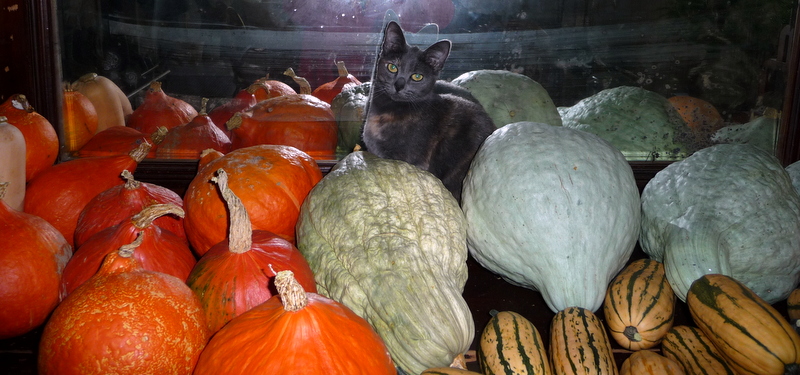
Miss Kitty in the squash harvest October 2014.

Decisions, Decisions Buying Packs of Seed!

You’re poring over your seed catalog, looking at seed online or better yet choosing your seed in the seed store. Hopefully, you’ve narrowed your choices. Making a list is a wise way to finally make your decision.

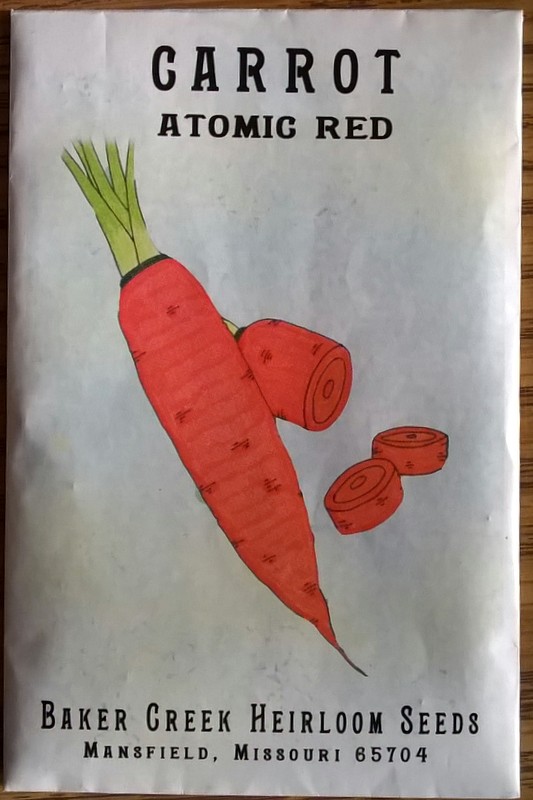
Let’s see what the seed packet says. The description should entice you to consider your options.

  • Title of pack – the variety and color
  • Catalog number, Lot number, amount of seed, cost, sell by date
  • Days to maturity –
    • Direct sowing of  seeds- days from the time you sow the seeds to the time of harvest. i.e. – beets, carrots, beans, peas, kale, lettuce, borage, dill, zinnia, sunflower
    • Transplants from germinated seed – days from time of transplanting into garden to the time of harvest. i.e. – cabbage, broccoli, cauliflower, brussels sprouts, tomato, pepper, eggplant, basil, thyme, petunia, snapdragon
  • A more detailed description of variety – color, height/length, weight, health benefit and overall appeal.
  • Detailed planting instructions – seasons for sowing, planting depth, seedling care, possible succession planting (timed, multiple sowing), soil requirements, temperature requirements, moisture requirements.
  • Seed company – pertinent company information

Happy Planting!!!!!

WP_20150428_18_47_24_ProWP_20150428_18_47_36_Pro

What Does it Mean to “Harden Off” Seedlings?

I often get this question this time of year. You can hardly wait to get your tomatoes in the ground! You’ve grown the plants out with great care. You’ve babied them.

You desperately want to plant them in the ground.  You take your hand or trowel and plant them in the cold ground. You water the seedlings and hope they will quickly grow. Uh oh, something is wrong! For some reason the plants don’t look so good after a couple of days in the soil. They look like they are burnt or dying. What did I do wrong?

Here are the steps you must take for  successful transplant.

  1. A seedling must be 45 – 60 days old prior to transplanting into your garden or container.
  2. Seven (7) to 10 days prior to transplant, start to wean the plants to use less water. Only water enough to prevent wilting.
  3. Treat your seedlings with seaweed emulsion, either by spraying or watering with a one (1) tablespoon per gallon of water solution.
  4. Take the seedlings outside for 2 hours the first day. Make sure you do this on a warm day with little wind. A cold wind could damage the seedlings. If you are using a cold frame*, completely opening the lid. Use the same guidelines as above.
  5. Each day increase the time outside by one (1) to two (2) hours.
  6. By the tenth day the seedlings will be tough enough to take the rigors of full sunlight and wind.
  7. Now you may safely plant your seedlings outside.

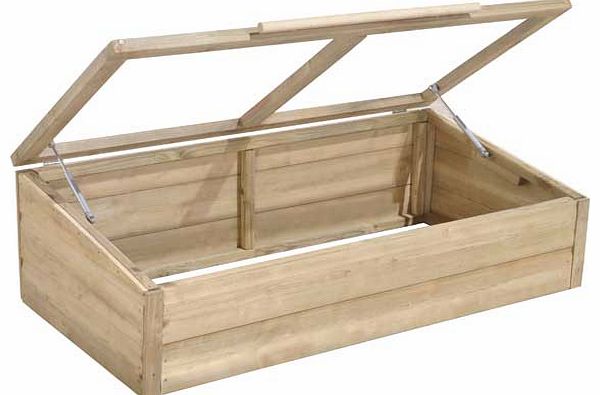
*Cold frame – a box with no bottom that has a hinged or removable clear or translucent top. The top may be opened or closed when the temperature outside is too cold or too warm. The box may be constructed out of  hay/straw bales, glass, poly carbonate, wood, etc.

cold-frame

Transplant Progress of Coyne and Hannah Tomatoes

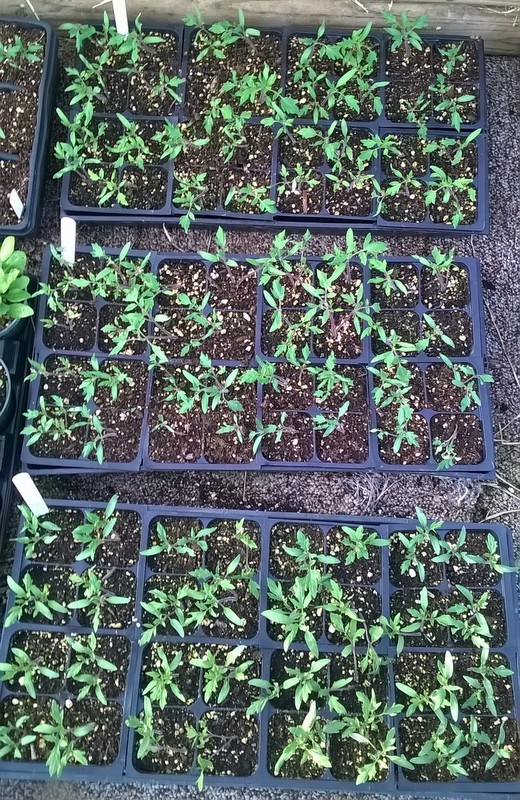
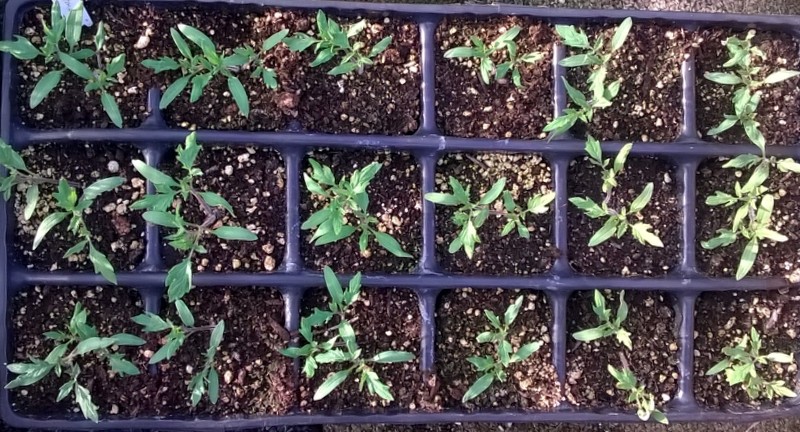
The Coyne and Hannah German Heirloom tomatoes were started on April 4th. It is amazing to see the progress from seed into seed flats, then transplanted into cell flats. They are continuing to grow in the cold frames. Plus, the cooler growing temperatures and fresh air is making the transplants more sturdy. Hopefully, the transplants will be short and stocky when it comes time to plant directly in the garden.

Below you will see the original seed flats and then the transplanted cell flats. Quite a transformation!


WP_20150423_18_46_47_ProWP_20150423_18_46_28_ProWP_20150423_18_52_59_Pro      WP_20150423_18_52_07_Pro

Salad Made Easy!!

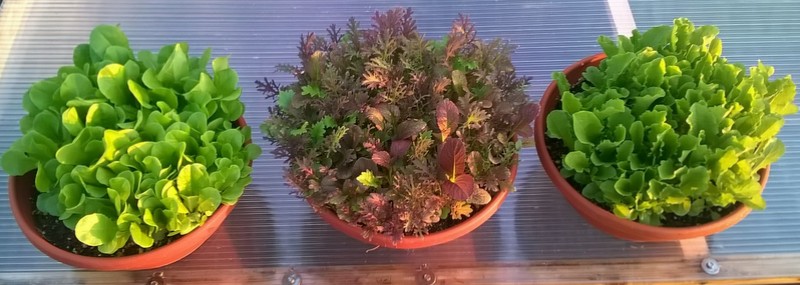
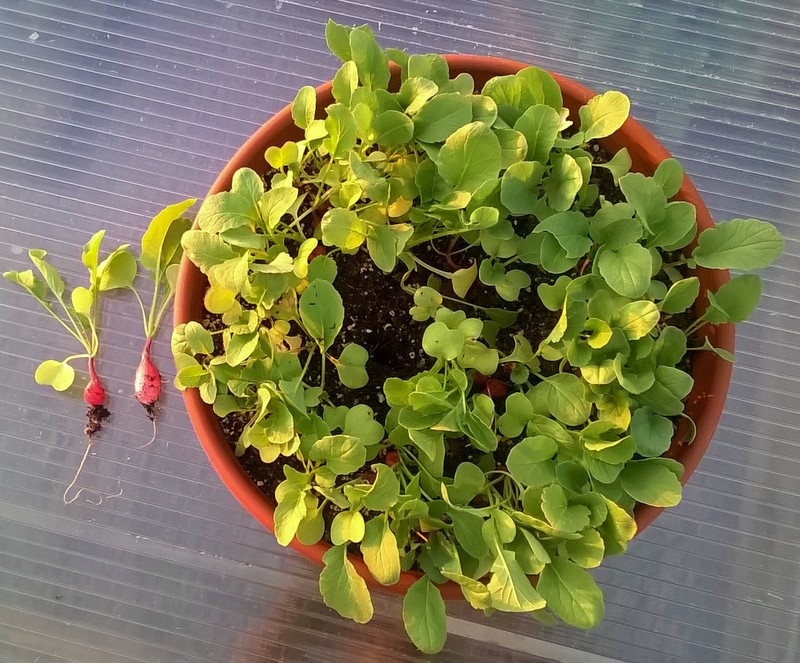
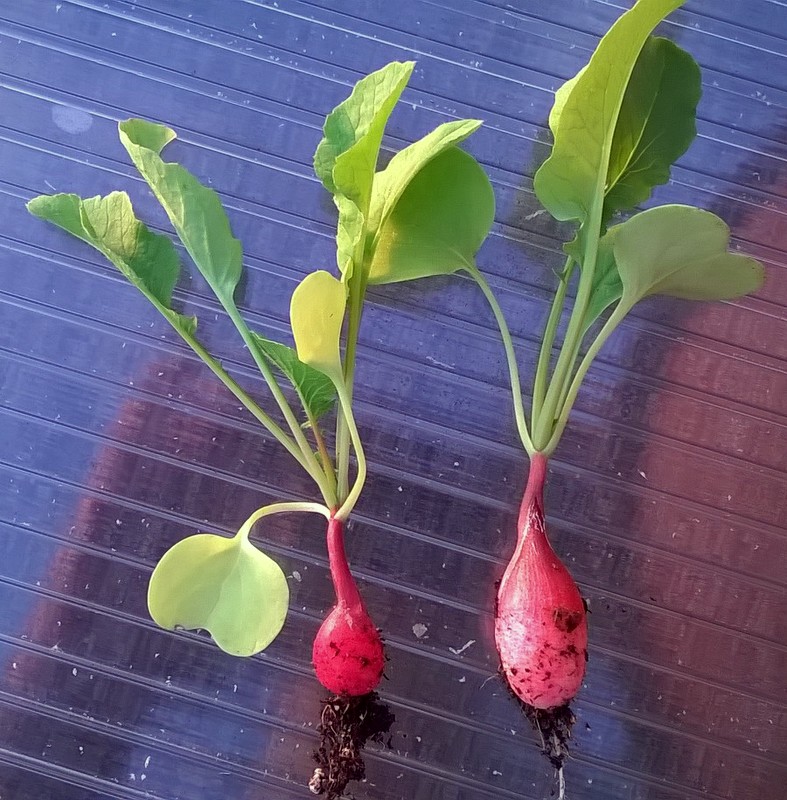
Spring time is for salads! An easy way to grow your own salads, use bowls and other decorative containers. Fill the containers with good potting soil and some compost, sow your lettuce or salad mix seeds, water the seed in and watch it grow! Grow in full sun or partial shade, with temperatures between 45 degrees to 70 degrees (F).  Cut the greens one (1) inch above the soil and the greens will grow again. We call this “cut and come again”. Sometimes you can do this twice!! You can even raise your own radishes.

WP_20150421_19_37_51_ProWP_20150421_19_41_01_Pro WP_20150421_19_40_16_Pro WP_20150421_19_40_26_Pro

2015 Texas Master Gardener Conference

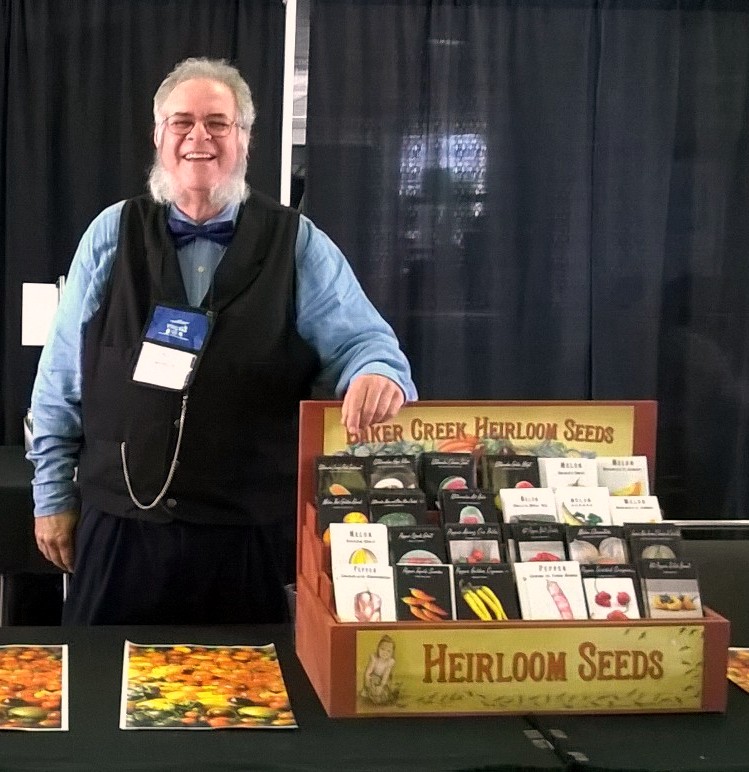
It was an absolute pleasure serving and presenting at the 2015 Texas Master Gardener Conference in Belton, Texas. Kudos to Baker Creek Heirloom Seed Company for sending me as an ambassador and teacher. I enjoyed attending and making new friends who have a passion for all things gardening.

Saving Heirloom Seed was my presentation this afternoon. The Master Gardeners were very attentive and had many questions. What an appreciative group!

WP_20150417_09_18_41_Pro