Spring Has Sprung!!

Plants are blooming early this year in the Missouri Ozarks. Add to that some crazy temperature swings. This morning (Feb. 29) it was 26° and in the 70°s this afternoon.

Papa planted Sugar Ann snap peas in the hoop house.

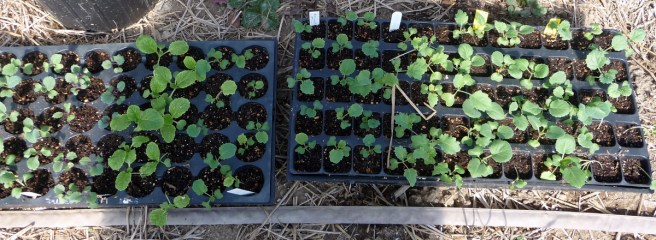
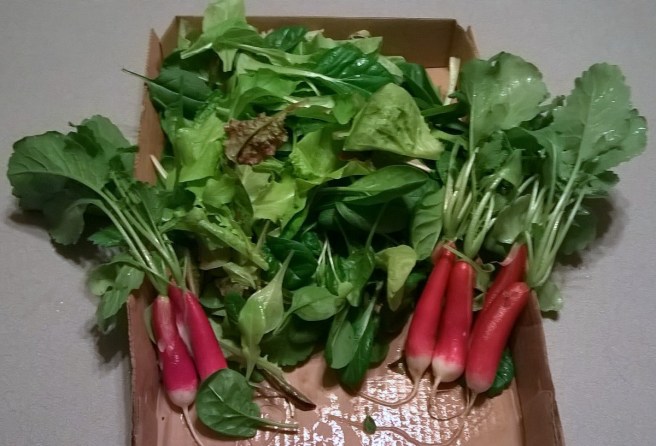
Check out these veggies growing in the hoop house!!

The Cole crops (broccoli, cabbage, cauliflower, Chinese cabbage & collards) were started January 29 and are now ready to plant.

P1040309-001

Gardening is such fun!!

Papa


Papa is Published!

What a pleasure! The Heirloom Gardener magazine has published three of my articles. The 2016 Spring edition has highlighted the Etiuda orange bell pepper, Red Express red cabbage and Hilton Chinese cabbage.

Heirloom Gardener Spring 20161A

I am currently writing two more articles which may be in the Summer 2016 issue. I look forward to writing more articles for various other venues.

If interested, the magazine may be purchased online, Whole Foods, Home Depot and Barnes and Nobles.

Stay posted!!

Papa

Time to Prepare, Time to Sow!

It’s the season to start your spring Cole (Broccoli, Cabbage, Cauliflower, Kale, etc.) and cool season perennial seedlings for transplant. We have snow predicted for today in the Missouri Ozarks. Sounds like a great day to start seeds for March transplants.

Using clean flats and cell trays filled with soil-less potting mix and compost, plant 2 to 3 seeds per cell about 1/4 inch deep. Make sure to label the cell packs or small pots with the date and variety of plant.

Gently water the flats (We don’t want to wash out the seed!). Allow water to thoroughly wet the entire soil profile. Once the water has drained, you may now start to sow the seeds.

I place my seed and cell flats in an environmental chamber constructed from a shelving unit, thermostatically controlled electric heat mats and artificial lights. With this station, the perfect germination temperature and light requirements are met. In addition, plastic domes are a great way to create a humid atmosphere to enhance germination.

Usually cool season transplants require 4 to 6 weeks to reach the proper level of maturity to plant in the ground or other container.

This topic will be continued in the near future!

By the way, I will be attending and presenting at the 2016 Missouri Organic Association Annual Conference in Springfield, MO. The conference dates are February 4 – 6.

2016 Annual MOA Conference

See you there!

Papa


Hello Miss Kitty!

I was taking pictures in the seed germination room when I heard a “purrrupp” behind me. Miss Kitty was on her back in her favorite chair. I just had to take a picture!

What a cutie! She still has her moments but definitely better behaved. She now wears a pheromone collar that simulates the aroma of a momma cat. Eureka! It works!

Papa

Calling All Organic Gardeners and Producers!!

February 4th through the 6th is the 2016 Missouri Organic Association Annual Conference, University Plaza Hotel and Conference Center, Springfield MO. Those attending will be from Missouri, Iowa, Illinois, Arkansas, Oklahoma, Kentucky, Tennessee and Kansas.

University Plaza

2016 MOA Annual Conference

The topics will include: Grain production, Livestock production, Commercial  Vegetable production, High-tunnel small fruits and vegetable production, Sustainable living skills, Culinary and medicinal plants, and a whole lot more!

The “Top Chef competition”, featuring 6 of the premier chefs from St. Louis, Kansas City, Springfield, and Columbia, scheduled for Friday, February the 5th, is by now a tradition of the MOA Conference.

One of the surprises prepared for this year is the “Consumer Health Education Seminary”, scheduled for Saturday, February 6th and open to the general public. The discussion will focus on organic foods and their connection to a healthy diet and balanced nutrition. The session will be presented by dietitians and medical physicians and will include definitions and discussion regarding “health food terminology”. Our guests will learn about the difference between organic, non-GMO, natural foods, free range, cage free, etc.

I will be one of the speakers on Thursday, February 4th. My topic will be “Making a Seed Saving Garden” from 11 am to 12 pm.

2016 MOA Annual Conference

This will be my third year attending this incredible conference. This is a well organized conference including friendly vendors and volunteers, relevant topics of the day, organic meals as well as a beautiful conference center and hotel with free parking.

Hope to see you there!!

Papa

Crazy Weather!! Spray Those Fruit Trees!

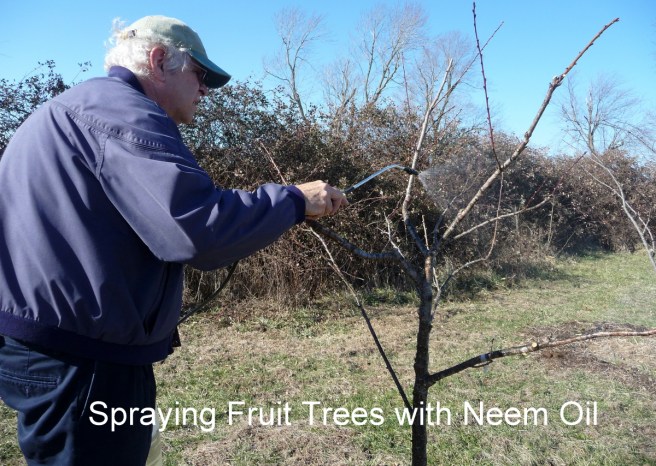
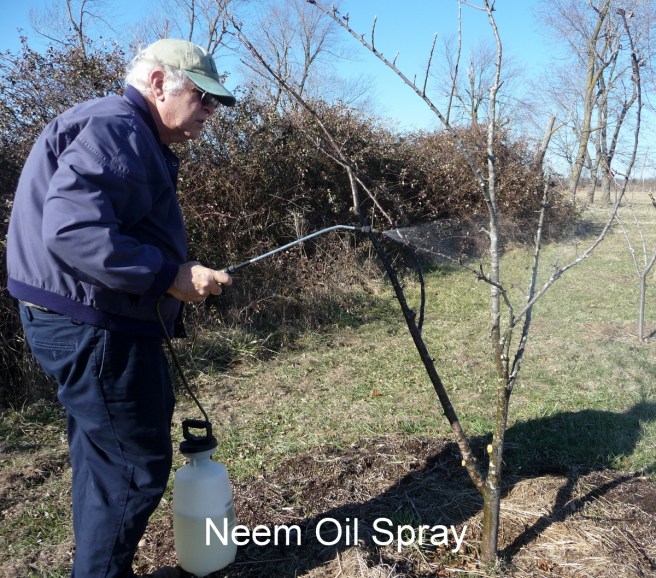
Amazing, 60° (F) on January 15th in the Missouri Ozarks. The flower buds are swelling due to the warm weather. It is definitely time to start spraying your fruit trees.
P1040109

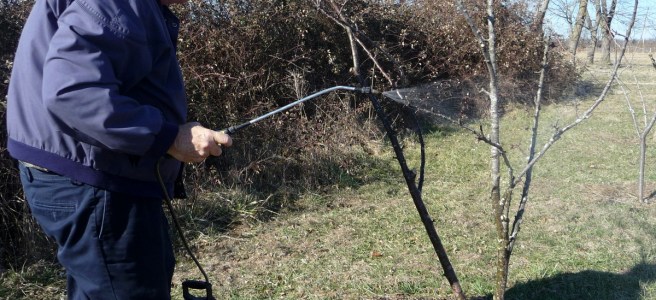
Neem Oil is the perfect choice to spray fruit trees. Neem oil is both a fungicide and an insecticide. 100% Neem Oil tends to solidify in its’ container. Place the container in a bucket with hot water to liquefy the oil to use in a sprayer. Two tablespoons per gallon is the usual rate to get the job done.
P1040110

Neem oil is made from the seeds of the Neem Tree (Azadirachta indica). The oil mixed with water and dish soap is sprayed at temperatures below 80° (F). Neem oil has fungicidal and bacteriological properties to either prevent or control certain types of bacteria and fungus.

Neem oil is effective to control fire blight which is a major issue on apple and pear trees.

Neem oil offers good control against powdery mildew, black spot, downy mildew, scab, anthracnose,  rust, leaf spot, botrytis, tip blight and alternaria. These are a sample of fungal diseases which plague fruit and ornamental trees.

As an insecticide, Neem Oil is detrimental to aphids, mealybugs, scale, different types of beetles, true bugs and caterpillars by disrupting their growth patterns. Most of the above insects will not reach adulthood and therefore no offspring. The oil itself smothers some of the insects by cutting off their air supply and eliminating insect eggs.

While standing upwind, spray the fruit trees from ground level to the branch tips.

Make sure the entire tree is thoroughly covered to insure control and effectiveness.

In a week to 10 days the trees will be sprayed again, using wettable sulfur.

Continue the process in another 7 to 10 days using elemental copper.

Spraying between intervals with seaweed emulsion and compost tea will strengthen the trees by building up the trees immune systems and handling stress.

The benefit is clear by enjoying healthy fruitful trees!

Papa


Time to Prune!!

A wise man said “there is a time and a season for everything”. Folks, it’s time to prune your fruit trees. It may seem early. Now is the time!

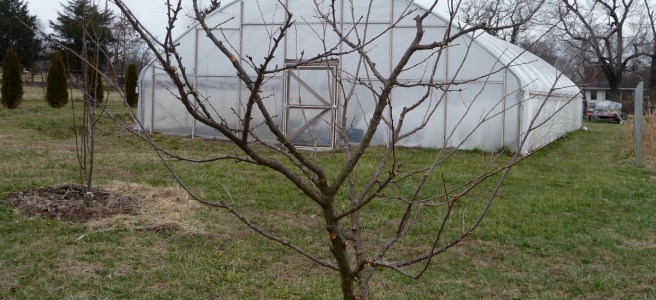
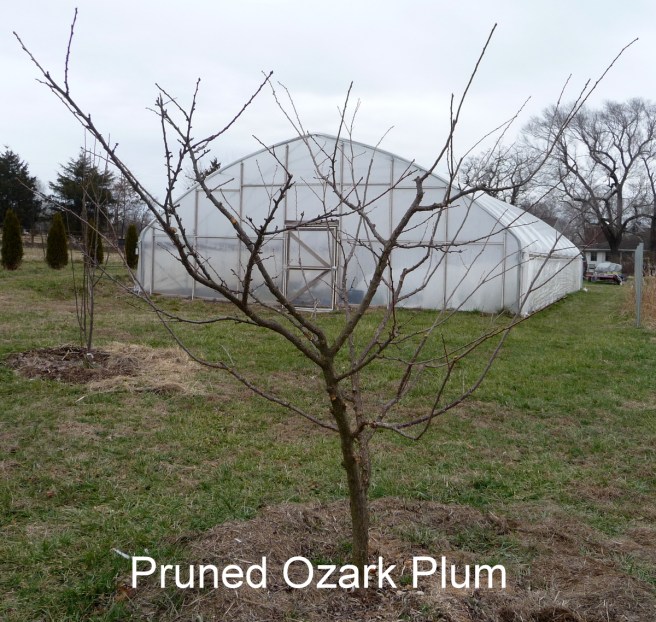
This 4 year old ‘Ozark Premier’ plum tree was methodically pruned to maximize its’ potential! The before and after shows the amount of pruning necessary to bring this tree to its’ perfection.

Let’s start by sharpening the tools of the trade. A good pair of hand pruners and loppers will get the job done. Start the New Year right by properly sharpening the blade of the pruner and lopper.

Using a diamond or rat tail file gently sharpen the blade. Gently file against the blade from the base to the tip. A sharpened blade gives a crisp cut. By the way, dip or paint the blades with rubbing alcohol to remove any possible pathogens (disease).

The pruning process starts by removing dead and crossing branches.

Remove the vertical branches to open the tree canopy for better fruiting. The best shape for plum trees require lateral (moderately horizontal) branching.

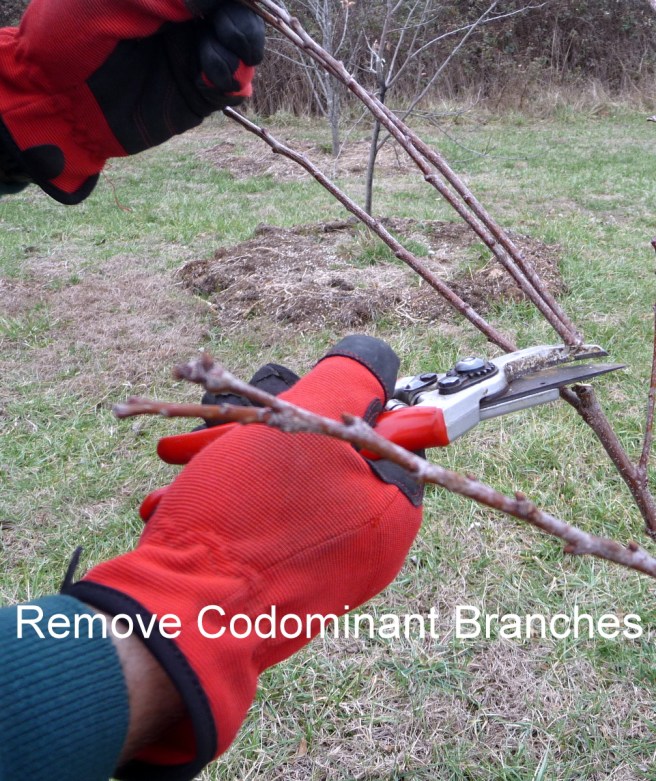
Codominant branches are a serious weakness in all trees. Codominance occurs when 2 or more branches occur at the same place on the trunk or supporting branch. These codominant branches are of the same diameter, neither one gaining superiority. This provides weak attachment and subsequent weakness. Time to remove!!

P1040075

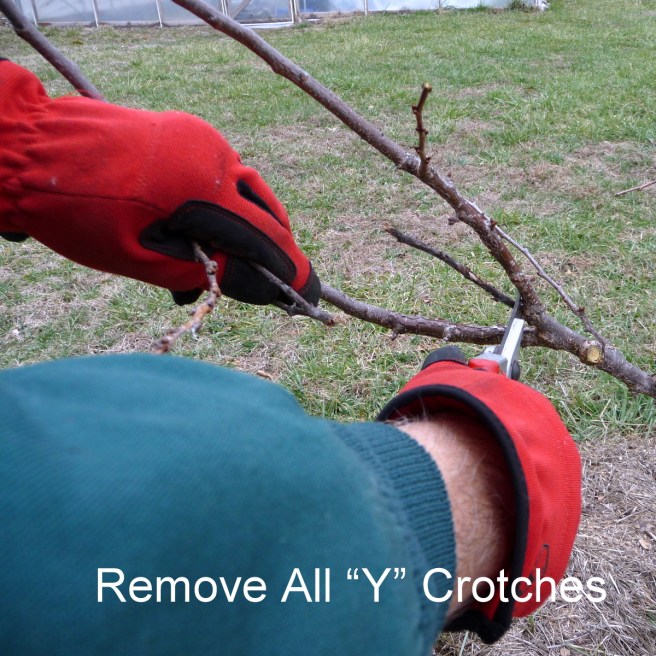
“Y” shaped branching is another weakness and usually codominant. Bye-Bye!

P1040083

Heading cuts will produce lateral (horizontal) branching in the future. The lateral buds will open or sprout due to the pruning which removes branch tip dominance.

Don’t forget to remove all low lying branches. You will want to get under that tree. Nothing more irritating than branches in your face!!

P1040084

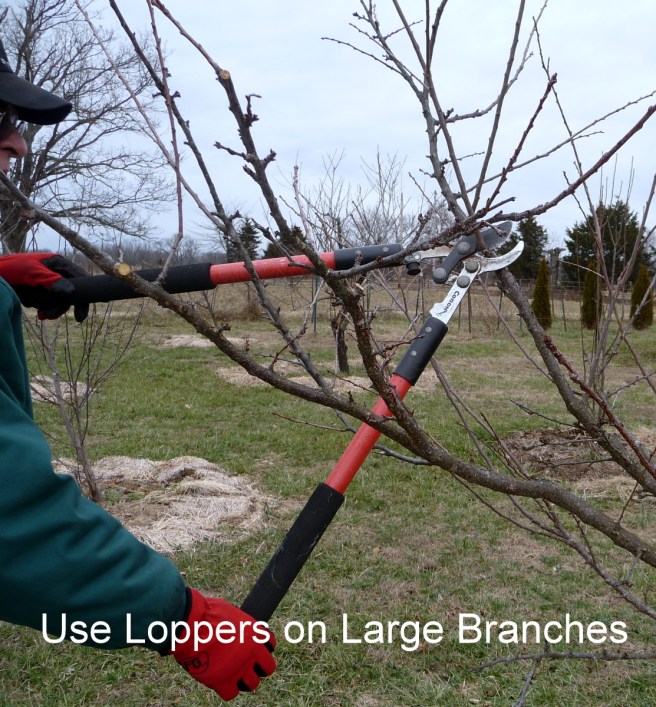
For cuts too large for your hand pruner, bring in the “muscle” – loppers!!!

P1040082

The finished product which next year will get more definitive pruning.

P1040087

That was fun!!

Papa

Seed Saving Tip

Have you saved seed from your vegetable garden or traded for seed during a seed swap? Have you provided space for them in your spring garden?

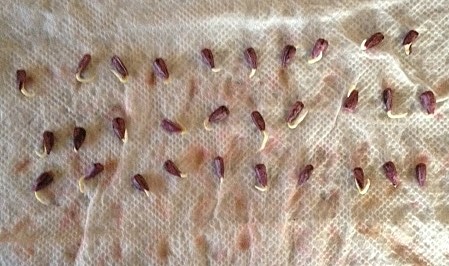
Here’s a tip worth your consideration. Find those seeds and start germination testing. Why? Germination of 50% or below should send you to your 2016 seed catalogs for replacements. Doing this now insures you will find the replacements available instead of “out of stock”.

germination1

Save time and money as a low germination rate will require double the seed sown for an expected yield.

An easy technique for germination:

  • Gather paper towels and zip-lock bags
  • Moisten the paper towel
  • For large seeds a minimum of 10 seeds ( ie.: watermelon, gourd, winter squash, summer squash, sunflower, pumpkin, beans, peas)
  • For small seeds a minimum of 25 seeds ( ie.: eggplant, sweet pepper, hot pepper, tomato, lettuce, cabbage, broccoli, spinach)
  • Place seed in moistened towel with spacing between seeds and fold towel in half. Be sure to label the bag with the seed name.
  • Place in zip-lock bag and seal.
  • Place the zip-lock bag in a warm place providing temperatures of 70-85 degrees.
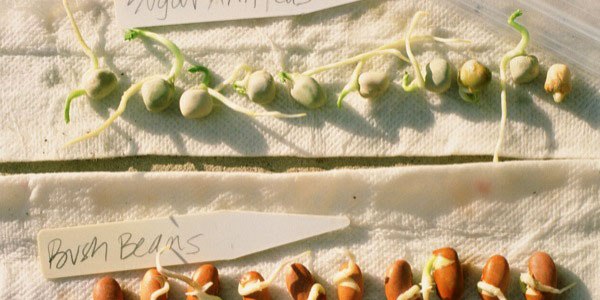
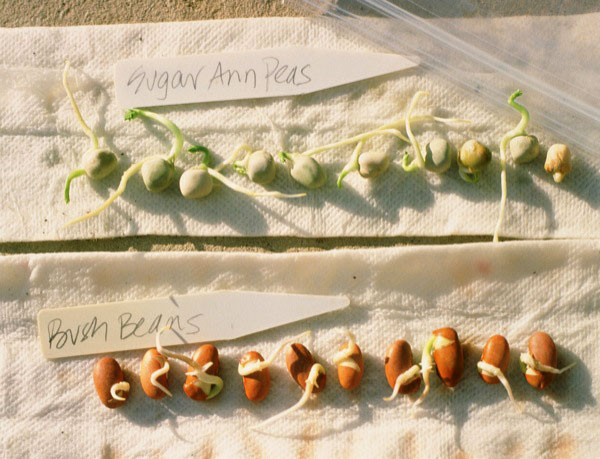
  • Check the bag every 3-5 days for signs of germination.The seed coat should be bursting and either a plant shoot should be on the top of the seed and/or a root on the opposite end.
  • All the seeds in the bag should germinate at the same rate of time for the seed type.germination600
  • A 50% germination rate for 10 seeds would be 5 seeds.
  • A 50% germination rate for 25 seeds would be 13 seeds.

Any questions? Do not hesitate to contact me!!

Papa