My Volunteer Butternut Squash Is not Producing! Why??

I received this question from Julie of Charlotte, North Carolina and Diane from Georgia.

I had a vigorous volunteer butternut squash grow in my garden this year. I had only one beautiful fruit grow to full size. The plant is still growing but each subsequent baby fruit (there have been many) yellows and falls off. It is so disappointing. Any ideas?”

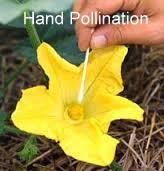
Not  pollinated-001         Hand Pollination

There are many factors that may have caused this issue.

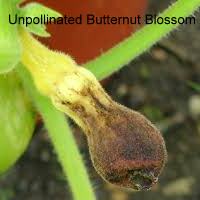
  • Lack of pollination or lack of pollinators.
    • The above picture provides a solution when there is a lack of pollinators. Hand pollination is a viable alternative to achieve proper fruiting.
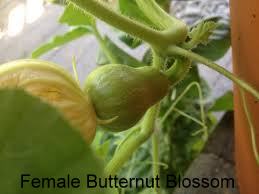
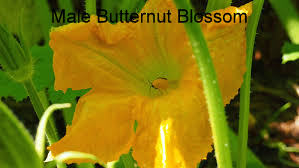
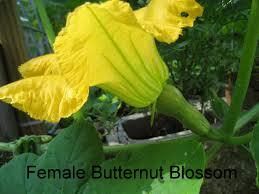
      • Using a Q-tip or a soft paintbrush, you may take pollen from the male flower and apply the pollen to the female flower. Early to mid morning is the best time to pollinate.
      • male blossom-001      Female bloom-001
  • Too much irrigation or flooding causing the roots to be damaged
  • Too little irrigation or drought causing stress and subsequent fruit drop.
  • Disease – bacteria, fungus or virus
  • Blossom end rot – calcium deficiency – http://papasgardens.com/2015/08/14/what-is-blossom-end-rot-is-it-a-disease/
  • Nutrient deficiency
  • Too hot resulting in fruit drop

A good strategy would be to plant your squash early (right after last frost) and again about a month later. One of the two (2) crops may produce because you may avoid excessive rain, drought, disease pressure, cold/heat or insect pressure.

Seaweed emulsion or kelp meal will pick up any nutrient deficiency and aid the plants with stress issues.

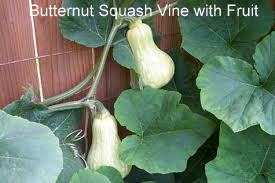
Squash vine-001

It is worth the effort to produce delicious squash!!

Papa

Succession Planting for Success!!

It is amazing how many times I hear of someone’s lack of success for certain crops. When you “put all your eggs in one basket” and only plant one time, that is often the basis for disappointment. If you do several small plantings a week to 10 days apart you have a much better chance for meeting your expectations. Succession planting will fulfill your idea of a good garden!!

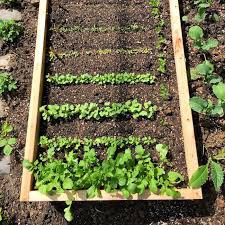
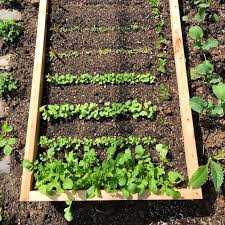
succession planting            succession planting1

There are several strategies that maximize your efforts. You will be astounded when you see how much produce you can get from small areas.

  • Two or more crops in succession: After one crop is harvested, another is planted in the same space. The length of the growing season, climate, and crop selection are important issues.
    • For example, a cool season spring crop (such as Irish potatoes) could be followed by a heat-loving summer crop (bush beans). The beans require less fertilizer and supply free nitrogen to the soil. The  bush beans are not bothered by the potential diseases of the potatoes.
    • Likewise, garden peas ( a legume) could be planted in cooler  weather, followed by tomatoes or squash.
  • Same crop, successive plantings: Several smaller plantings are made at timed intervals, rather than all at once. The plants mature at different dates, providing a continuous harvest over an extended period.
    • Lettuce, spinach and other greens are common crops for this method. The beauty of this approach eliminates the overwhelming effect of too much produce at one time.
      • There are many lettuce types from which to choose:
        • Looseleaf, Butterhead, Cos (romaine), Buttercrunch, Batavian, Heading and Chinese. Some of the Looseleaf and Romaine types may be grown in warmer/hotter temperatures.
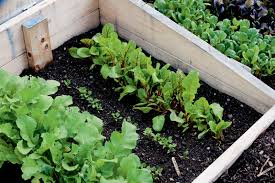
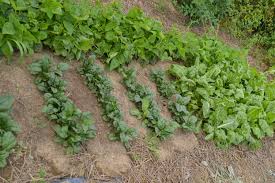
  • succession planting3
  • Same crop, different dates of maturity: Planting different varieties (for example broccoli or tomato) that come to harvest at successively later dates.
    • Calabrese Green Sprouting broccoli matures 10 – 14 days earlier than Waltham 29 broccoli.
    • Stupice tomato starts to fruit in 55 days, Roma tomato 70 days and Black Krim tomato 85 days. Plus Stupice and Roma are much smaller plants which can be planted in front of the taller Black Krim.

Using one or all of these methods will give you a greater chance for success in your gardening endeavors. Enjoy your new opportunities!

Papa

Pest Control – Nature’s Way – the Braconid Wasp

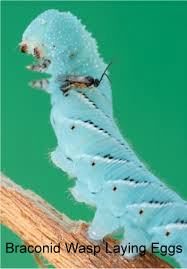
You may have seen this phenomenon at one time or another. Little white cocoons on the back of a tomato hornworm. Those cocoons are from the larvae of the Braconid wasp.

WP_20150830_19_09_27_Pro        WP_20150830_19_10_16_Pro

New adult Braconid wasps will emerge from those little cocoons!

Braconid wasp emerge

These amazing ladies and gents are only 1/8th inch long and rely on the caterpillars of many butterflies and moths to perpetuate the species. A fertile female wasp will use her ovipositor (egg laying lance) to lay eggs in the caterpillar of tomato hornworms and other destructive caterpillars.

Braconid Sting3A-001

The life cycle continues over and over again causing destruction of the caterpillars and rewarding us with juicy tomatoes and undamaged plants!!!!

Papa

Early blight on tomatoes, potatoes, peppers and eggplant. Can it be subdued?

Alternaria solani is the fungus causing Early Blight. Spring brings the rain, wind, and insects traveling from plant to plant plus a hidden visitor of Alternaria solani spores. Overhead irrigation, tools, infected seed and working in the garden when wet also support spore dispersal and growth. Rain splashing from the soil, carry these spores to your plants.

Spores enter the plant through leaf surfaces or wounded plant material. The fungus spores can linger, producing many “seasons” of infection and take advantage of the hot, wet weather of late summer.

Early Blight is favored by warm temperatures and extended periods of leaf wetness from frequent rain, fog, or dew. Warm, humid  temperatures of 75-86 degrees increase the likelihood of infection.

Once the spores have “attacked”, infections have occurred and become the most important source of new spore production and rapid spread of the blight. Lesions generally appear quickly under warm, moist conditions on older foliage and are usually visible within 5-7 days after infection.

Early blight can develop quickly mid- to late season and is more severe when plants are stressed by poor nutrition, drought, other diseases, or pests.

What are the symptoms?

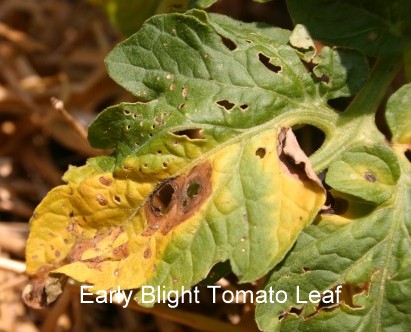
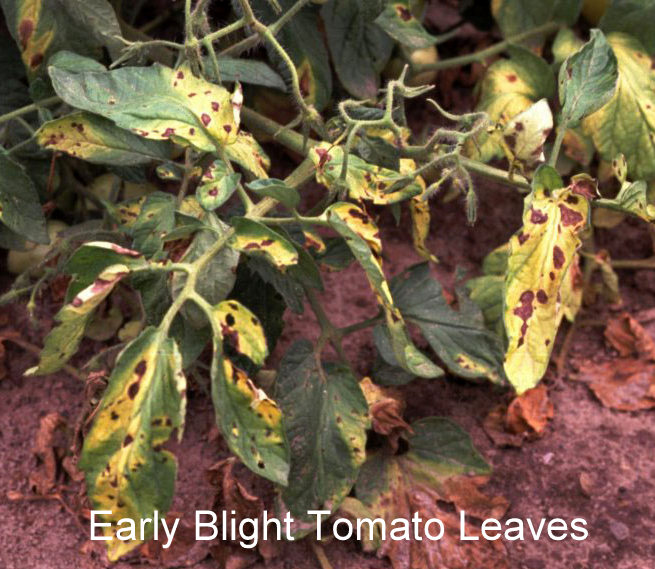
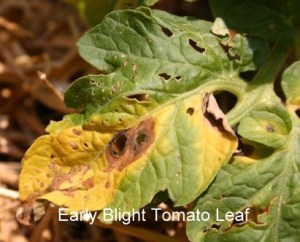
  • Dark spots will start showing on the older leaves of your tomatoes, potatoes, Bell pepper, hot pepper and eggplant.
  • These spots will look like concentric rings.
  • Tissue surrounding these brown spots will turn yellow (a yellow halo)
  • Spots enlarge becoming leathery, merge and leaves start to hang withered or fall off.
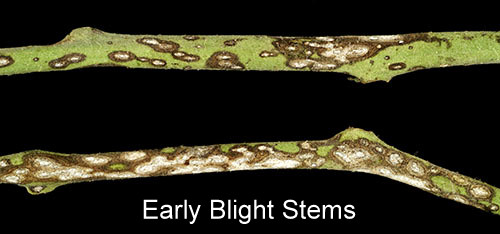
  • Younger leaves will start showing black spots as well as the stems.
  • As the leaves fall, the fruit has no shading and succumb to sunscald. This will also cause reduced fruiting as there is less leafing for photosynthesis.
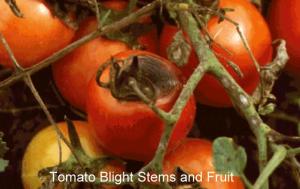
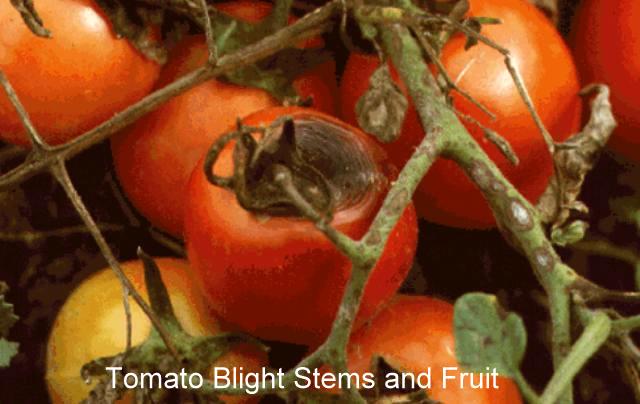
  • Infected fruit have dark, sunken, leathery spots near the stem end. Both green and ripe fruit are affected.
tomato-early-blight1       tomato Early-blight

13_StemsTomato4       eblight3lg1_fruit

  • Tomatoes will rot from the stem to the inside of the fruit.
  • Tubers of the potato vine develop dark specks resulting in a corky potato.

What can be done to stop this blight?

  • Apply mulch (black plastic, straw, newspaper, biodegradable weed barrier)  to protect the plant from spore splashing from the soil onto lower leaves. Remember early blight is a soil borne disease.
  • Provide plenty of space between the plants. Good air flow will help keep the plants dry.
  • Pick off affected/infected leaves and remove them from the garden, bagged; dispose with household garbage. Burning is equally effective.
  • Wash your hands and/or gloves when you finish in the blighted area.
  • Change your clothes to reduce further spore dispersal.
  • Wash/disinfect any tools used in the blighted area.
  •  Use a biofungicide spray: Bacillus subtilis,  (Serenade® MAX) and Bacillus pumilis (Sonata®) with compost tea. Read label for application.
  •  Copper products, hydrogen peroxide, and potassium bicarbonate can be used against early blight . Read the label for application.
  • Garlic, neem oil and seaweed extract have also been shown to be effective in reducing the severity of early blight disease on tomatoes. Spray and apply as label directs.
  • Do not work in the garden when it is wet after rain, morning dew or fog.
  • Use drip irrigation as this will keep the plants dry.
  • Rotate your tomatoes, potatoes, Bell and hot peppers and eggplant every three to four years with small grains (wheat, barley, rye, oats, sorghum), corn and legumes (peanuts, peas, cowpeas, green beans, long beans, runner beans, fava beans, soybeans, Southern peas, sugar snap peas). If you are limited on space consider container and vertical gardening giving your soil time to regain its health and decrease the spore population.
  • Amend your soil with compost during late fall as it supports microorganisms that contribute to biological control in the soil.
  • Early blight survives from season to season in or on the leaves, stalk and fruit from diseased plants.  Remove diseased plants or destroy them immediately after harvest.(Bag or burn)
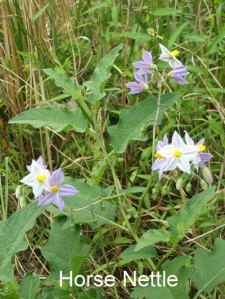
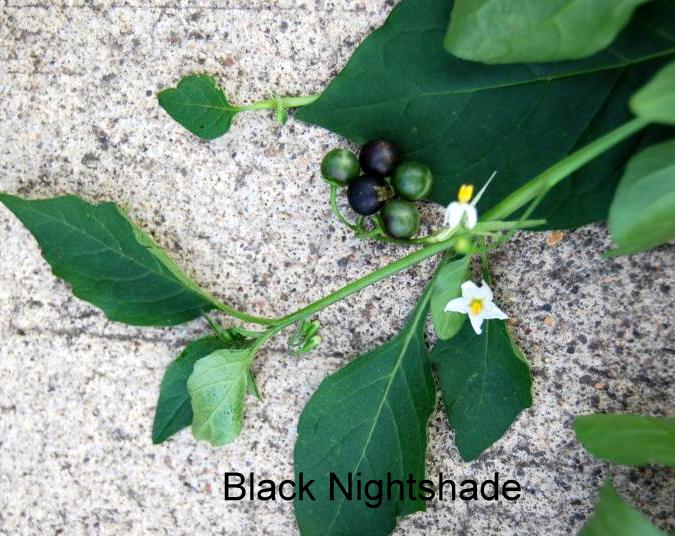
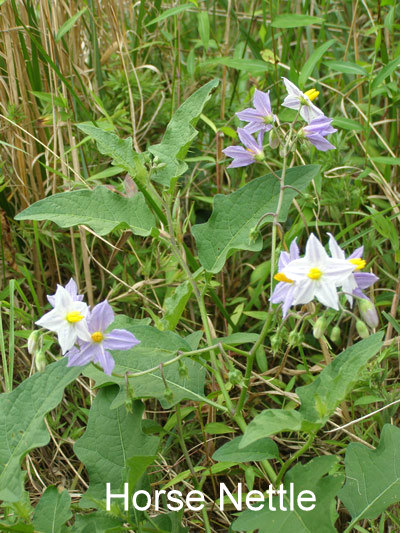
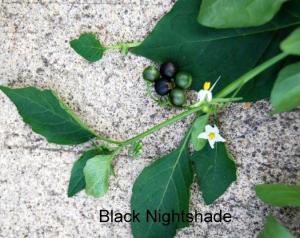
  • Nightshade and horsenettle  serve as alternative hosts for the disease. Remove them from your garden area.
  • blacknightshade_orig       Horse-nettle-plant1
  • Tomato stakes and cages should be disinfected (hydrogen peroxide or diluted bleach solution) and rinsed prior to storage. All dried plant material must be removed, bagged or burned.
  • Be alert to weather changes.
  • Become a plant detective. Get out to the garden daily and observe for any changes. You won’t be sorry as you are on the watch for disease. Removing leaves at the first sign of infection will slow the spread of Early Blight.
  • Do not compost any diseased plant material.
  • Do not save seed from diseased fruit as Early Blight survives within them.

Are there Early Blight “resistant” tomato varieties? More like partially resistant.

  • Mountain Pride
  • Mountain Supreme
  • Mountain Gold
  • Mountain Fresh
  • Mountain Belle
  • Mountain Fresh Plus
  • Aunt Jenny’s Purple
  • Big Rainbow
  • Black Plum
  • Juliet
  • Legend
  • Matt’s Wild Cherry
  • Old Brooks
  • Tigerella (AKA Mr. Stripey)
  • Tommy Toes

What is a good strategy for potatoes?

  • Choose resistant varieties such as long season as they are usually more resistant – Certified seed potatoes.
  • Choose a short season variety, plant early and harvest before Early Blight invades.
  • Separate your potatoes from your tomatoes to decrease cross infection.
  • Give wider spacing to access better drying and air flow.
  • Be aware of the moisture in the soil. Do not over water.

Yes, Early Blight can be subdued if you are vigilant.

Papa

Fall garden progress! Two week update.

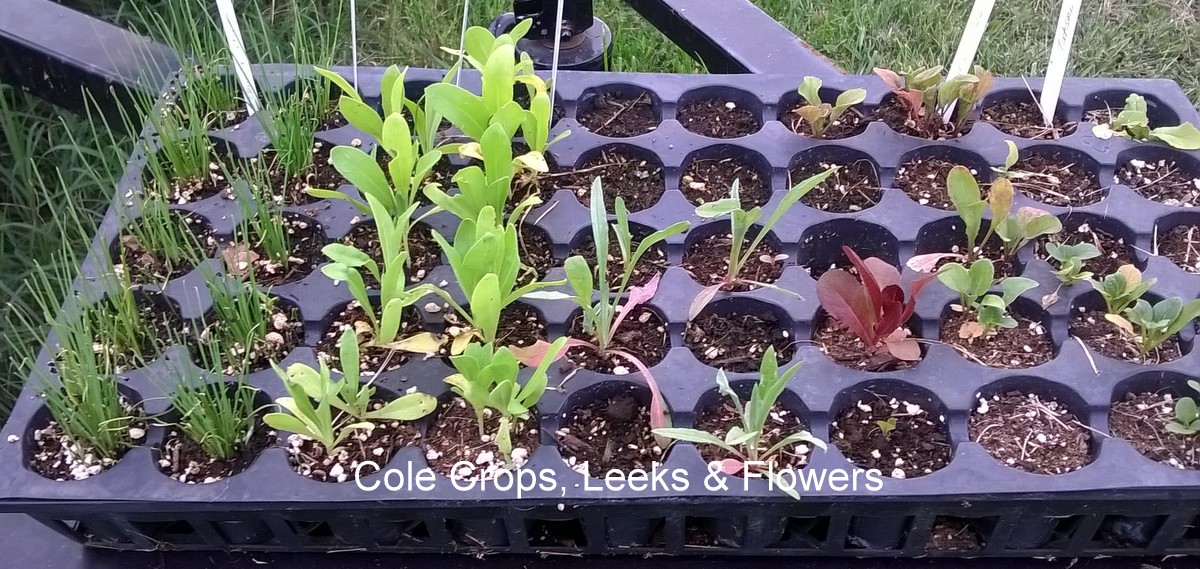
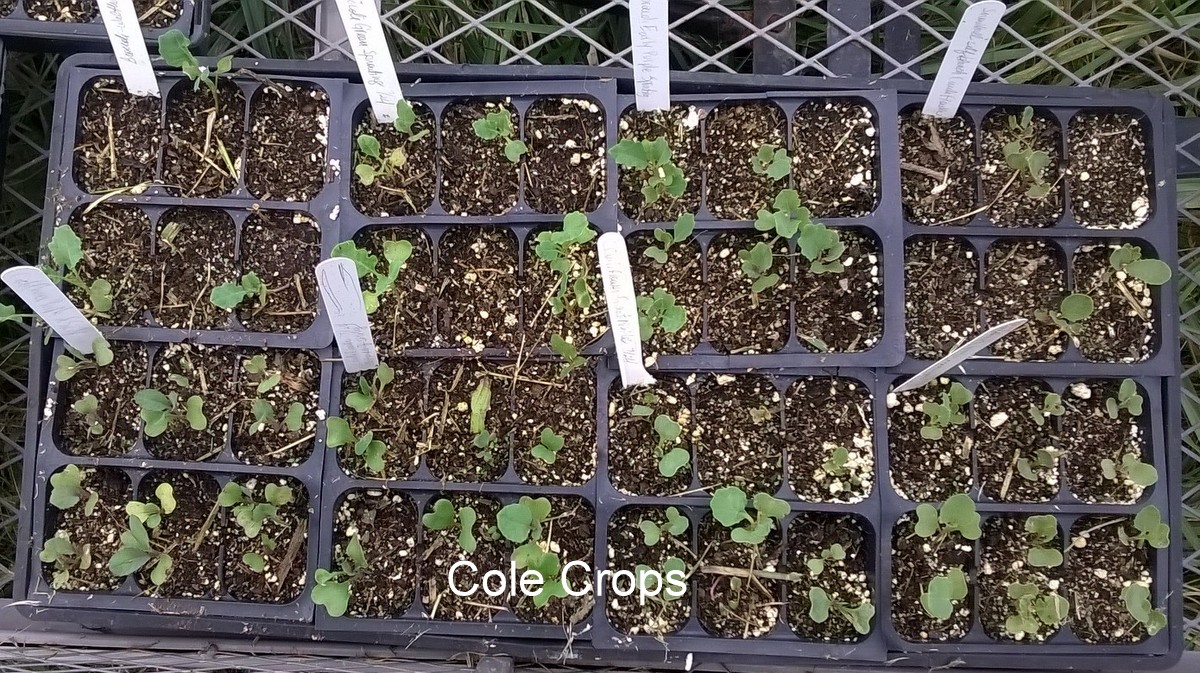
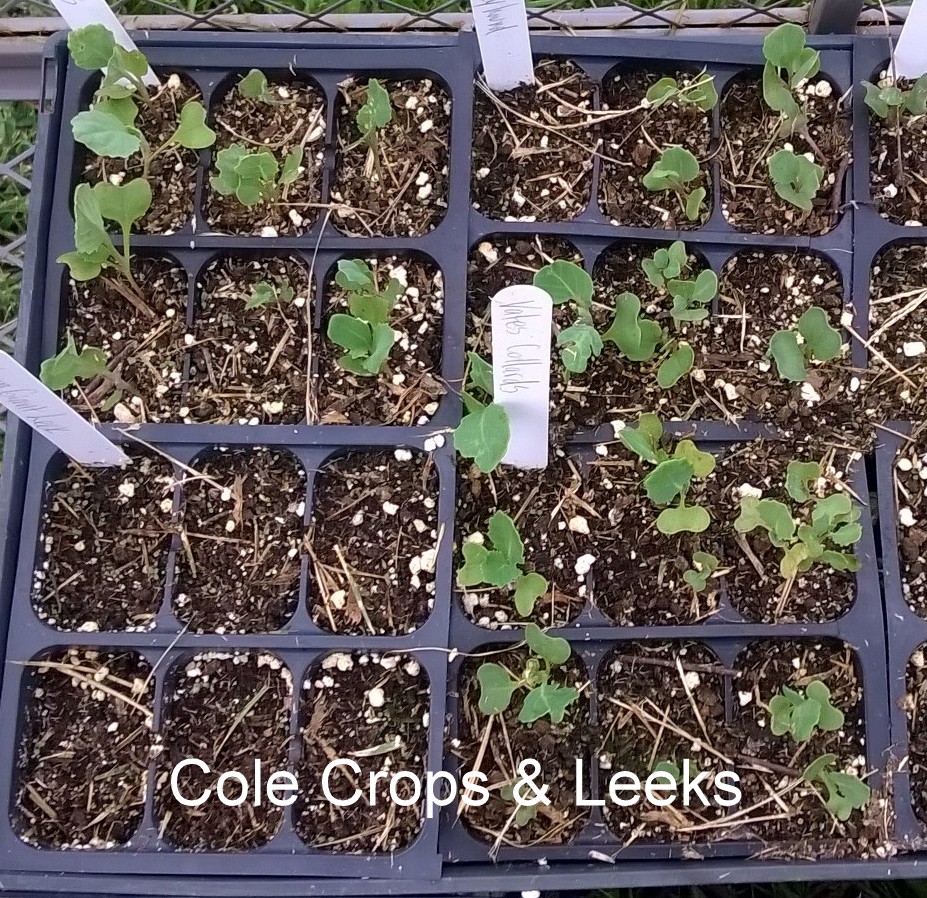
Isn’t it amazing to see the vigor and strength of seeds as they quickly appear ? Just look at the health and size of these transplants. Be sure to click on the pictures below!

WP_20150828_18_33_35_Pro     WP_20150828_18_34_34_Pro

WP_20150828_18_35_16_Pro

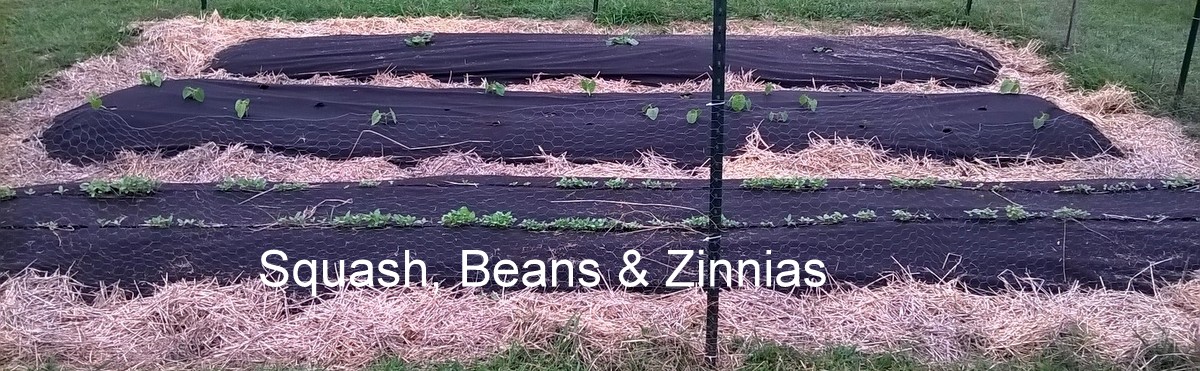
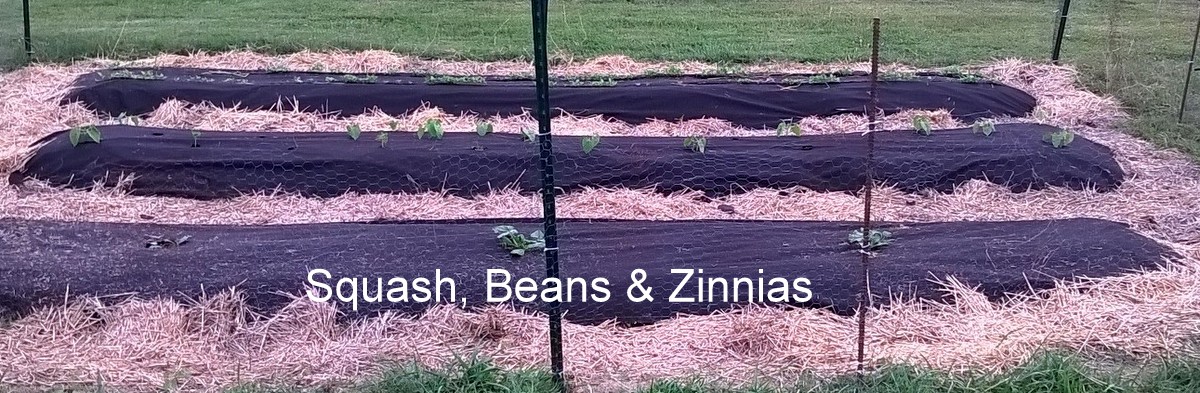
Zucchini, beans and zinnias are all enjoying the cooler evenings! I will use some of the transplants to fill in gaps on the bean bed. Never let space go to waste! Please click on the pictures below for a closer look!

WP_20150828_18_36_48_Pro       WP_20150828_18_37_18_Pro

I will keep you posted on the progress. Plus, I will add low tunnel frames to the beds to get ready for cooler temperatures.

Papa
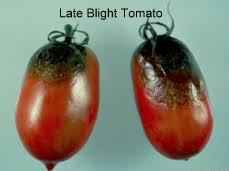
Late blight on Tomatoes and Potatoes. Is there a Cure?

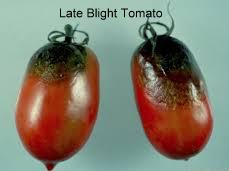
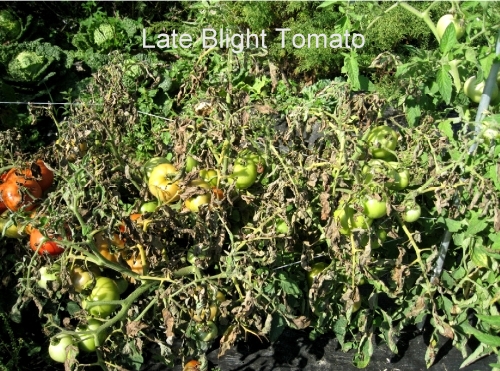
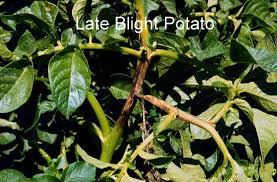
Late blight, which is caused by a fungus Phytophthora infestans, is one of the most destructive and contagious plant diseases directly affecting the fruit and killing the plant. (Phytophthora means ‘plant destroyer’ in Latin)

Late Blight1       Tomato LB

Late blight spreads like a wildfire. This fungus produces spores in abundance and with the help of moist wind they will travel up to 30 miles. It is imperative to destroy infected plants as soon as possible as this disease is easily spread.

This disease shows up in late summer as the hot and warm humid days may be followed by cool and moist nights with accompanying rain, fog and heavy dew. This is a indicator to the home gardener to become watchful for the signs of late blight.

What to look for:

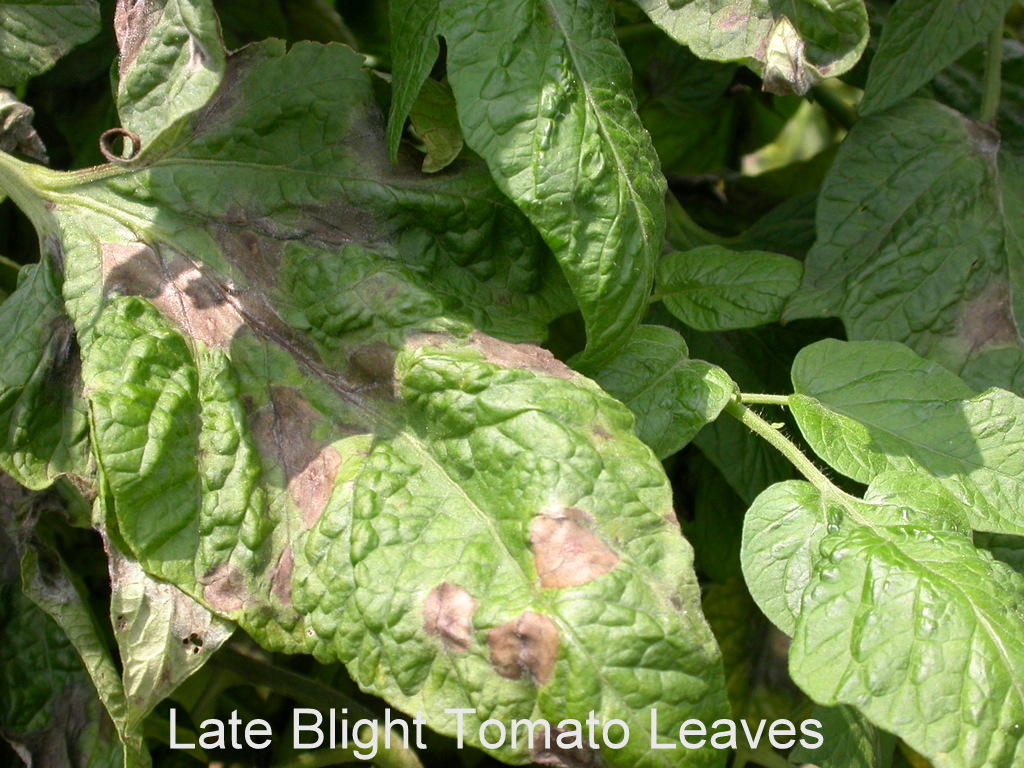
  • Leaves will develop water soaked spots.
  • The spots will enlarge and quickly turn from brown to purple to black.
  • Shoots of the plant will turn black and eventually the plant will collapse.
  • As the plant rots there is a foul odor; a whitish mold may be present.
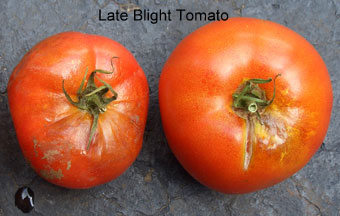
  • Tomatoes will show grayish water soaked spots, enlarge and turn dark. They may have additional rot, an unpleasant foul odor and be mushy.
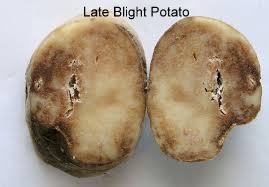
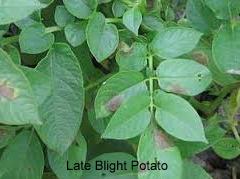
  • Potato tubers will show purplish or brown corky spots. There may be additional rot, an unpleasant foul odor and be mushy.

Late Blight2        Tomato LB1

Potato LB1         Potato LB2

Potato LB

Can this disease be prevented?

  • Check your potatoes and tomatoes daily following cool, humid and prolonged wet weather followed by warm/hot humid days. Sign up to receive alerts (www.usablight.org) for immediate notification when late blight is confirmed near you.
  • Copper fungicides (Elemental copper as cupric oxide) can be highly effective if applied as a preventative (before infection) and with complete coverage of all plant foliar surfaces, including the undersides of leaves where the fungus typically produces spores. Follow the label and use as prescribed.
  • Neem oil is an alternative fungicide. Follow the label and use as prescribed.
  • If symptoms are found remove the plant(s) immediately in plastic sealed bags.
  • Remove the plant(s) when the leaves have dried to decrease the dispersal of spores.
  • Dispose of this diseased material in plastic sealed bags with your household trash. Burning the diseased plant material is equally effective.
  • Change your clothing and wash your hands/change your gloves before entering the garden again. (Spores from late blight could be reintroduced from your clothes, hands and gloves) Remember this is a highly contagious disease.
  • Hill your potato plants to stop spores from draining down to the tubers.
  • Some gardeners will cover their tomatoes with an old tent frame or swing set and place plastic over the frame. The frame must be higher than the planting and permit air movement as there cannot be condensation on the leaves. High tunnels have been very successful.

Are there blight resistant tomatoes?

An article in growveg.com (January 17, 2014) by Barbara Pleasant offers a list of 9 blight resistant tomato varieties offering excellent to very good resistance.

They are:

  • Defiant PHR
  • Lemon Drop
  • Matt’s Wild Cherry
  • Mountain Magic
  • Mountain Merit
  • Plum Regal
  • Mr. Stripey (AKA Tigerella)
  • Iron Lady
  • Jasper

Are there blight resistant potatoes?

  • Elba, most resistant
  •  Kennebec
  • Allegany
  • Sebago
  • Rosa
  • Defender
  • Jacqueline Lee
  • Ozette
  • Island Sunshine

Harvesting potatoes:

  • If there are symptoms as harvest approaches remove all potato foliage from the garden and wait 2 weeks before digging the tubers.
  • Wait for dry conditions to dig your potatoes.
  • Remove all potatoes from the soil. ( the spores of this fungus will overwinter in unharvested tubers, in the soil and living crop debris)
  • Check your harvested potatoes for spots and cull if spots are present. Do not store spotted (culled) potatoes with unaffected potatoes.

Harvesting tomatoes:

  • Any fruit that rot after picking should be put in a trash bag and disposed with household garbage.
  • Unaffected parts of fruit can be consumed, but fruit from affected plants should not be canned due to concern that the pH may not be sufficiently low.
  • Tomato seed is not a carrier of this disease.

A photo gallery of this disease:  http://www.hort.cornell.edu/lateblight

Cleaning the garden of all living debris, tomatoes and potatoes is essential. Burn or bag this debris for disposal. Do not compost. Again, this is a very contagious disease.

Is there a cure?

Late blight has been with us a long time. The potato famine in Ireland of 1845 was caused by late blight. As you have read this disease is highly contagious and your daily observations are necessary to spot the symptoms and act accordingly.

Papa
.

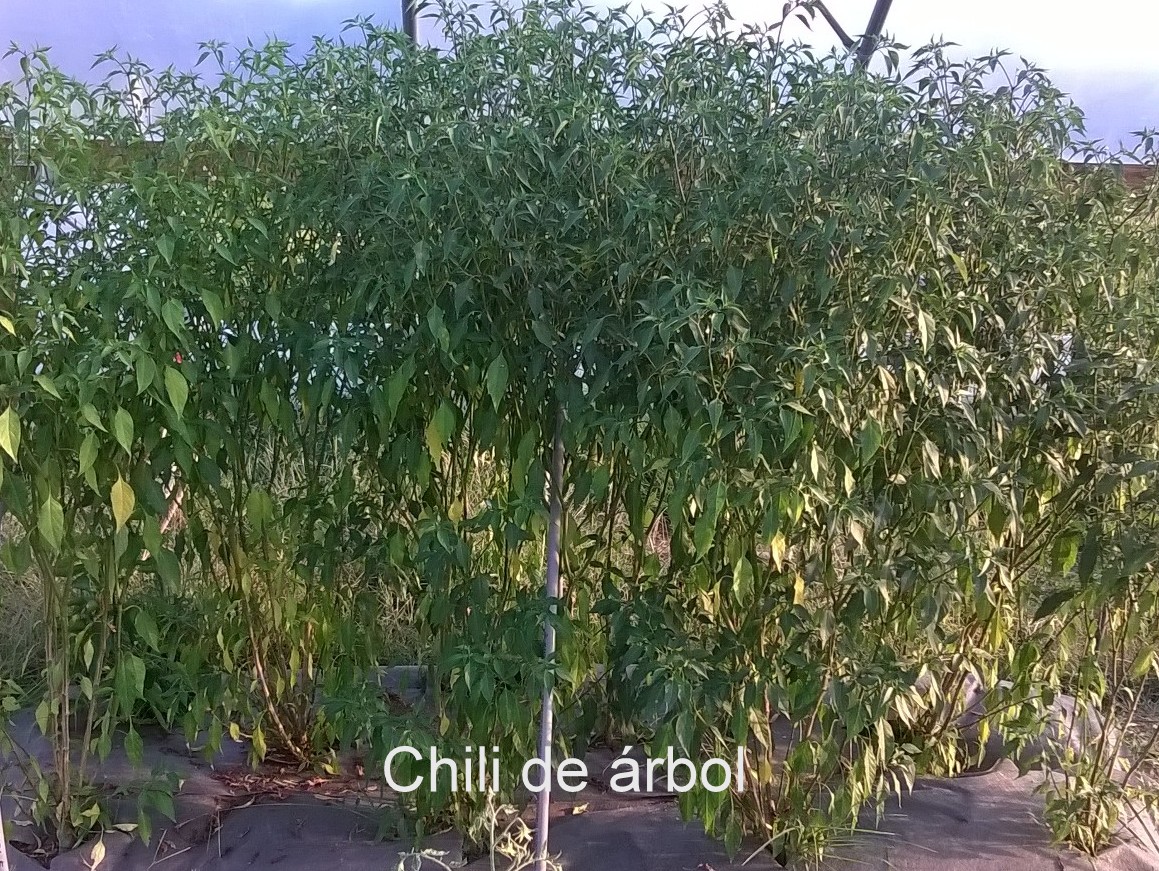
The Amazing Chili de árbol!!

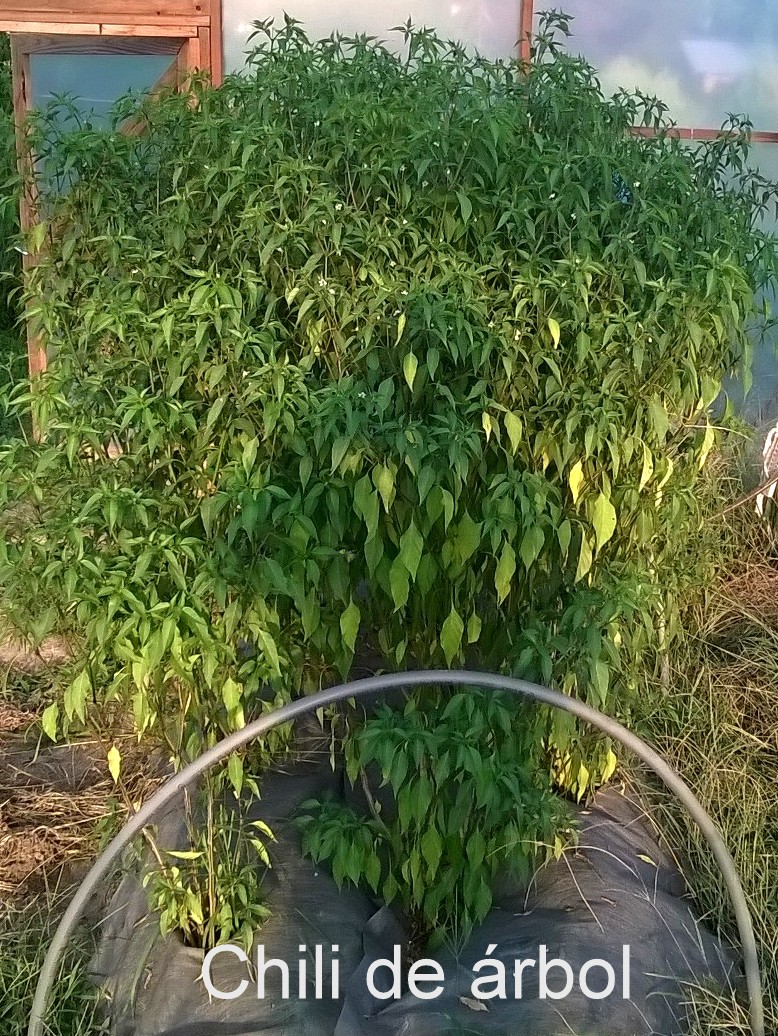
The Chile de árbol grows into a small tree. In a greenhouse the pepper trees grow more than 10 feet. The Tree Chili is originally from Mexico and is a staple for cooking and seasoning. They are presently growing in my hoop house reaching 6 feet!

WP_20150825_18_49_28_Pro        WP_20150825_18_48_19_Pro

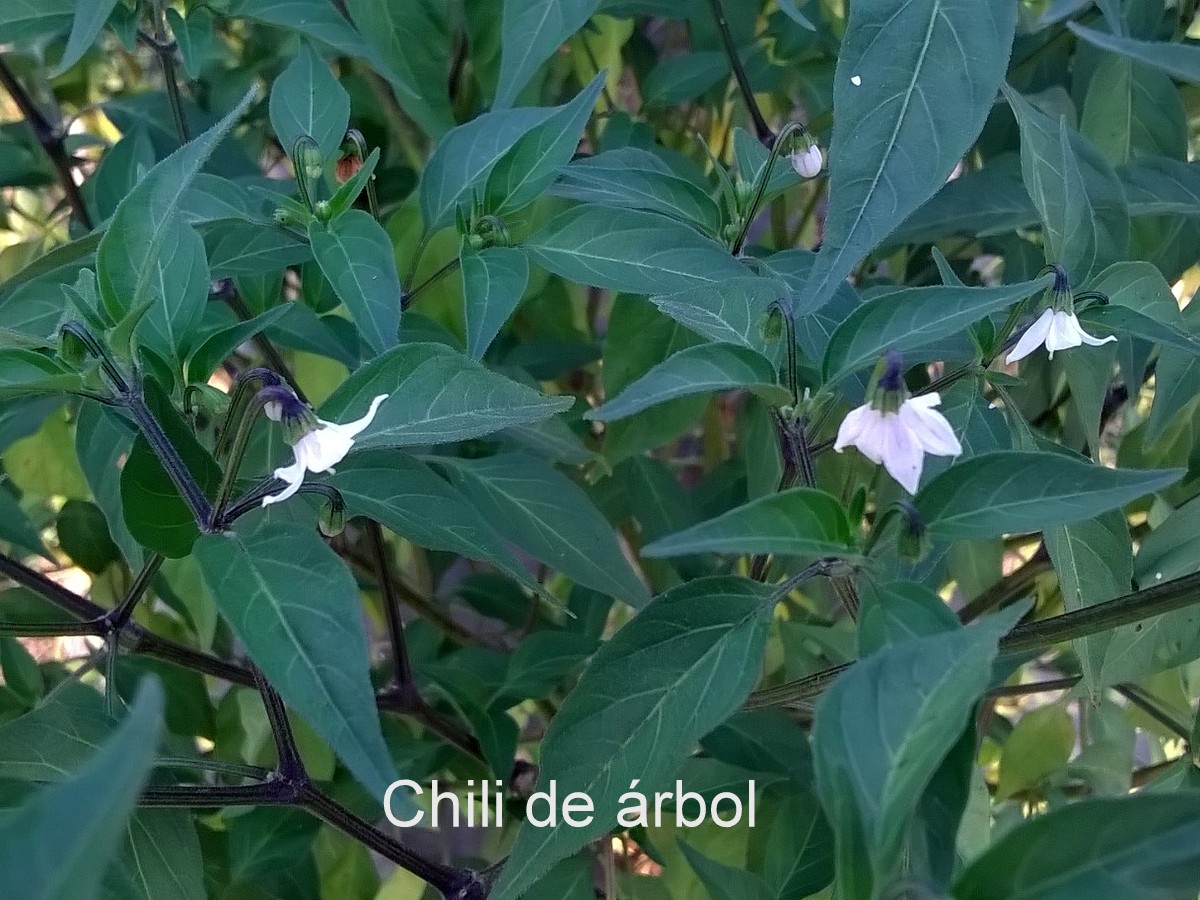
The plants have started to flower as the temperature is a little cooler. I am starting to see fruit set. This variety is a Capsicum anuum type of pepper. The degree of heat is 50,000 to 65,000 *Scoville Units. They may be substituted for Cayenne peppers, with similar flavor and heat.

WP_20150825_18_48_57_Pro     chile_de_arbol_peppers_med_hr

When dried the peppers (also called bird’s beak or rat tail chili) hold their beautiful red color which makes them ideal for wreaths.

I will publish again when the trees are full of chilies.

Papa
*Scoville Units – The idea was to dilute an alcohol-based extract made with the given pepper until it no longer tasted hot to a group of taste testers. The degree of dilution translates to the SHU. In other words, according to the Scoville scale, you would need as many as 5,000 cups of water to dilute 1 cup of tobacco sauce enough to no longer taste the heat.   Smithsonian Magazine

Russeting? What’s that?

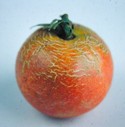
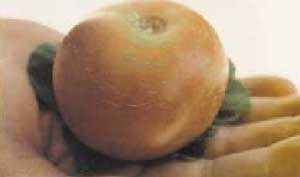
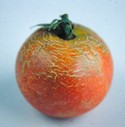
Russeting is characterized by multiple micro cracks in the tomato skin which are often concentric; also called cuticle cracking.  This disorder is caused by fluctuations of soil temperature and  soil moisture.

russeting (1)

This is a physiological disorder – a problem caused by the growing conditions rather than by a pest or disease agent. Inappropriate levels of water ( drought, fluctuations in watering/rain, flooding), light, temperature (stop and start growing) and nutrients can all cause a variety of  physiological disorders in tomatoes.

russeting

The fruits are especially vulnerable as they are at the growing tips and have to compete with the new shoots for water and nutrients.

The cuticle, the very outside, transparent layer, of the fruiting skin may become less elastic. As the fruit grow, the cells of the fruiting skin loose their elasticity and small cracks start to appear.

Excessive temperature changes during the daytime and nighttime cause the skin of the fruit to react to the air around it. Water condensation within the skin of the fruit may expand and contract causing cracking.

These suggestions may remediate tomato russeting:

  • Apply adequate mulch in hot weather to keep the soil cool and decrease evaporation.
  • Consider raised bed gardening for better drainage.
  • Water in mid-morning.
  • Use shading material to enhance a cooling effect on the entire.
  • Pick tomato early when fruit shows color.

Papa
Okra Loves Heat!!!!

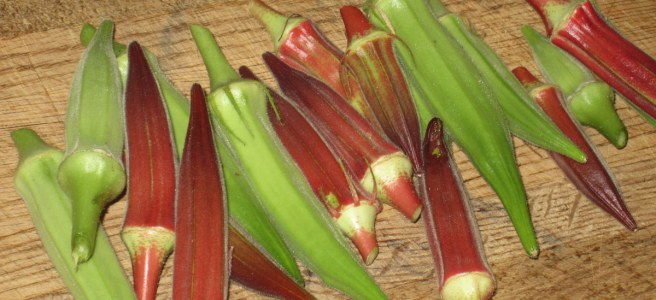
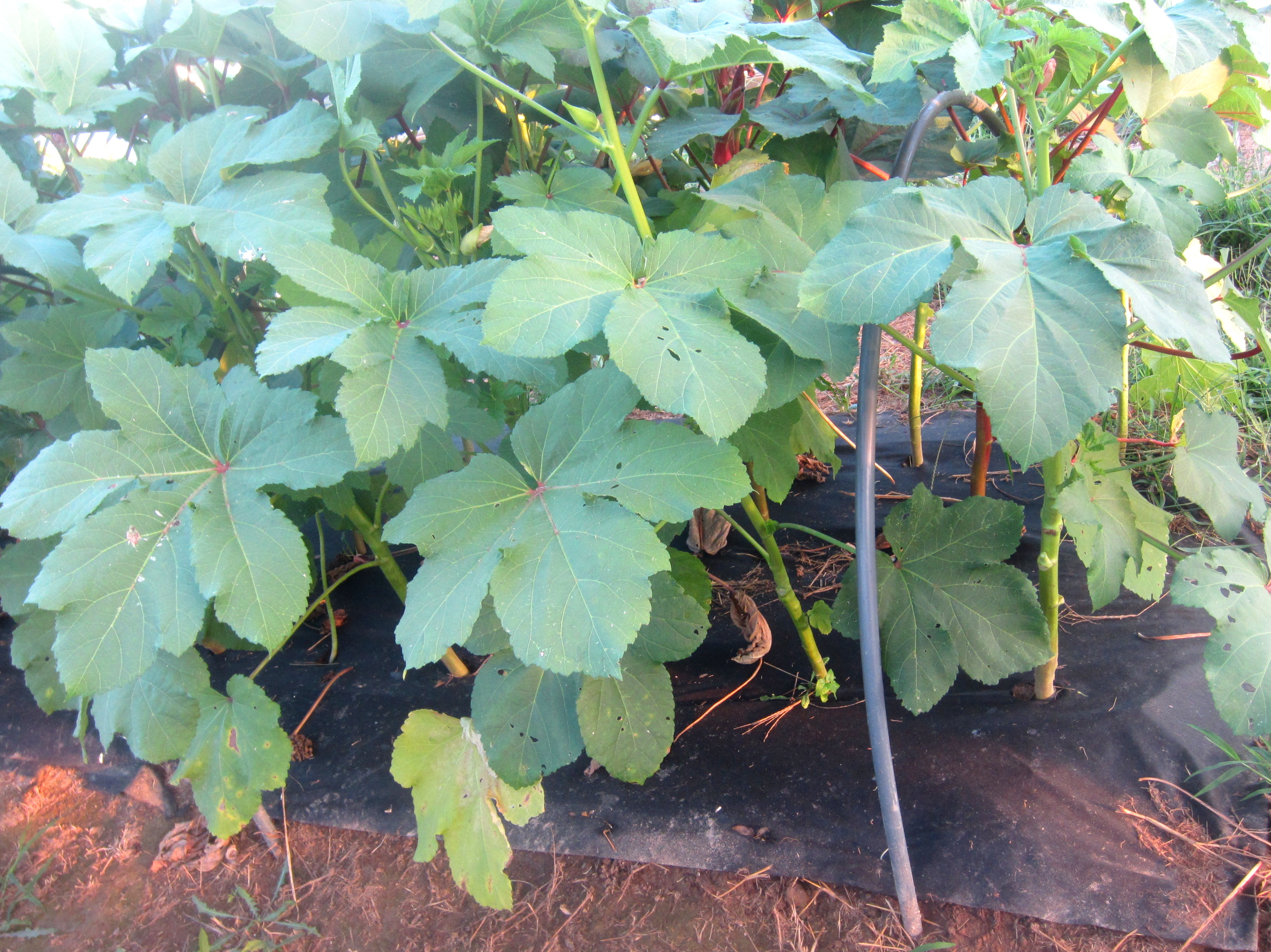
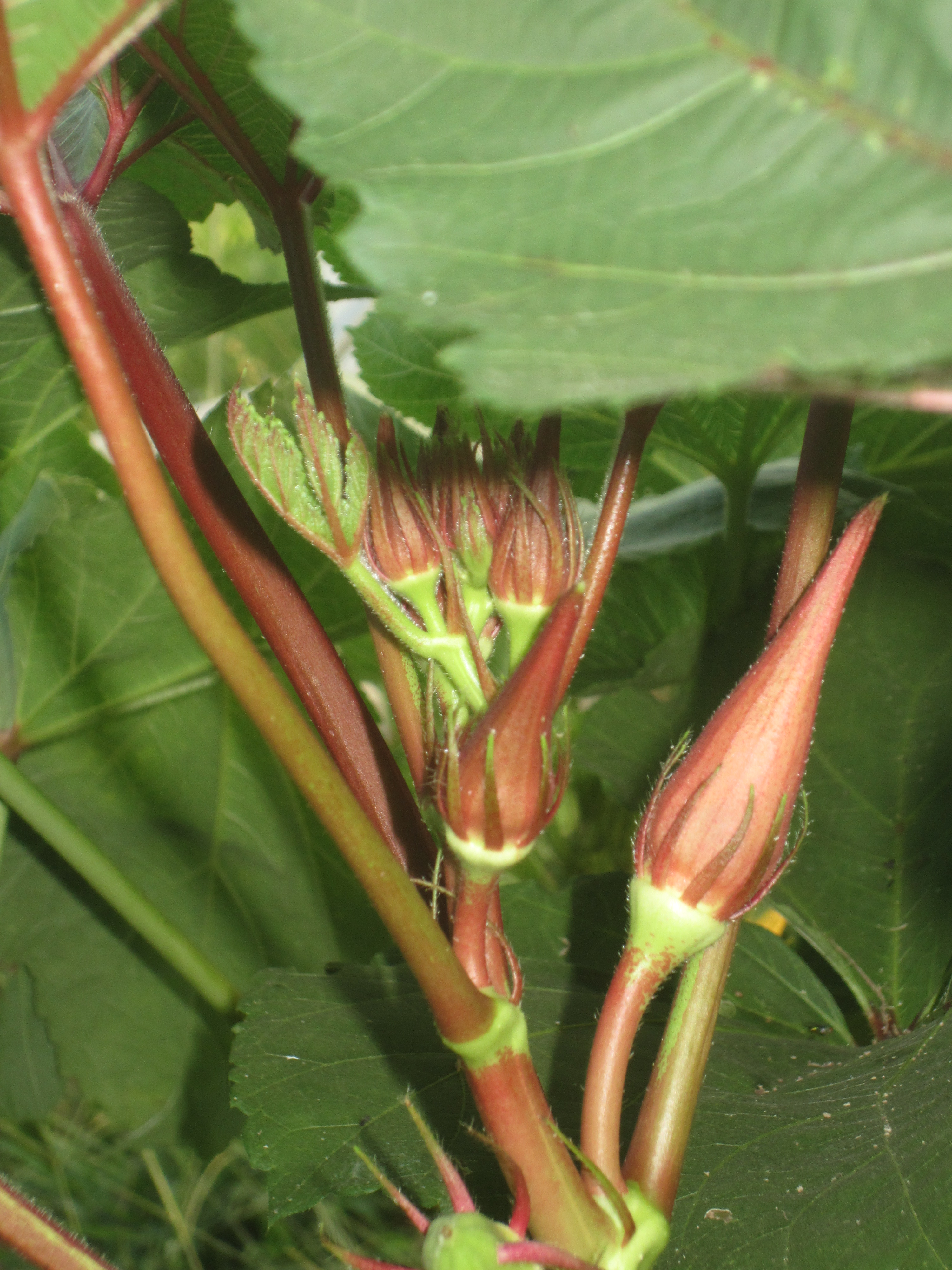
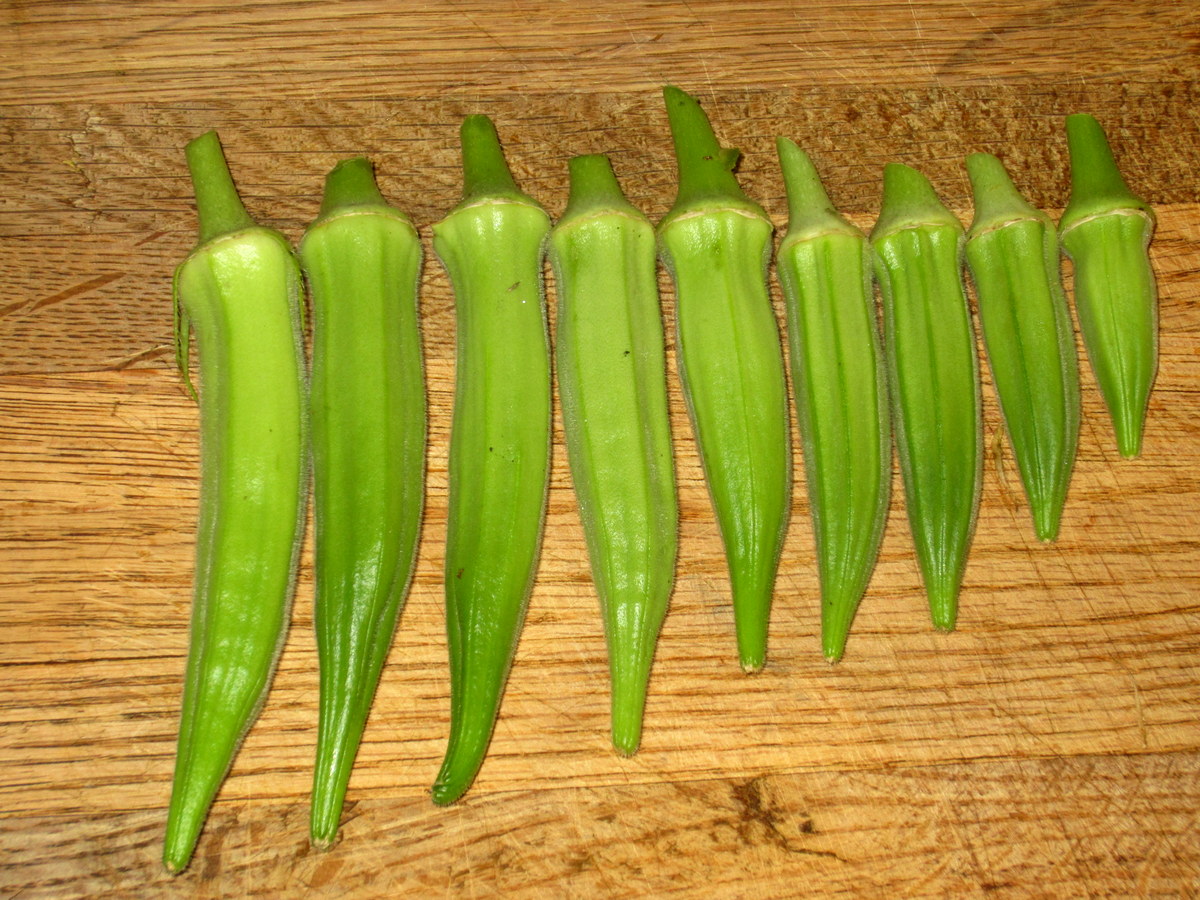
I am growing 3 different varieties of okra in my hoop house and they are thriving in 100° heat!!! The varieties are Eagle Pass, Jing Orange and Roberie. The production is impressive. By leaving the side vents open I get adequate insect pollination.

IMG_9753 IMG_9755

IMG_9666

5-IMG_0130 3-IMG_0126

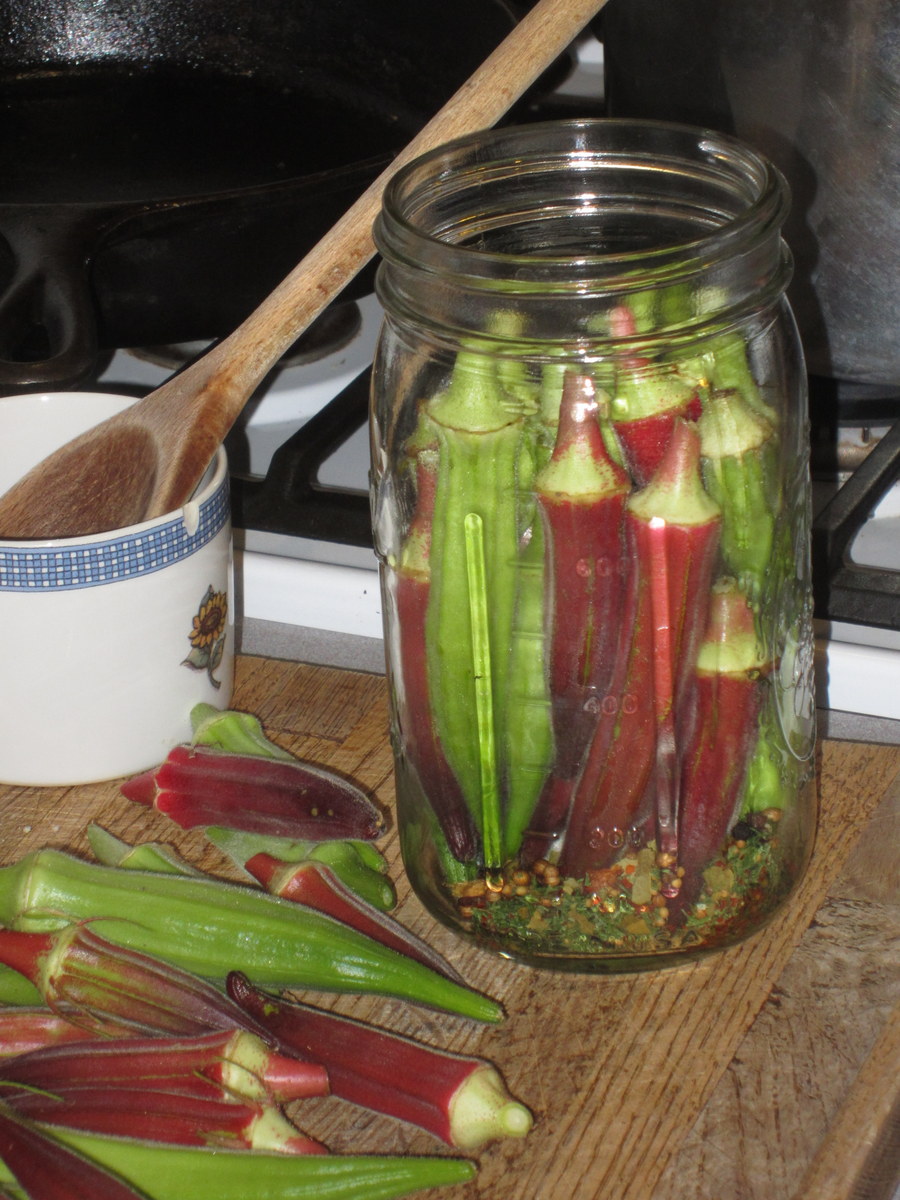
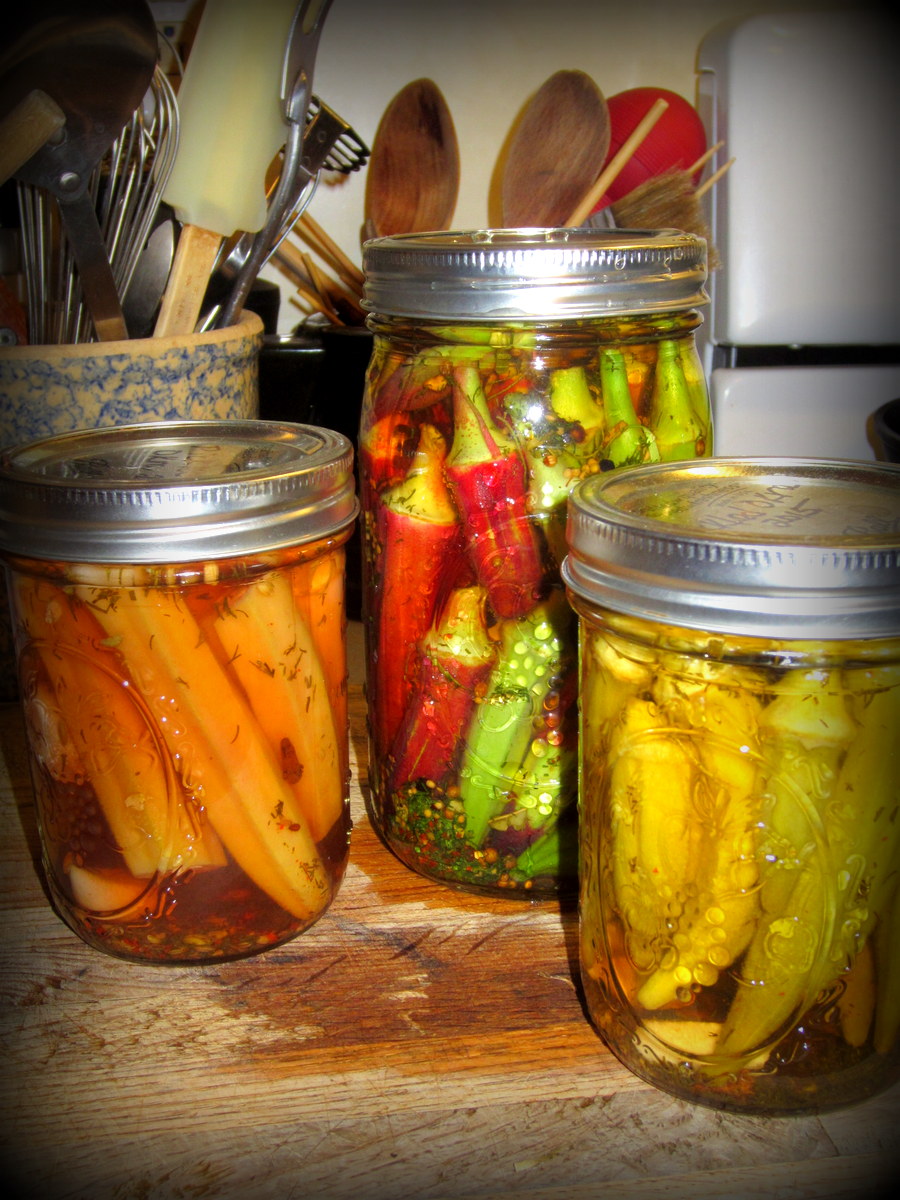
Our favorite way to enjoy our okra is by pickling. I prefer my pickled okra with dill, garlic, pickling spice, hot pepper, red pepper flakes, pickling salt and apple cider vinegar.

2-IMG_0125 6-IMG_0132

Enjoy! Yum!!!

Papa
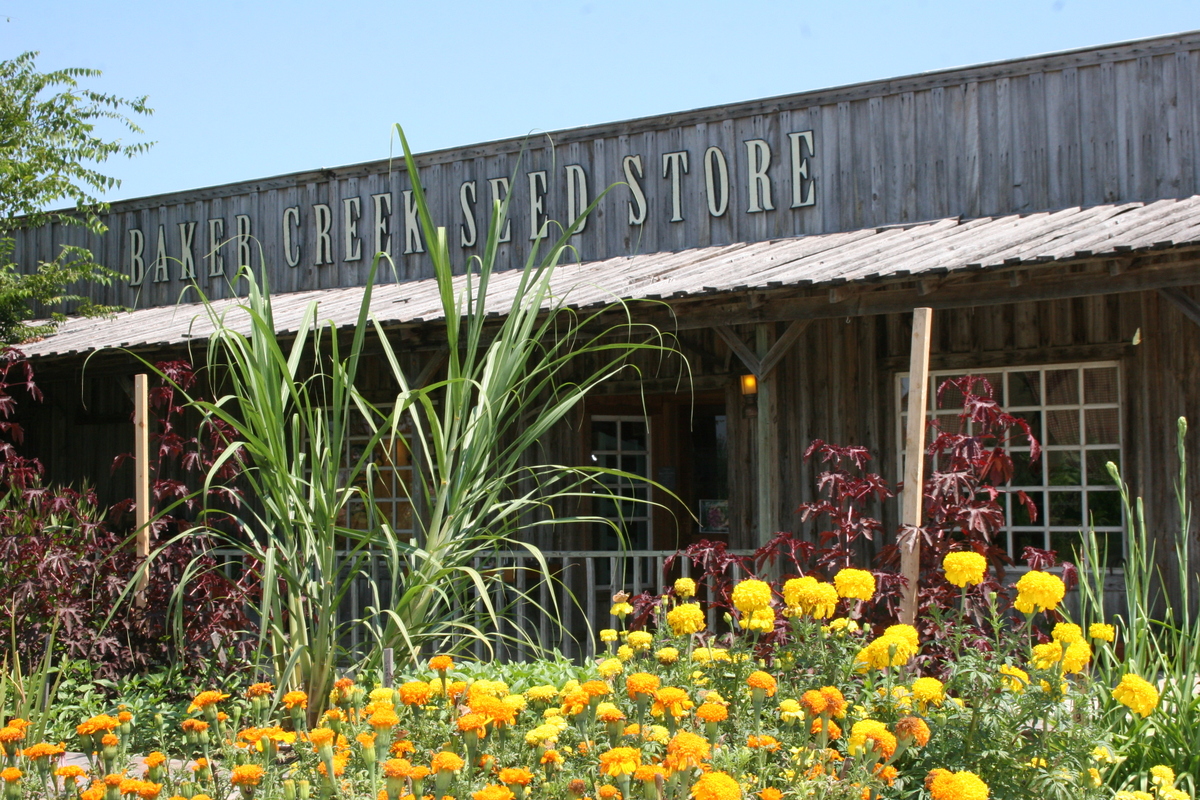
A Summer Stroll at Baker Creek Heirloom Seed Company

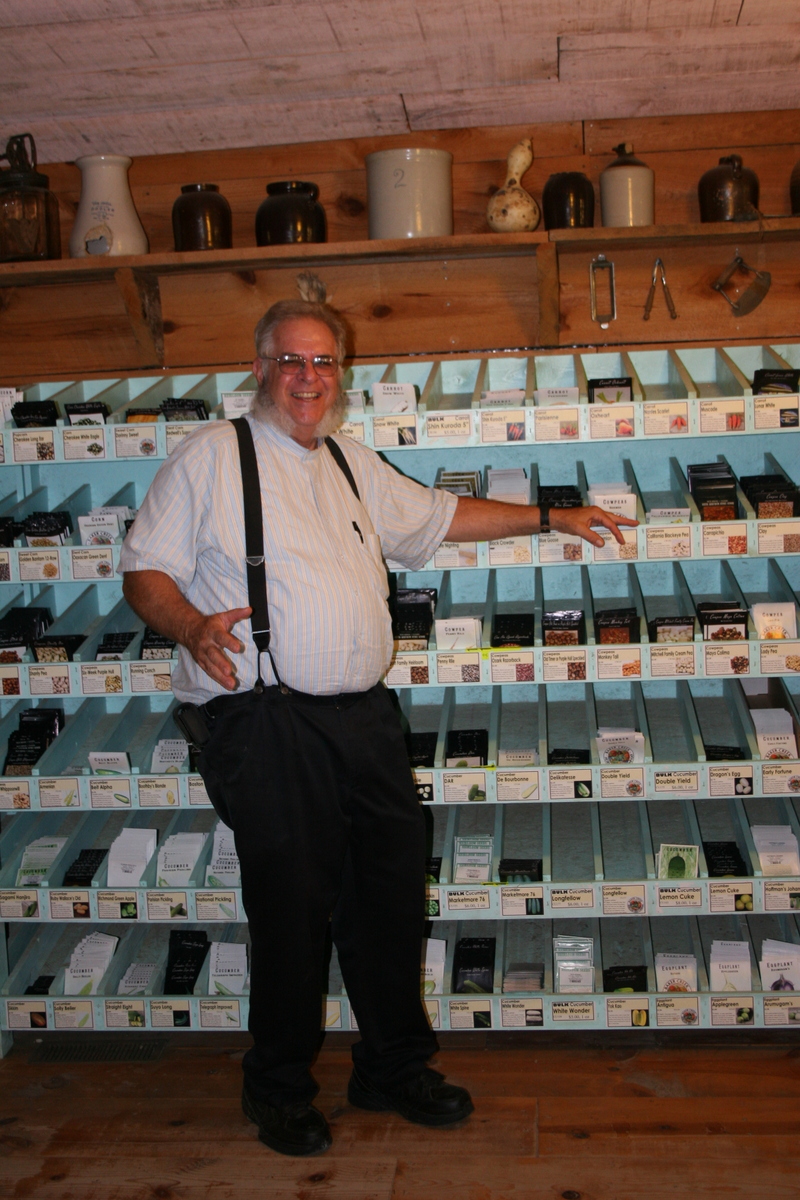
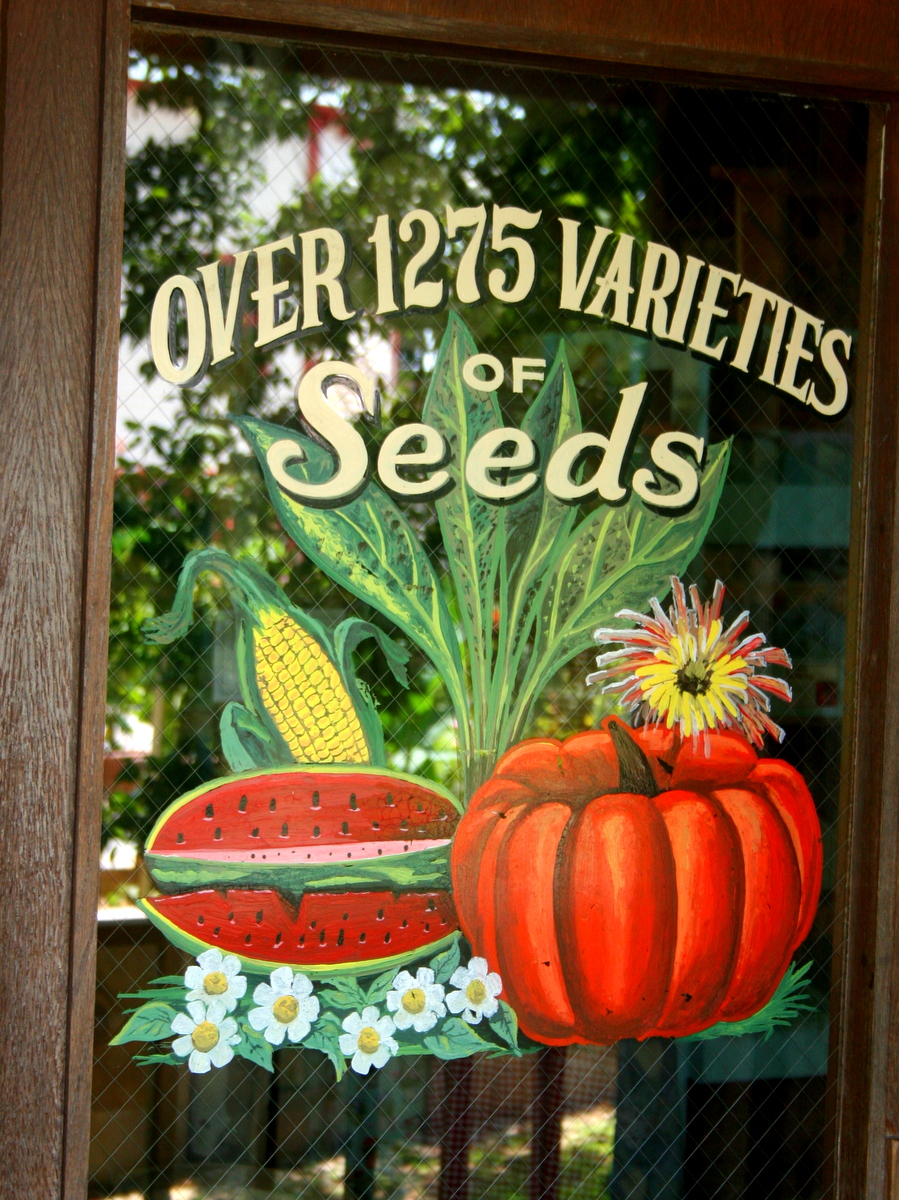
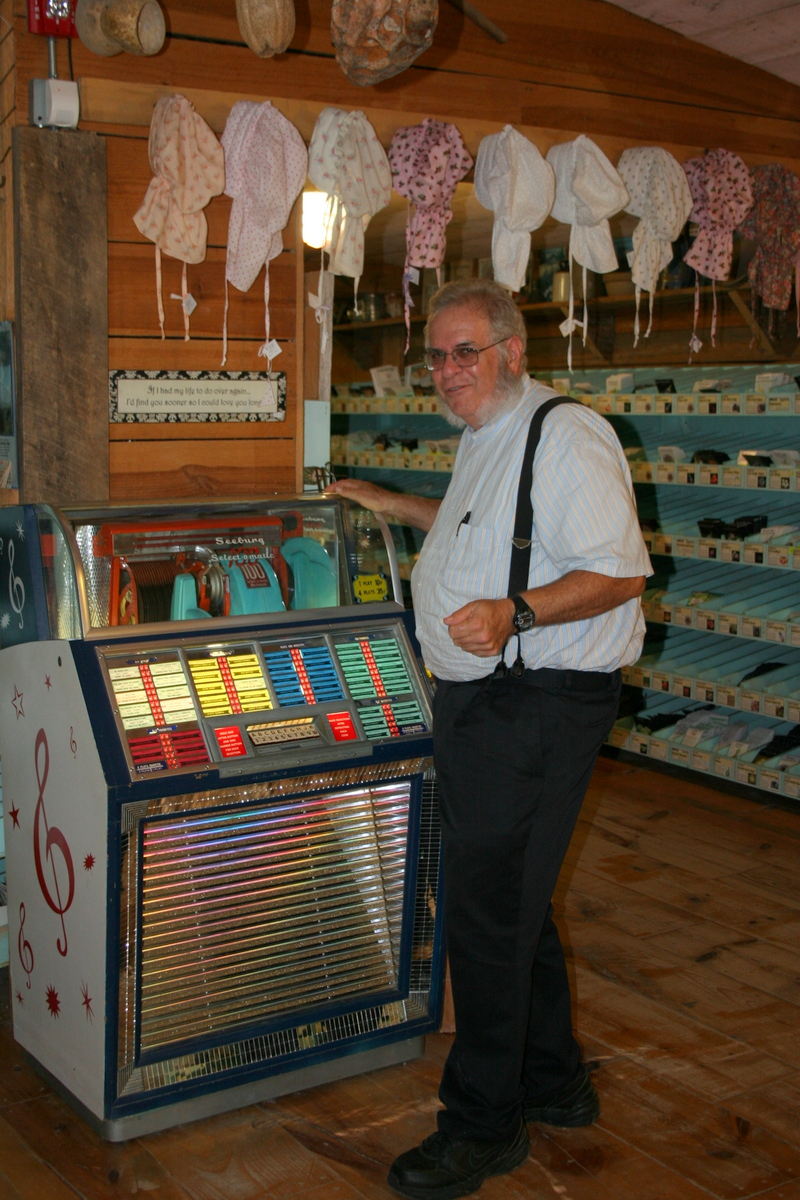
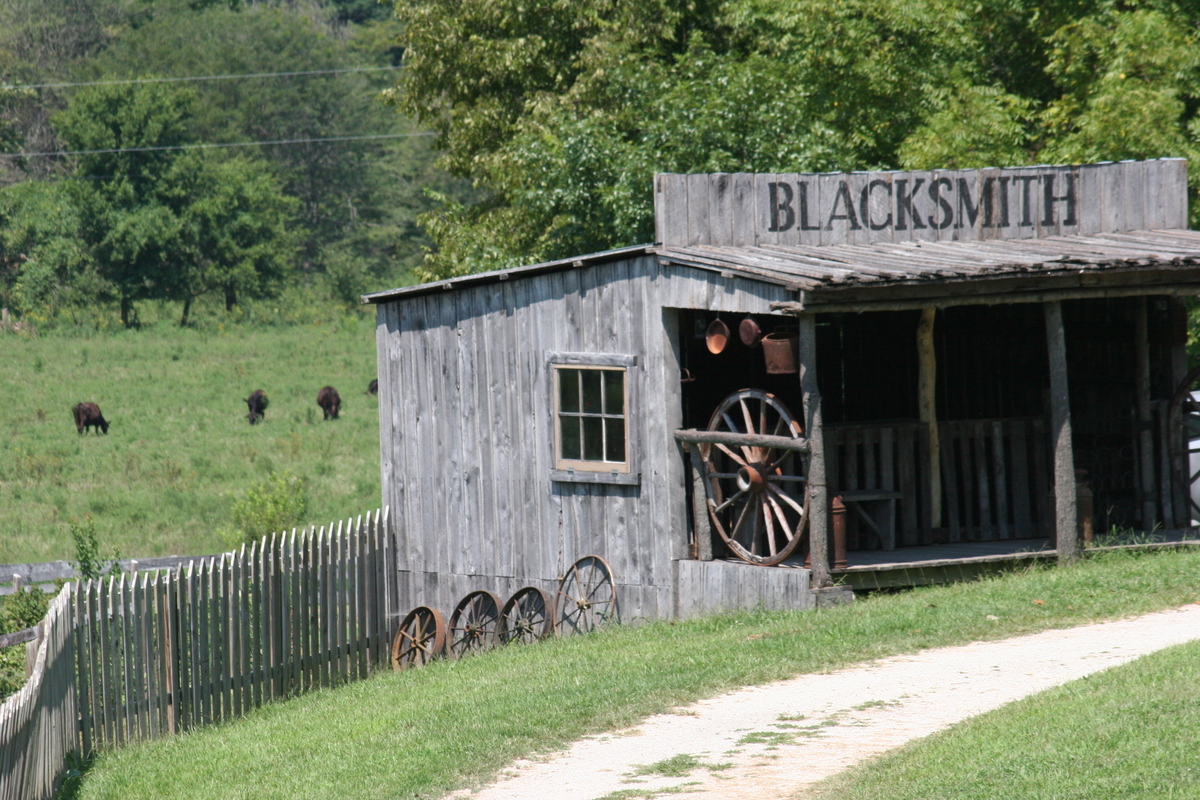
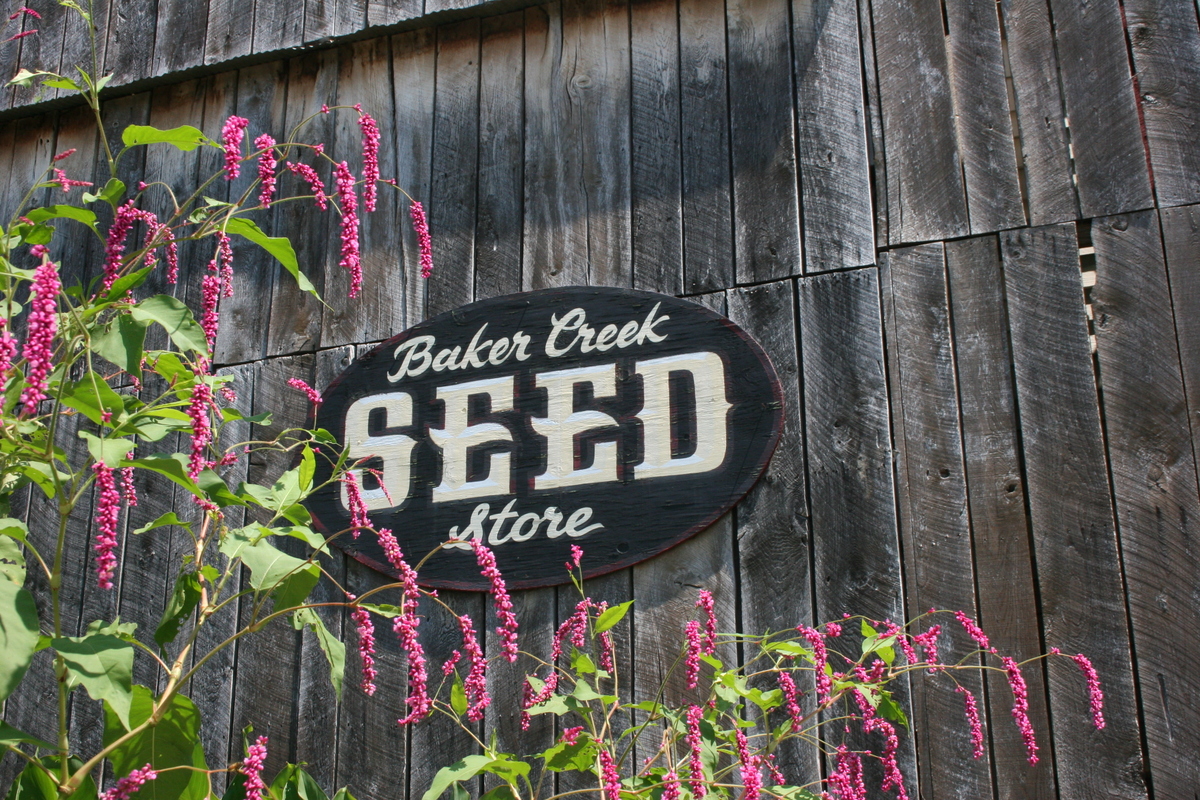
If you are ever near Springfield or Branson, Missouri, you should check out Bakersville Pioneer Village. Home of the Baker Creek Heirloom Seed Company, it offers an amazing Seed Store with over 1700 varieties of heirloom, hard to find seeds, gardening books, hand made items from the local Amish community, and items found in an old time Mercantile.

16-IMG_3194 22-IMG_3098

03-IMG_3130 23-IMG_3204

02-IMG_3121 IMG_3128

05-IMG_3135 19-IMG_3091

There are monthly festivals the first Sunday of each month (March through October) featuring local produce and herbs, Blue Grass and old time country music from local musicians and artisans selling home made soaps, jewelry, quilts and various crafts.

I often speak about Seed Starting or some aspect of gardening in the theater.

The next festival is coming up Sunday, September 6, 2015.

25-IMG_3215 04-IMG_3133

15-IMG_3192 20-IMG_309321-IMG_3096

10-IMG_3176 07-IMG_315012-IMG_3180

The hotel is open as an eatery offering vegan cuisine from produce grown at Baker Creek by our Chef Quintin Eason.

11-IMG_3179 06-IMG_313714-IMG_3187

Enjoy strolling through the gardens of this quaint little “town” and enjoy the flowers in their full summer bloom.

Stop by the Flour Mill (Friday and Sunday) to get the best cinnamon bun you have ever eaten!

18-IMG_319917-IMG_3196

13-IMG_3186 24-IMG_3211

Make sure you stop by the Seed Store and say Hey!

Papa