Question: From – momstheword11
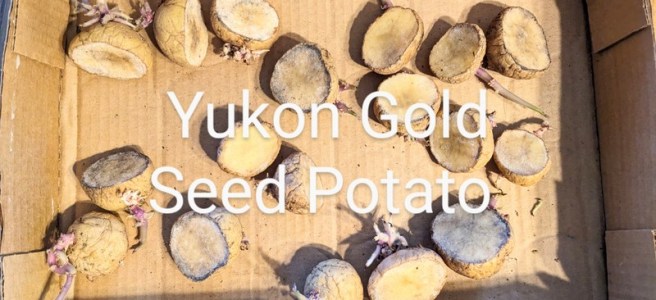
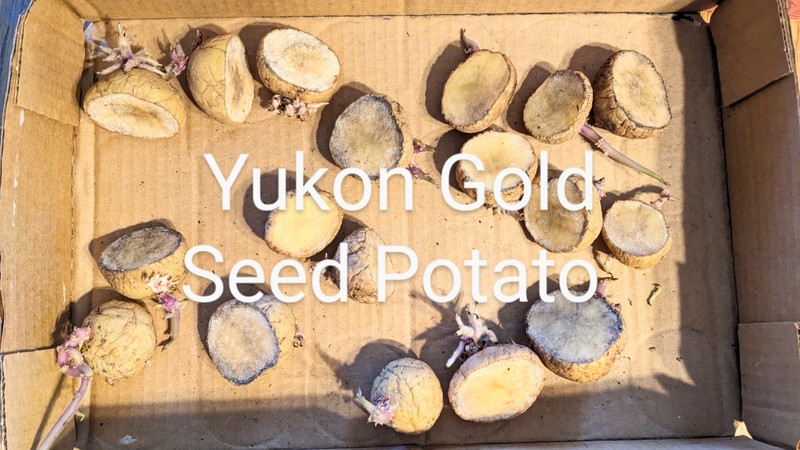
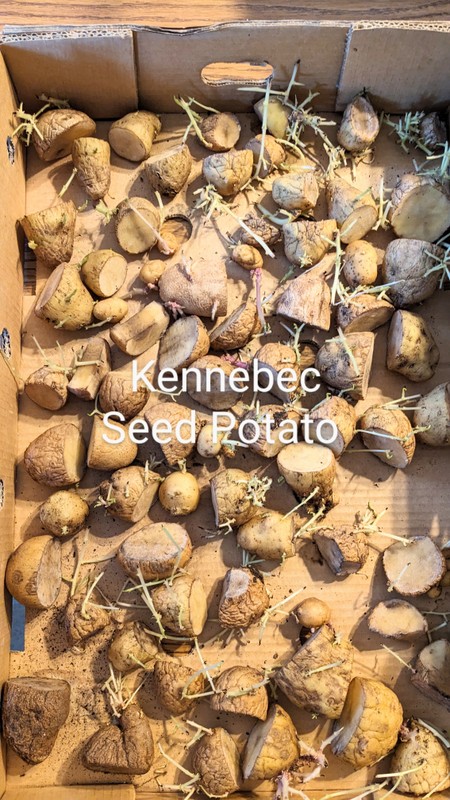
Can anyone tell me please if there is an advantage to not planting them until the cut sides are dry? I heard that it helps to let the cut sides dry? Thanks.

Answer: From Papa


Question: From – momstheword11
Can anyone tell me please if there is an advantage to not planting them until the cut sides are dry? I heard that it helps to let the cut sides dry? Thanks.

Answer: From Papa


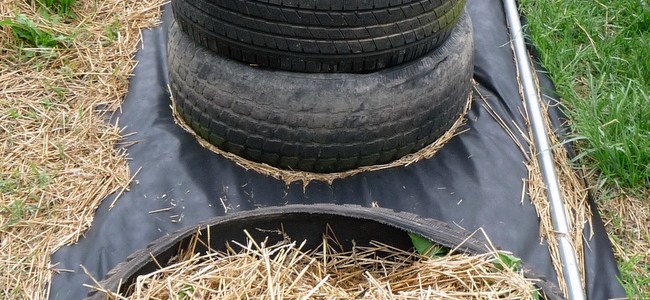
The potatoes are growing. Another layer of tires were added, compost was installed between the growing plants and topped with straw.
The compost used was from last year! Dark and rich with almost no smell!! Hopefully the plants will take off and turn darker green.
Pots of basil and other aromatic herbs will be placed between the tire rings to deter insect pests. Colorado Potato Beetles can be a challenge.
I’ll keep you posted.
Papa
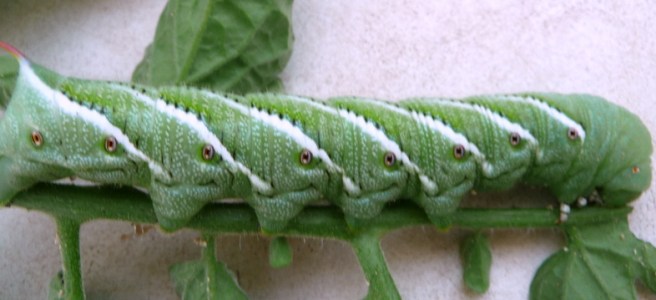
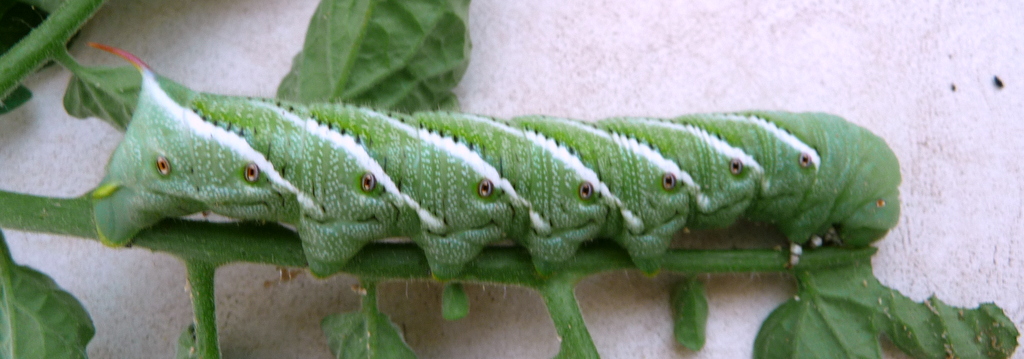
My old nemesis the Tomato Hornworm is back! They certainly are an impressive creature!

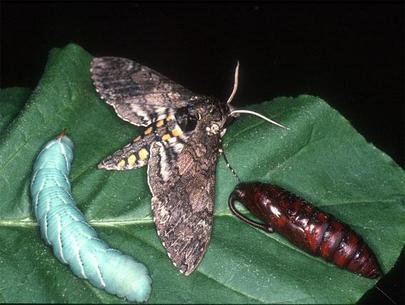
When the Five Spotted Hawk (Manduca quinquemaculata) moth finds a tomato plant, it will lay one or several eggs on the tomato plant. When the eggs hatch, the little caterpillar will eat its egg case and starts to eat like crazy! The caterpillar will molt several times until it becomes mature and ready to burrow in the ground and metamorphize into a chrysalis. By late spring the chrysalis will open and a new moth appears in late spring/early summer. Finally the cycle starts all over again.

It is incredible how fast an almost mature caterpillar can strip a tomato plant. I recommend removing the worms by hand. Usually the creatures are found alone hiding amongst the damage. Beware, there color is a great camouflage! Check out the size of this critter!!
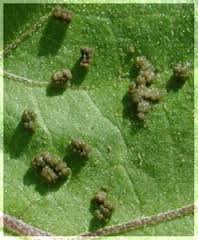
BTW, here is another indicator of their escapades. Giant worm poop!!!

You have to admit, they are amazing!!!!!!
Papa
Last year green beans were out of the question due to a plague of Japanese beetles. This year started out, pretty much the same. I am determined to get a good crop of green beans. To accomplish this feat, I have to get rid of the dreaded Japanese beetles by mid July.
![beetle - Japanese Beetle (Popillia japonica) [MO 06]](https://papas.garden/wp-content/uploads/2015/05/beetle-japanese-beetle-popillia-japonica-mo-06.jpg)
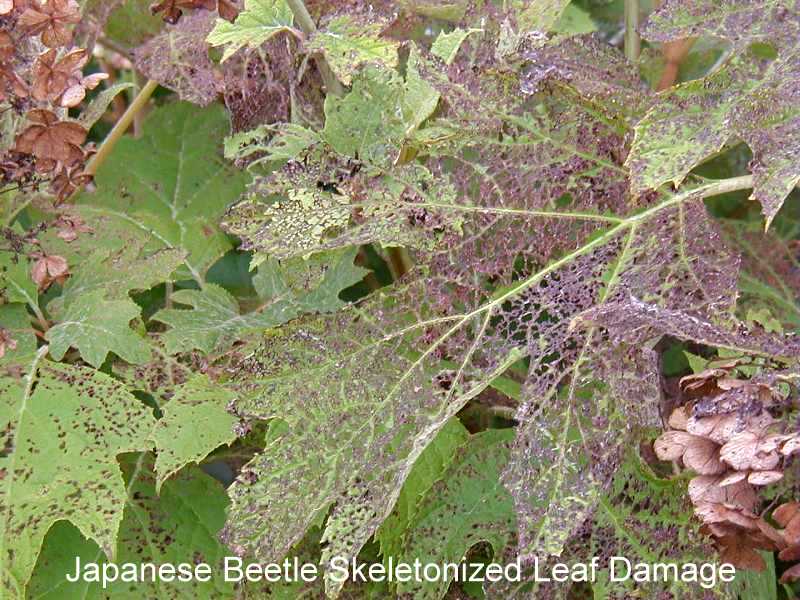
Just look at the damage they do!!
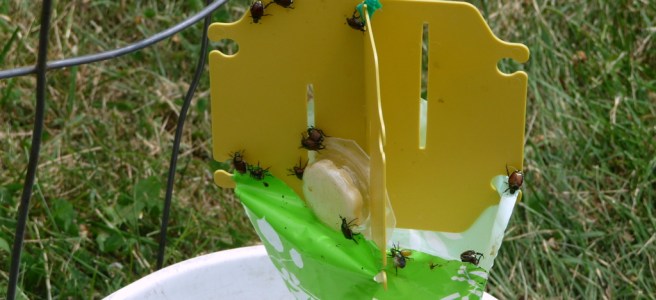
I decided to try Japanese beetle traps. (If you need traps, I can recommend these over on Amazon.com: Japanese Beetle Trap.) The trap consists of two plastic rectangles (holes punched and slotted), pheromone lure, plastic bags and a twist tie. I have made a modification to the collection bag by cutting off the bottom of the bag and suspending the trap in a 5 gallon bucket filled with one to two gallons of soapy water.
The beetles are lured to the pheromone, fall into the bag and drop to the soapy water.
A large tomato cage was used to suspend the trap above the soapy water. I use dish soap vs dish detergent. The soap bio-degrades and is friendly to the environment.
If I used just the bags, I would easily go through three to four bags per day. What a waste! You can use the same bag over and over again. The bucket is emptied once a day. The soapy water kills the beetles within minutes. I toss the dead beetles out in an out of the way place to break down and compost on their own.
The two traps have easily killed thousands of Japanese beetles. YES!!!!!!! I am already seeing a difference. There seems to be fewer beetles.
Papa
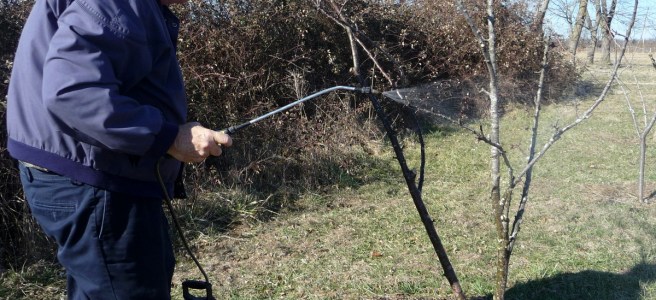
Amazing, 60° (F) on January 15th in the Missouri Ozarks. The flower buds are swelling due to the warm weather. It is definitely time to start spraying your fruit trees.
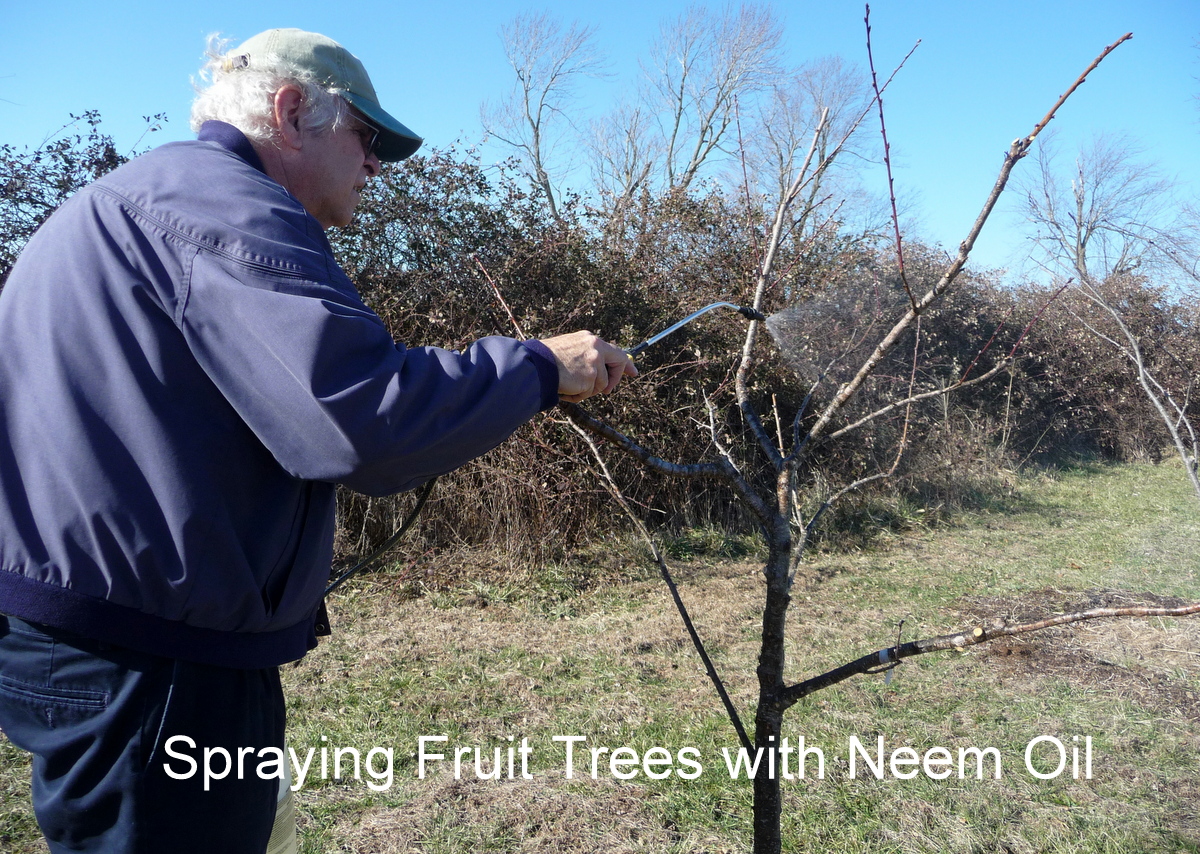
Neem Oil is the perfect choice to spray fruit trees. Neem oil is both a fungicide and an insecticide. 100% Neem Oil tends to solidify in its’ container. Place the container in a bucket with hot water to liquefy the oil to use in a sprayer. Two tablespoons per gallon is the usual rate to get the job done.
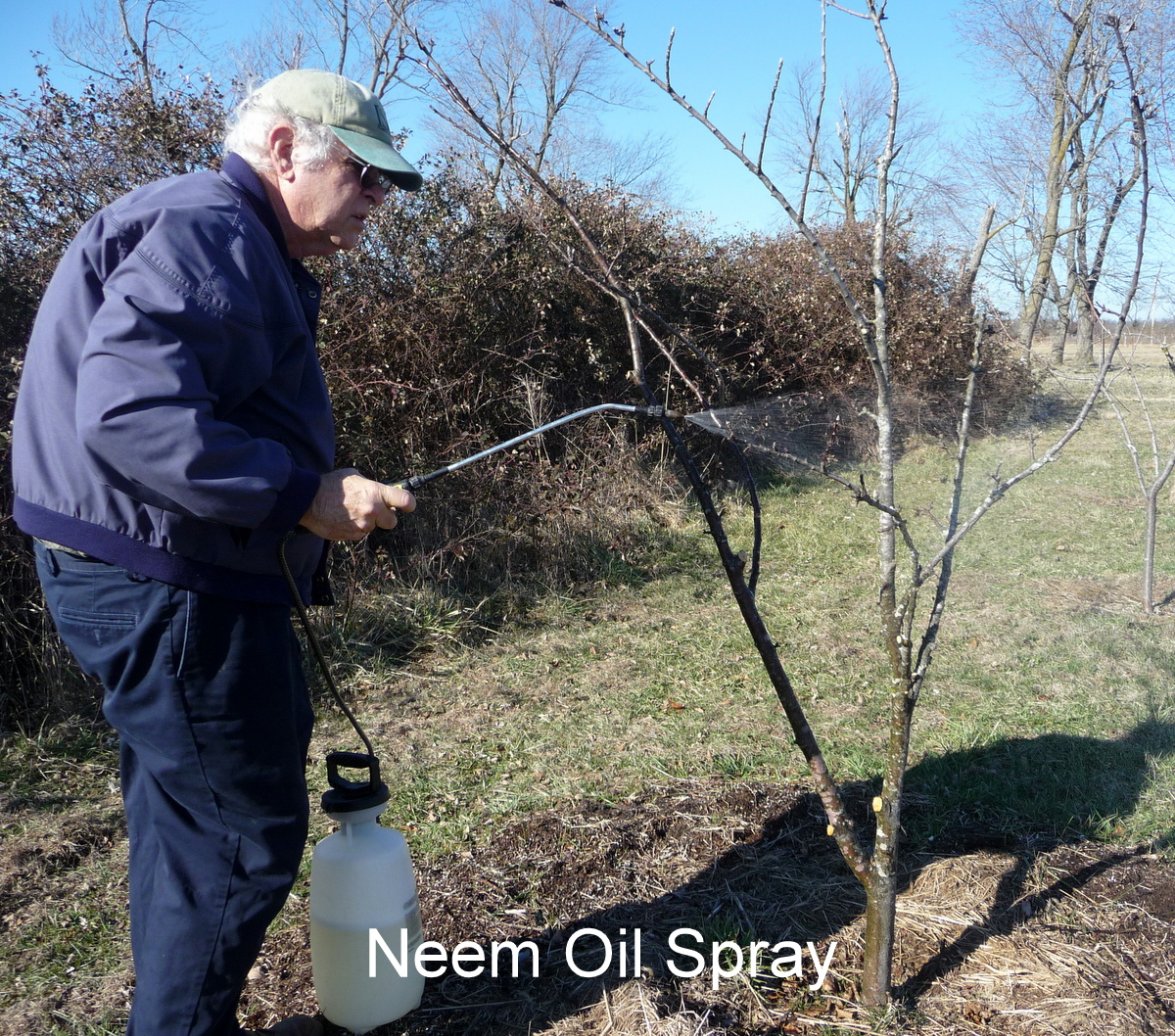
Neem oil is made from the seeds of the Neem Tree (Azadirachta indica). The oil mixed with water and dish soap is sprayed at temperatures below 80° (F). Neem oil has fungicidal and bacteriological properties to either prevent or control certain types of bacteria and fungus.
Neem oil is effective to control fire blight which is a major issue on apple and pear trees.
Neem oil offers good control against powdery mildew, black spot, downy mildew, scab, anthracnose, rust, leaf spot, botrytis, tip blight and alternaria. These are a sample of fungal diseases which plague fruit and ornamental trees.
As an insecticide, Neem Oil is detrimental to aphids, mealybugs, scale, different types of beetles, true bugs and caterpillars by disrupting their growth patterns. Most of the above insects will not reach adulthood and therefore no offspring. The oil itself smothers some of the insects by cutting off their air supply and eliminating insect eggs.
While standing upwind, spray the fruit trees from ground level to the branch tips.
Make sure the entire tree is thoroughly covered to insure control and effectiveness.
In a week to 10 days the trees will be sprayed again, using wettable sulfur.
Continue the process in another 7 to 10 days using elemental copper.
Spraying between intervals with seaweed emulsion and compost tea will strengthen the trees by building up the trees immune systems and handling stress.
The benefit is clear by enjoying healthy fruitful trees!
Papa
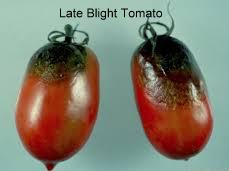
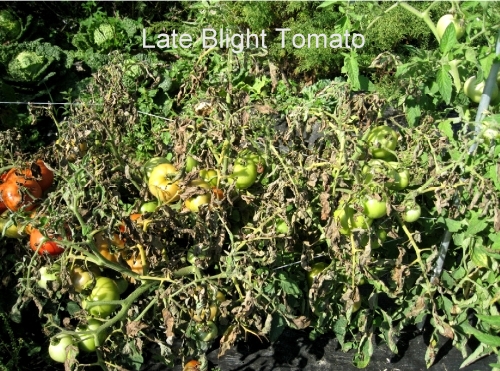
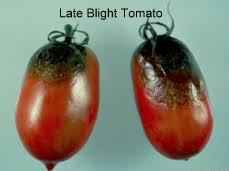
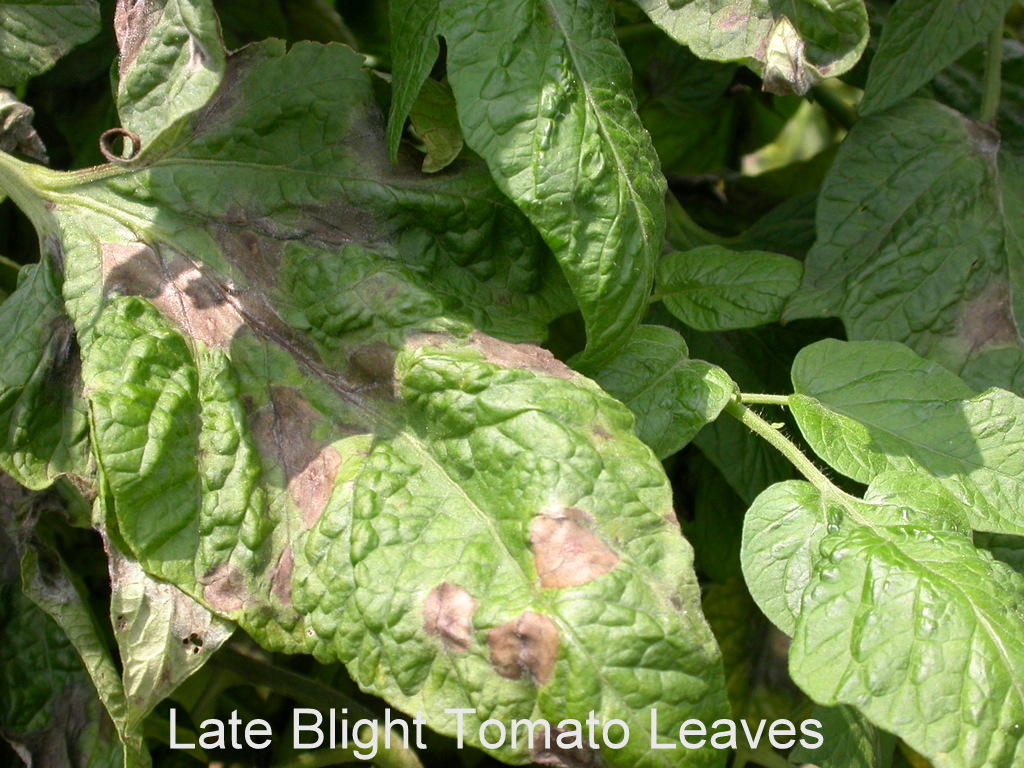
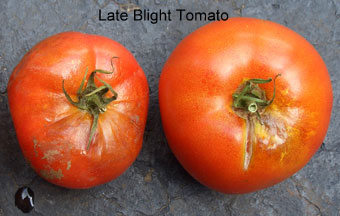
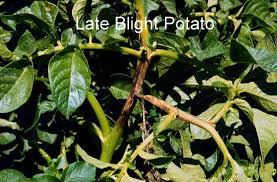
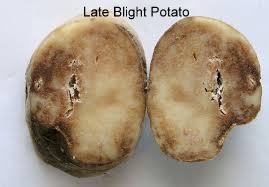
Late blight, which is caused by a fungus Phytophthora infestans, is one of the most destructive and contagious plant diseases directly affecting the fruit and killing the plant. (Phytophthora means ‘plant destroyer’ in Latin)
Late blight spreads like a wildfire. This fungus produces spores in abundance and with the help of moist wind they will travel up to 30 miles. It is imperative to destroy infected plants as soon as possible as this disease is easily spread.
This disease shows up in late summer as the hot and warm humid days may be followed by cool and moist nights with accompanying rain, fog and heavy dew. This is a indicator to the home gardener to become watchful for the signs of late blight.
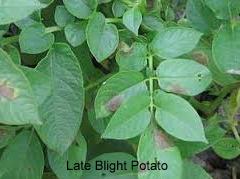
What to look for:
Can this disease be prevented?
Are there blight resistant tomatoes?
An article in growveg.com (January 17, 2014) by Barbara Pleasant offers a list of 9 blight resistant tomato varieties offering excellent to very good resistance.
They are:
Are there blight resistant potatoes?
Harvesting potatoes:
Harvesting tomatoes:
A photo gallery of this disease: http://www.hort.cornell.edu/lateblight
Cleaning the garden of all living debris, tomatoes and potatoes is essential. Burn or bag this debris for disposal. Do not compost. Again, this is a very contagious disease.
Is there a cure?
Late blight has been with us a long time. The potato famine in Ireland of 1845 was caused by late blight. As you have read this disease is highly contagious and your daily observations are necessary to spot the symptoms and act accordingly.
Papa
.
I just uploaded a new video documenting how to make and install floating row covers.
Supplies you will need:
Low tunnels using floating row covers is of great benefit for several reasons.
This is another method and tool for your gardening arsenal!!!
Papa
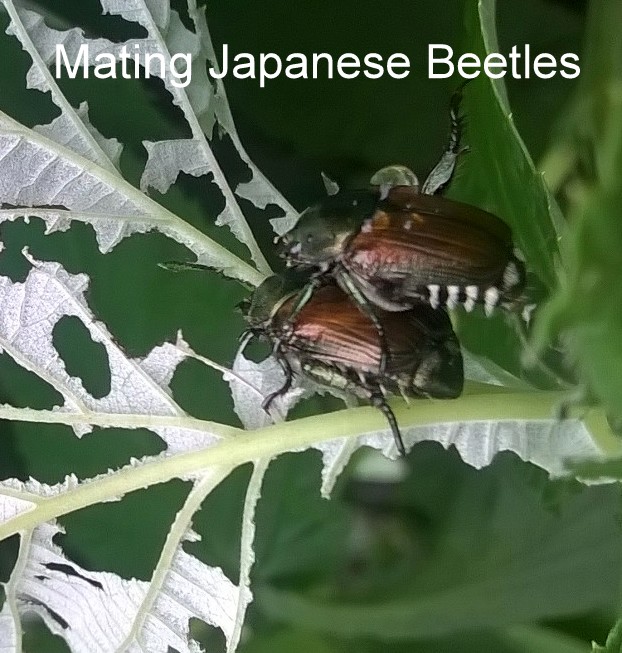
These beautiful creatures have metallic green bodies with copper colored wings. They are 3/8 inch long and 1/4 inch wide. Japanese beetles are quite unique!
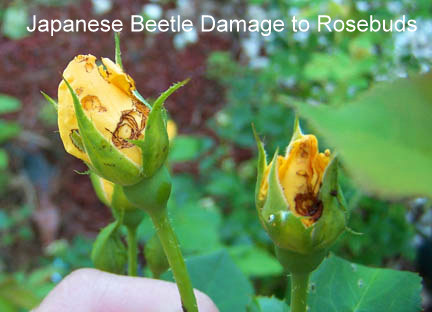
It is amazing the damage these imported invaders can do!
This is damage from one or two beetles. Imagine what a few dozen can do!
Japanese Beetles (Popillia japonica Newman, 1841) came to our shores in 1912 on Japanese iris.
Stages of development are as follows:

The most effective natural control of Japanese beetles is daily, hand picking early in the morning as the beetles are lethargic.
Prevention: Kill grubs in the soil which turn into the Japanese beetle.
Both of the above methods are encouraged by the USDA and several well known universities as a safe and effective means to control Japanese beetles. These biological controls are species specific!! There are no other creatures affected by these methods.
Just remember you may have great prevention measures but your neighbors may not. Japanese beetles are with us for short 30 -50 day window. Killing them early may reduce the populations in your immediate area!
Birds are another way to deal with these nasty pests. They eat both the beetles and their grubs.
Sanitation is a wonderful way to rid your self of these pests. Clean up all debris around their favored plants. Till in the fall to expose the grubs for birds and other creatures to consume. Till again in the spring to again expose the pupae and emerging adult beetles.
Be diligent and decrease their surplus population!
Papa
Now is the time for those pesky mosquitoes. I don’t want to use all those nasty chemicals. There has got to be an alternative!
There are natural ways to rid yourselves of the mosquito nuisance. Let’s explore the options:

These products may be purchased at the big box stores, garden centers and online.
* OMRI Listed: The Organic Materials Review Institute (OMRI) is a national nonprofit organization that determines which input products are allowed for use in organic production and processing. OMRI Listed—or approved—products may be used on operations that are certified organic under the USDA National Organic Program.
Now go get them!
Papa
I get many questions regarding the use of biological caterpillar (worm) spray. There are many misconceptions about how this valuable tool is used. Let’s clear the air! Bacillus thuringiensis var. kurstaki or Bt was discovered back in 1901. The name of the bacteria was given in 1911. I’ll not bore you with the rest of the history.
Suffice it to say, due to the use of synthetic pesticides, many were concerned about the toxicity and environmental issues. Fast forward to the 1980s. Bt became essential as an alternative to toxic pesticides. The effectiveness of Bt is remarkable to say the least. The bacteria with its crystalline toxins attack the gut of caterpillars and destroy the creature from within. When used on a frequent basis, it is almost 100% effective. It is totally safe for humans, pets, birds, fish, pollinators and beneficial insects. Bt may be sprayed up until the time of harvest!! Bt is no longer viable or effective after continued exposure to ultra-violet light and water.
The greatest misconception involves the insertion of the Bt genetic material into the seed germ. The Bt GMO* ready corn or potatoes has Bt as an internal mechanism to kill caterpillars. The agri-business companies use other genetic materials (from other bacteria and viruses) to potentiate the Bt gene. This really is scary stuff!!!
The externally sprayed Bt material is completely safe. It is not systemically part of the plant. Whereas, a Bt GMO* ready crop has the insecticide in all parts of the plant. This GMO creation was made for convenience and to save money. No one can say for sure what are the long term effects!!!
I started using Bt in 1978. Up until that time, my broccoli plants were full of caterpillars. I remember being served some broccoli, only to find dead worms on my plate. Ugh, nasty! Once I used Bt, there were no more worms!!! It really does work!! Plus, it is very cost effective and safe to the environment.
*GMO – Genetically Modified Organism – “A GMO is a plant or animal that has been genetically modified through the addition of a small amount of genetic material from other organisms through molecular techniques. Currently, the GMOs on the market today have been given genetic traits to provide protection from pests, tolerance to pesticides, or improve its quality. Examples of GMO field crops include Bt-potatoes, Bt-corn, Bt-sweet corn, Roundup Ready soybeans, Roundup Ready Corn, and Liberty Link corn.” University of Kentucky Entomology
Papa