Floating Row Covers? Let’s Learn How!

I just uploaded a new video documenting how to make and install floating row covers.

Supplies you will need:

  • Rebar – 3/8″ x 10′, cut into 5 – 2′ lengths
  • Electrical PVC – 1/2″ diameter pipe x 9′
  • Floating Row Cover fabric
  • Angle Cutter or equivalent for cutting lengths of rebar
  • Hack Saw or PVC Pipe Cutter
  • Gloves and Safety Glasses

Low tunnels using floating row covers is of great benefit  for several reasons.

  • Floating row cover is a light weight, breathable fabric that allows air, moisture and sunlight to pass through the material.
    • There are various fabric weights to meet different needs.
      • Agribon 15 is lightweight fabric that is used for insect protection and shading.
      • Agribon 50 is a heavy cloth used for freeze and frost protection. This cloth will protect a crop down to 26° (F)
  • Insect protection – when properly sealed, insects cannot penetrate the covering which protects the crop from damage and disease.
    • Problem insects such as Japanese beetle, squash bugs, squash vine borer, cucumber beetles and flea beetles are blocked from doing their usual mayhem.
  • Isolation chambers – Low tunnels are ideal for seed saving of crops such as squash, pumpkin, melons and watermelons. Bumble bee hives may be inserted at one end of the enclosure to insure proper pollination. Plus, there is not a chance of cross pollination. You may grow several varieties side by side. That is a huge advantage.
  • Season extension – row covers placed over a crop will allow for early planting by trapping 2° – 8° (F) higher temperature. Likewise using a row cover late in the season will protect the crop from early frost. By using this method you can easily extend your growing season by one month!!!!
  • Hoop houses, high tunnels and greenhouses – row cover gives added protection and benefits the grower with lower fuel costs. The insulatory value of the row cover will block some of radiant cold that may damage a crop.

This is another method and tool for your gardening arsenal!!!

Papa

Little or No Flower Heads On my Broccoli! Huh?

I’ve grown broccoli for the last two years and all I get are huge plants with either little or no flower heads. What seems to be the problem?Broccoli

Timing is key!! Broccoli likes to stay cool.

Causes of no or poor flower heading:

  • Alternating periods of abnormal high temperatures followed by abnormal low temperatures stresses the plant  and causes heading to come to a complete halt.
  • Stress brought on by drought or inadequate moisture.
  • Excessive nitrogen can cause huge healthy plants with little or no head production.
  • Transplanting too late with root bound plants will keep the broccoli from heading.
  • Transplants when exposed to temperature of 40 degrees and below for 1 – 2 weeks triggers heads to form too early or not at all.
  • Transplants not properly hardened off will be stressed and perform poorly. http://papasgardens.com/2015/04/24/what-does-it-mean-to-harden-off-seedlings/
  • Overcrowding results in either little or no head formation due to competition for adequate water and nutrient.

Prevention:

  • Proper timing of transplanting for your specific area. Your County Cooperative Extension Service will supply the dates for planting.
  • Proper planting of transplants 2 feet apart.
  • Even supply of moisture. Drip irrigation is best.
  • Balanced nutrition/fertilization. Avoid excessive applications of nitrogen.
  • Proper hardening off of transplants.
  • Cover planting when temperatures drop below 50 degrees. Low tunnels with floating row cover or cloches will provide protection. Drawing low tunnels
  • plastic-bottle-clochesPlant in Fall.
    • Decreased pest pressure.
    • Plants are usually stronger. The flower heads are bigger.
    • Plants grow better into cooler weather.
    • Sow seeds for transplants 10 – 12 weeks before first frost.
    • Set transplants 2 feet apart for extended season planting.

Broccoli are sensitive to their environment. When treated with care, they will reward you!

Papa

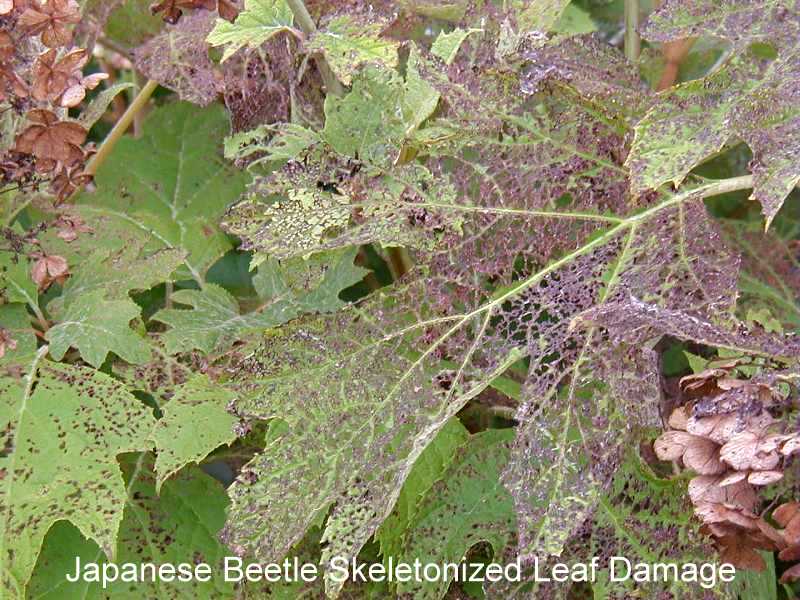
Skeletonized Leaves? Rosebuds with Chewed Petals? = Japanese Beetles (Popillia japonica Newman, 1841)

These beautiful creatures have metallic green bodies with copper colored wings. They are 3/8 inch long and 1/4 inch wide. Japanese beetles are quite unique!

beetle - Japanese Beetle (Popillia japonica) [MO 06]

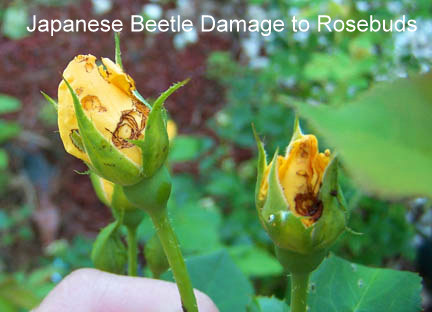
It is amazing the damage these imported invaders can do!

WP_20150616_09_21_40_Pro       beetlerose

This is damage from one or two beetles. Imagine what a few dozen can do!

OLYMPUS DIGITAL CAMERA

Japanese Beetles (Popillia japonica Newman, 1841) came to our shores in 1912 on Japanese iris.

Stages of development are as follows:

  • Egg
  • Larvae (white grub)
  • Pupae (grub transforms into a cream colored/reddish brown cocoon)
  • Adult beetle emerge from soil May through June. It is a voracious eater for 30 to 50 days.
    • Once emerged it searches for food sources.
    • A pheromone (a scent produced by Japanese beetles to attract other Japanese beetles) is sent out to help other Japanese beetles find the food source.
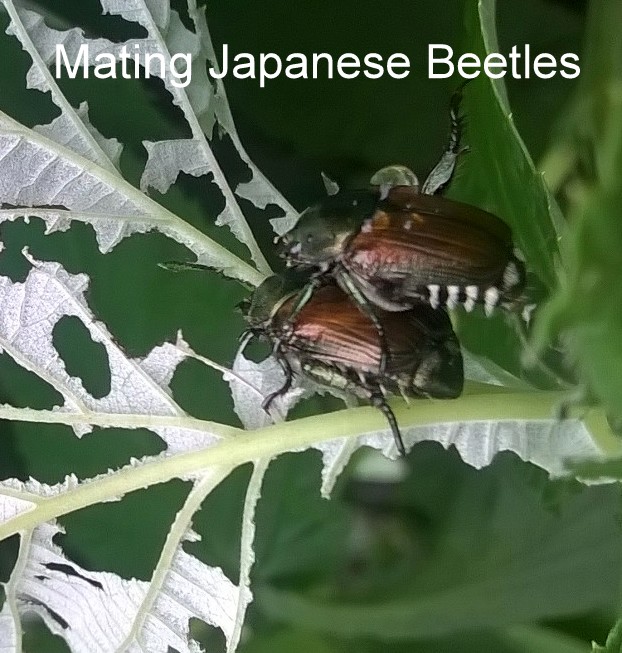
    • Mating is soon to occur.
    • WP_20150616_11_41_10_Pro
    • Females feed for a few days on a plant food source and burrow 3 inches into the soil to lay eggs.
  • Once the eggs are laid the females emerge again to feed, mate and lay eggs again.
    • This cycle is repeated until their season is over, laying upwards to 40 to 60 eggs.
  • Eggs develop depending on soil temperature. The warmer the soil the quicker larval development.
  • Once they are larvae, they move upwards in the soil to feed on organic matter and roots.
  • Soil cooling moves the larvae (grubs) deeper in the soil for winter.
  • Soil warming moves the grubs upwards in the soil where they pupate and transform into an adult Japanese beetles and their life cycle begins again.

japanese beetle life cycle

The most effective natural control of Japanese beetles is daily, hand picking early in the morning as the beetles are lethargic.

  • Your arsenal of weaponry includes a bucket, soapy water and vigilant monitoring daily!
    • Early detection of the scout Japanese beetles is key to this strategy! This will reduce the following years population!!!
  • Place the bucket under the infested plant. Shake the plant and the beetles will fall into the soapy water.
    • Hand pick any beetles not falling into the bucket of soapy water.
  • This action reduces the pheremones of the exploratory first wave of Japanese beetles. This must be done daily!!
  • Leave the beetles to die and decompose in the bucket of soapy water. The odor of dying and decomposing beetles in the soapy water will repel/deter additional beetles from invading your area. (Many thanks to The Herb Gardener for this insight)
  • Place the bucket(s) near areas of previous Japanese beetle attack.
  • Insecticidal soap applied directly to the beetle will cause its demise.
  • Lemon dish soap sprayed directly on the beetle is another effective way to kill these pests!

Prevention: Kill grubs in the soil which turn into the Japanese beetle.

  • Milky Spore Disease (Bacillus popillae) will kill grubs but will take up to a year to inoculate the soil. This inoculation will last up to 10 years in the areas of heavy, consistent infestations.
    • Milky Spore when ingested in the grubs gut germinate, enter the blood and multiply.
    • The build up of spores causes the grub to have a milky white appearance.
    • Grubs continue to ingest the spore, become infected and die, each releasing 1 – 2 billion spores back into the soil.
      • Apply as labeled. May be purchased through biological mail order catalogs.
  • Beneficial nematodes actively seek out grubs in the soil.
    • The nematodes penetrate the grub releasing a bacteria.
      • This bacteria produces quickly feeding on the tissue of the grub.
      • The nematodes feed on the bacteria and continues their life cycle. They reproduce, release bacteria and kill the grubs.
      • Apply as labeled. May be purchased through biological mail order catalogs.

Both of the above methods are encouraged by the USDA and several well known universities as a safe and effective means to control Japanese beetles. These biological controls are species specific!! There are no other creatures affected by these methods.

Just remember you may have great prevention measures but your neighbors may not. Japanese beetles are with us for short 30 -50 day window. Killing them early may reduce the populations in your immediate area!

Birds are another way to deal with these nasty pests. They eat both the beetles and their grubs.

  • Bobwhite
  • Eastern Kingbird
  • Crows
  • Eastern Starling (I knew there must be something good about these birds)
  • Red-winged Blackbirds
  • Catbirds
  • Song Sparrows
  • Robins
  • Grackles (Again, I knew there must be something good about these birds!)

Sanitation is a wonderful way to rid your self of these pests. Clean up all debris around their favored plants. Till in the fall to expose the grubs for birds and other creatures to consume. Till again in the spring to again expose the pupae and emerging adult beetles.

Be diligent and decrease their surplus population!

Papa

The Time is Now for Kimchi!!!

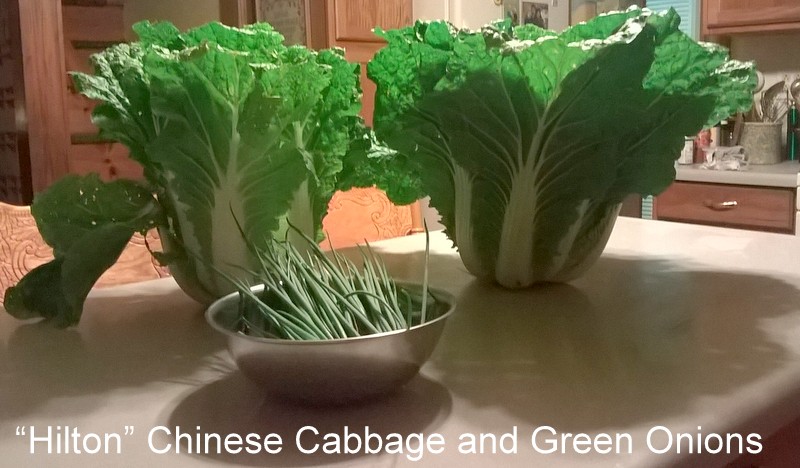
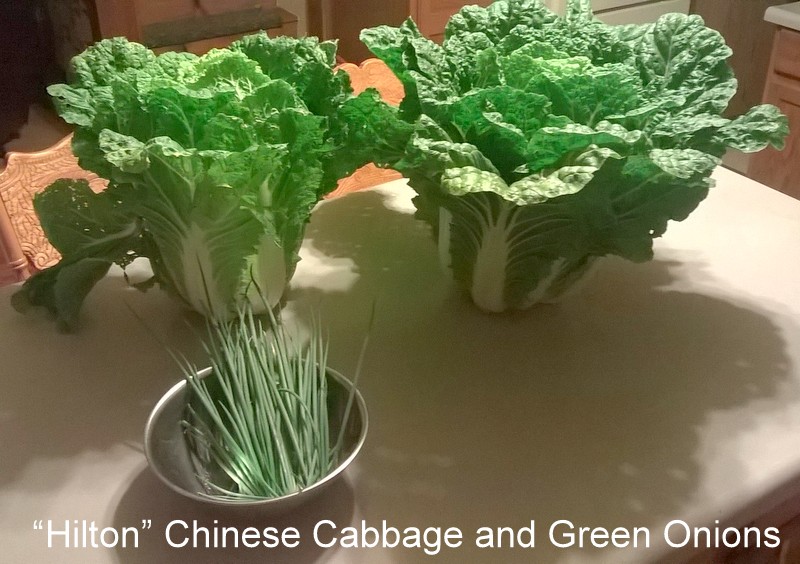
The “Hilton” Chinese Cabbage is in the house! It’s Kimchi time!!


WP_20150617_20_07_35_Pro WP_20150617_20_07_59_Pro

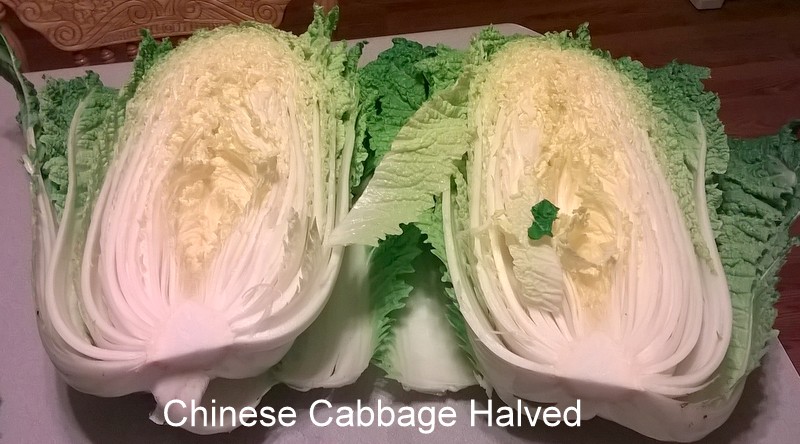
The big cabbage is 18 inches wide and 16 inches tall. They are gorgeous! Check out this cross section!

WP_20150617_20_42_02_ProNow the fun begins!!

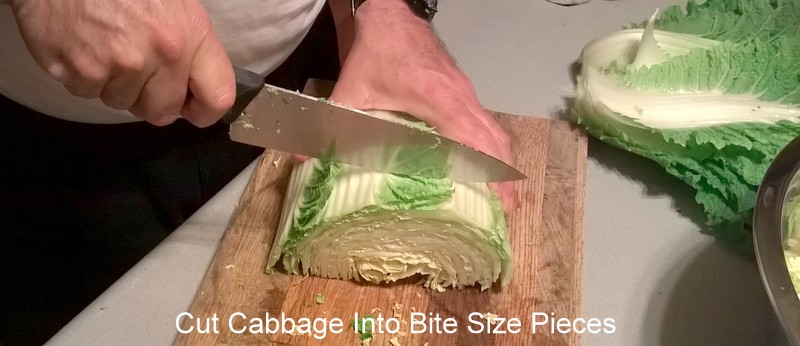
First cut the cabbage width wise in 2 inch strips.

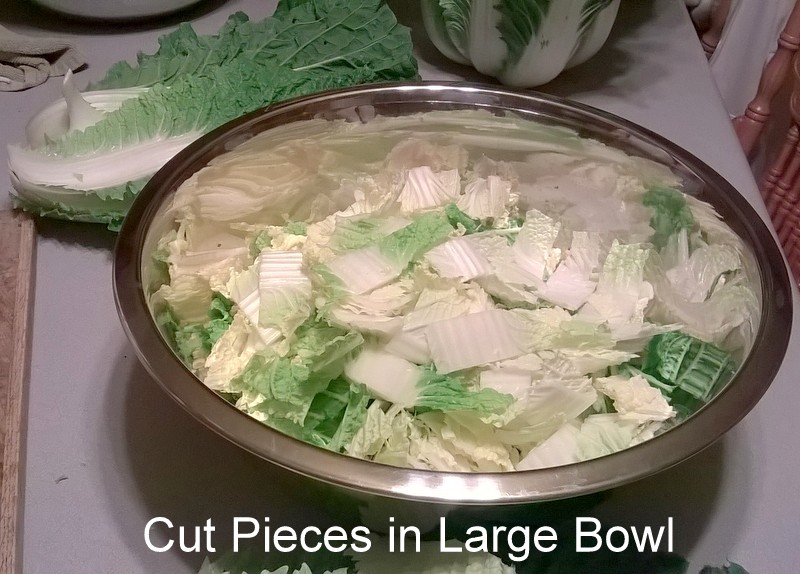
Next, cut the strips into bite size pieces.

Place bite size pieces in a large, non-corrosive bowl.

WP_20150617_20_50_15_ProWP_20150617_20_50_31_Pro

WP_20150617_20_50_48_Pro

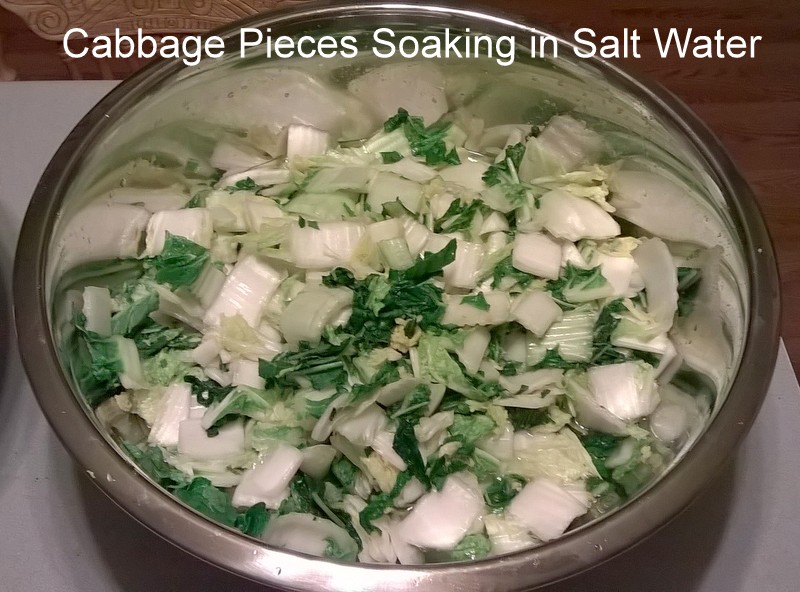
Add Kosher/pickling salt to warm water and pour over the cabbage. This brine wilts the cabbage and starts the fermentation process.

The covered bowl sits for 12 hours prior to rinsing with water.
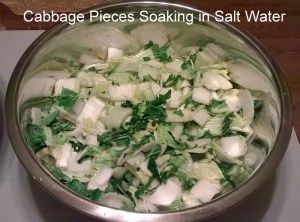
WP_20150617_21_51_49_Pro

Prior to rinsing the cabbage, it is wise to prepare the additional ingredients.

Pare green onions to 1 1/2″ to 2″ lengths and place aside.

Mince several tablespoons of garlic and place aside.

Mince a few tablespoons of fresh ginger and place aside.

Pare Daikon radish into 2″ match stick size pieces and place aside.

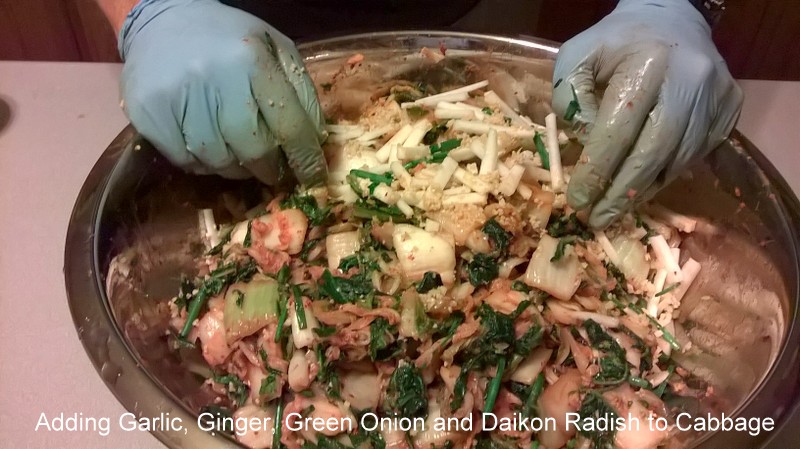
Combine green onions, garlic, fresh ginger and Daikon radish with the rinsed cabbage in a non-corrosive bowl.
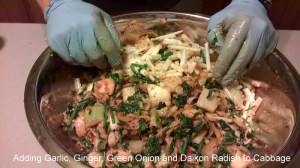
WP_20150618_07_15_39_Pro

Add warm water to chili flakes and make into a paste.

WP_20150618_06_54_54_Pro

I strongly recommend you wear latex or nitrile gloves prior to mixing chili paste with the cabbage. Otherwise, your hands will become glowing hot!!

Mix the chili paste with the cabbage, green onion, garlic, fresh ginger and Daikon radish. Mix thoroughly!!

WP_20150618_07_05_16_Pro

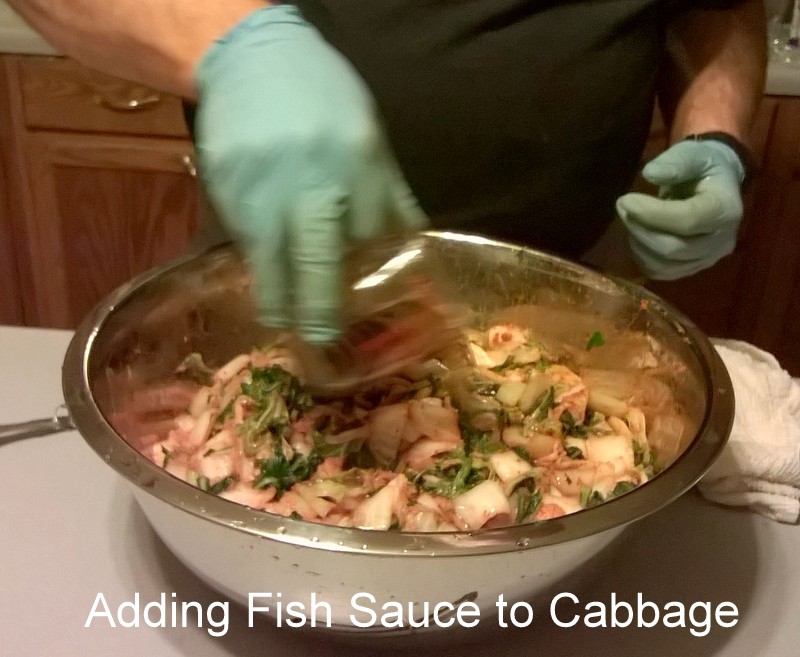
Add fish sauce, shrimp paste and sugar to the cabbage mixture.
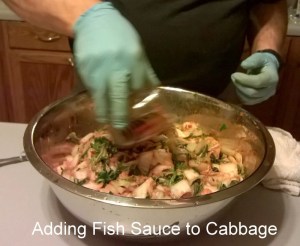
WP_20150618_07_09_40_Pro

Mix thoroughly!

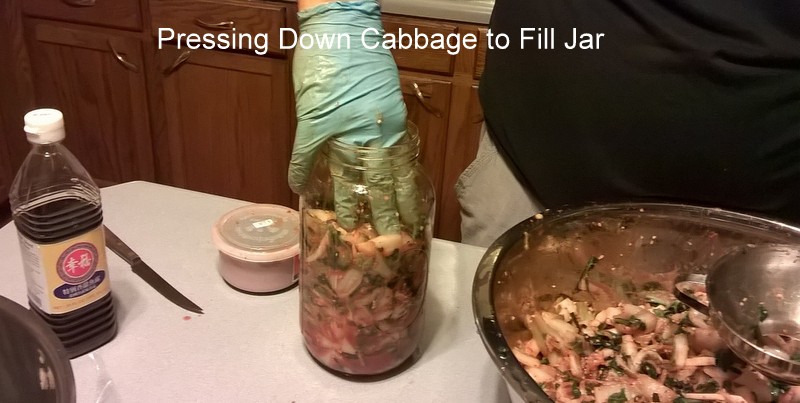
Place cabbage mixture into sterilized glass jars, packing tightly, leaving a 2″ head space.

WP_20150618_07_17_45_Pro     WP_20150618_07_18_52_Pro

Here is the finished product!

WP_20150618_07_29_02_Pro

Let rest for 24 hours at room temperature.

Refrigerate up to 30 days. Enjoy with rice, in soup, stir fry or as a side dish.

Bon Appetit!!

Papa

For Great Kimchi You Need Chinese Cabbage!

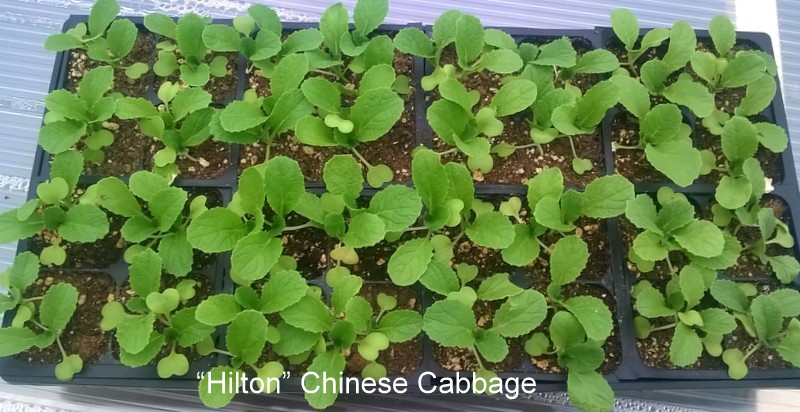
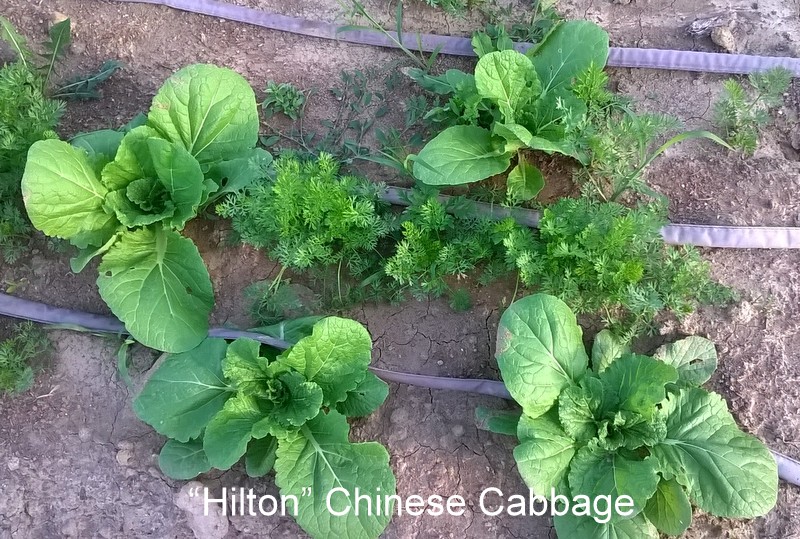
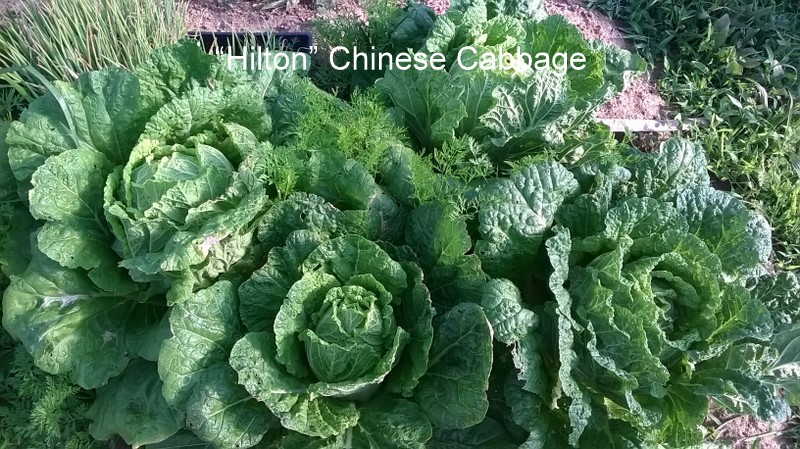
I can hardly wait to make a batch of Kimchi (fermented Chinese cabbage and vegetables). The “Hilton” Chinese cabbage is ready to harvest. A few more ingredients and I’ll be ready to go.

WP_20150612_18_29_28_ProThe seedlings were started in early March.  They were transplanted into the hoop house the first week of April. Look at the results above! This Chinese cabbage is gorgeous!!!

WP_20150408_18_52_03_Pro         WP_20150512_19_06_54_Pro

WP_20150612_18_28_37_Pro

Brassica rapa sub. Pekinensis is the famed Napa cabbage used for stir fry, saute and Kimchi. Kimchi in its varied forms is a favorite of Korean cuisine. This spicy, highly seasoned fermented cabbage is a staple of the Korean diet. Plus, fermented foods are bursting with beneficial bacteria to boost digestive health.

The “Hilton” Chinese cabbage is an open pollinated variety. My observations of this Chinese cabbage indicate a vigorous growth similar to hybrids. It performs well in warm/hot weather. Other open pollinated varieties would have bolted (gone to flower) by now. It is truly a remarkable variety!!

“Hilton” Chinese cabbage may be obtained at Baker Creek Heirloom Seed Company. http://www.rareseeds.com/chinese-cabbage-hilton/

Enjoy!!

Papa

Got Mosquitoes? Use Bacillus thuringiensis sub. israelensis (Bti) and Cedar Oil!!

Now is the time for those pesky mosquitoes. I don’t want to use all those nasty chemicals. There has got to be an alternative!

Mosquito

There are natural ways to rid yourselves of the mosquito nuisance. Let’s explore the options:

  • Remove all sources of standing water, where possible.
  • Keep grassy and/or weedy areas mowed on a regular basis.
    • Mosquitoes will reproduce in high humidity areas!
    • Mosquitoes will lay eggs in wet soil and mud!
  • Use Bacillus thuringiensis sub. israelensis (Bti) (OMRI Listed)* in standing water.
    • When eaten by mosquito larvae, Bti is toxic to the point of death in 4 – 24 hours.
    • Mosquito larvae
    • The gut of the larvae ruptures from the formation of crystals produced by the bacteria.
    • Bti is dispensed in the form of crumbles, powder or doughnut shaped dunks.
      • Bti is placed in old tires, rain barrels, ponds, ditches and flood water.
    • Bti is non toxic to people, pets, livestock and beneficial insects. It is only toxic to certain larvae of the fly family (Diptera).
  • Cedar oil (OMRI Listed)* is a safe, effective product to spray.
    • This essential oil (mixed with water) may be sprayed on standing water sources.
    • May be sprayed on your dogs and cats.
    • May be used as a repellent on clothing and lightly sprayed on exposed skin (not your eyes or mouth). (It is also a great tick repellent)

These products may be purchased at the big box stores, garden centers and online.

* OMRI Listed: The Organic Materials Review Institute (OMRI) is a national nonprofit organization that determines which input products are allowed for use in organic production and processing. OMRI Listed—or approved—products may be used on operations that are certified organic under the USDA National Organic Program.

Now go get them!

Papa

For Milkweed Go Native!!

It is very important that you supply the correct varieties of milkweed for your specific location.

Three-Amazing-Monarchs-on-Milkweed (1)

For instance, I live in the Missouri Ozarks. The recommended varieties are: http://www.xerces.org/wp-content/uploads/2013/07/Milkweeds-of-Central-US_plus-vendors_XercesSociety.pdf

  • Swamp Milkweed (Asclepias incarnata)
  • Common Milkweed (Asclepias syriaca)
  • Butterfly Milkweed (Asclepias tuberosa)
  • Whorled Milkweed (Asclepias verticillata)
  • Green Antelopehorn (Asclepias viridis)
  • Purple Milkweed (Asclepias purpurascens)

Sunset Flower AKA Scarlet Milkweed AKA Tropical Milkweed (Asclepias curassavica) is not recommended for a Monarch butterfly larval plant in North America. Tropical Milkweed is native to South America. It is now becoming an invasive species in the southern states of America. The Monarchs that consume this variety become prey to additional parasites. Subsequently, this variety weakens the larvae and butterfly. Lastly, the Monarchs are not migrating to Mexico because they have a constant supply of the wrong food.

Check out these links for native milkweed in your area:

http://www.xerces.org/wp-content/uploads/2011/03/xerces-nrcs-california-milkweed-guide.pdf

http://www.xerces.org/wp-content/uploads/2011/03/NativeMilkweedsGreatBasin.pdf

http://www.xerces.org/wp-content/uploads/2011/03/SE-Monarch-milkweed-butterfly-host-plant-brochure-final-2012.pdf

http://www.xerces.org/wp-content/uploads/2014/03/Monarch-Butterflies-East-Region.pdf

http://www.xerces.org/wp-content/uploads/2015/03/Monarchs-Milkweeds_Northern_Great_Plains.pdf

Don’t forget nectar producing plants for your Monarchs as well. Some of their favorites include:
Buckwheat (Eriogonum)
Butterfly Bush (Buddleia)
California Lilac (Ceanothus)
Citrus (Citrus)
Coneflower (Echinacea)
Coreopsis (Coreopsis)
Cosmos (Cosmos)
Daisy (Aster and Chrysanthemum)
Dianthus (Dianthus)
Heliotrope (Heliotropium)
Lantana (Lantana)
Marigold (Tagetes)
Milkweed (Asclepias)
Pincushion Flower (Scabiosa)
Rabbit Brush (Chryssothamnus)
Rock Cress (Arabis)
Salvia (Salvia)
Senecio (Senecio)
Star Clusters (Pentas)
Sweet Alyssum (Lobularia)
Verbena (Verbena)
Wall Flower (Erysimum)
Zinnia (Zinnia)

Papa