Check out part one of my Natural Pest Management talk at Baker Creek:
This video covers:
- Definition
- Strategy
- Scouting and Monitoring
- Physical/Mechanical Controls
- Cultural Controls
-Papa
Check out part one of my Natural Pest Management talk at Baker Creek:
This video covers:
-Papa
These beautiful creatures have metallic green bodies with copper colored wings. They are 3/8 inch long and 1/4 inch wide. Japanese beetles are quite unique!
![beetle - Japanese Beetle (Popillia japonica) [MO 06]](https://papas.garden/wp-content/uploads/2015/05/beetle-japanese-beetle-popillia-japonica-mo-06.jpg)
It is amazing the damage these imported invaders can do!

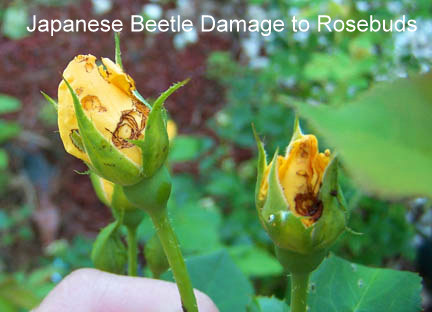
This is damage from one or two beetles. Imagine what a few dozen can do!
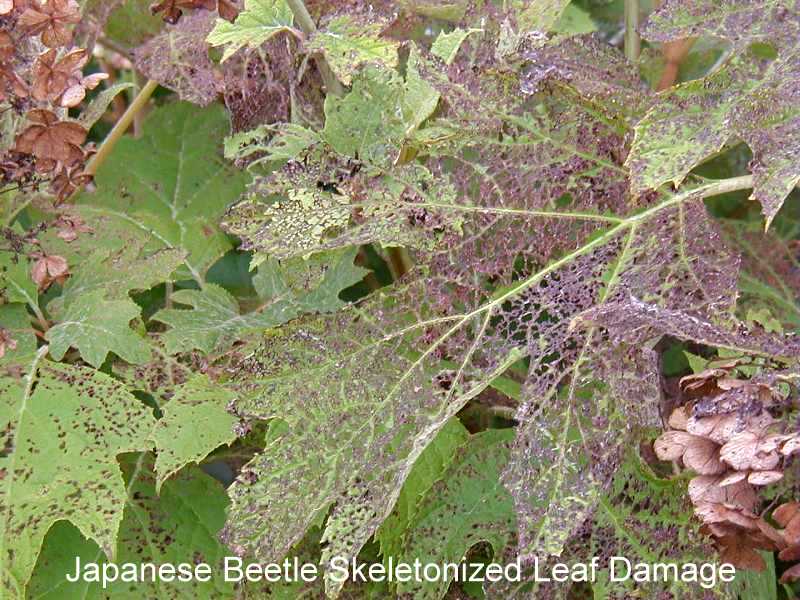
Japanese Beetles (Popillia japonica Newman, 1841) came to our shores in 1912 on Japanese iris.
Stages of development are as follows:
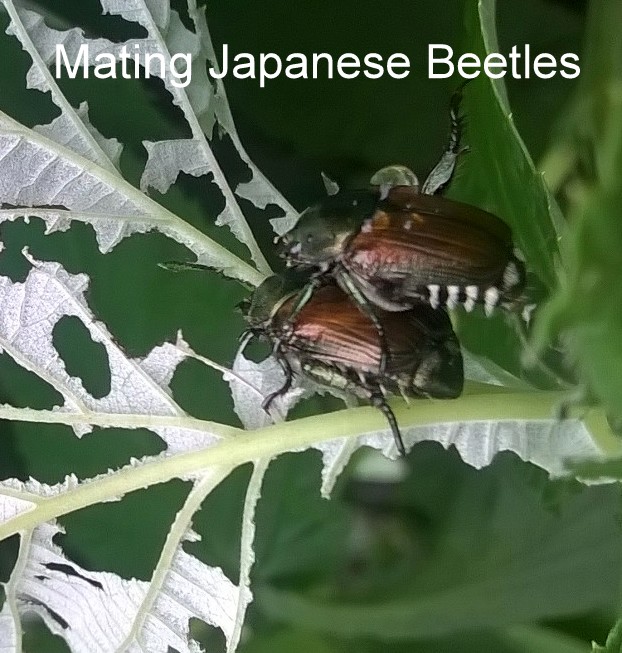

The most effective natural control of Japanese beetles is daily, hand picking early in the morning as the beetles are lethargic.
Prevention: Kill grubs in the soil which turn into the Japanese beetle.
Both of the above methods are encouraged by the USDA and several well known universities as a safe and effective means to control Japanese beetles. These biological controls are species specific!! There are no other creatures affected by these methods.
Just remember you may have great prevention measures but your neighbors may not. Japanese beetles are with us for short 30 -50 day window. Killing them early may reduce the populations in your immediate area!
Birds are another way to deal with these nasty pests. They eat both the beetles and their grubs.
Sanitation is a wonderful way to rid your self of these pests. Clean up all debris around their favored plants. Till in the fall to expose the grubs for birds and other creatures to consume. Till again in the spring to again expose the pupae and emerging adult beetles.
Be diligent and decrease their surplus population!
Papa
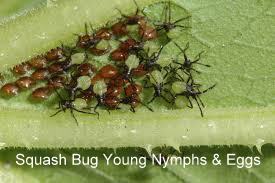
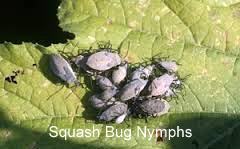
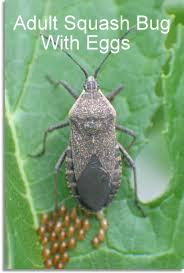
Ugh, here we go again. Those nasty squash bugs are back! I really wanted to grow zucchini and yellow crookneck. Why waste my time! I hear this over and over again.
Now, there is a solution. Trap Crops!
Plant Red Kuri squash, Blue Hubbard Squash and Buttercup squash (as a trap crop) three (3) weeks prior to planting summer squash, winter squash, cucumber, cantaloupe and watermelon. The trap crop should be seeded in pots for transplanting, prior to direct seeding squash, cucumber and melons. Monitor for squash bugs to determine if treatment is needed on the trap crop.
Plant Red Kuri or Blue Hubbard or Buttercup squash transplants either surrounding, adjacent, at the four corners or in containers next to the crop.
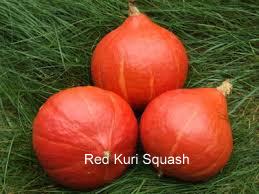
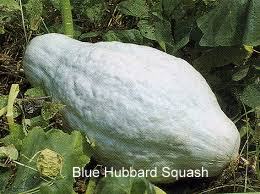
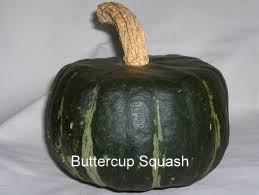
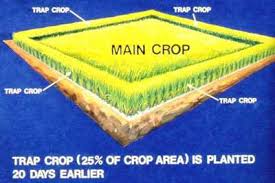
Monitor for squash bugs.
Spot spray the squash bugs on the trap crop with a*pyrethrin insecticide. It may be necessary to spray the entire trap crop when the population threshold is exceeded. In other words, the squash bugs have infested the entire trap crop with eggs, larvae and adults.
*Pyrethrin insecticides – Evergreen Pyrethrum Concentrate, *OMRI Listed
PyGanic® Crop Protection EC 5.0 II, *OMRI Listed
* OMRI Listed: The Organic Materials Review Institute (OMRI) is a national nonprofit organization that determines which input products are allowed for use in organic production and processing. OMRI Listed—or approved—products may be used on operations that are certified organic under the USDA National Organic Program.
Caution – You must read the label!! The label is the law!! Pyrethrins will instantly kill any insect that is sprayed. That includes beneficial insects (honey bees, bumble bees, lady bugs, parasitic wasps, etc.). Be very careful!! Remember, squash crops, cucumbers, and melons are dependent upon pollinators to produce fruit.
When you follow these steps you will enjoy a fruitful harvest. Let me know of your success!
Papa
You may purchase the above varieties of squash at Baker Creek Heirloom Seed Company by clicking on the links below.
http://www.rareseeds.com/red-kuri-squa-hokkaido-/
What shall I do about inch worms of the tiniest size eating my Korean red eggplant ? There doing quite a job at eating big holes? Thanks Art
Pandora
Pandora,
Visit your local garden center and purchase Dipel or Thuricide.
DiPel® is a biological insecticide containing the naturally occurring microorganism Bacillus thuringiensis subspecies kurstaki(Btk) DiPel is more specific in its spectrum of insect toxicity against caterpillars.
Thuricide BT Caterpillar Control concentrate is used by organic gardeners and is made from bacteria that is toxic to listed pests. Safe to use on all plants, vegetables and edible crops. Thuricide is a biological insecticide with Bacillus thuringiensis (Bt) for use on fruits, vegetables, shade trees, and ornamental plants to treat a variety of leaf-feeding worms. Pests treated include bagworms, tent caterpillars, gypsy moths, cabbage loopers, and tomato hornworms .
Follow the label instructions and apply with a sprayer. The Bt spores maximize efficacy against lepidopteran pests.
Days to Harvest: There are no restrictions on applying DiPel or Thuricide up to the time of harvest. DiPel or Thuricide may be used for any labeled pest and an insecticide for use against listed caterpillars (larvae) of lepidopterous insects. Close scouting and early attention to infestations is highly recommended. Larva must eat deposits of DiPel or Thuricide to be affected. • Treat when larvae are young (early instars) before the crop is damaged. • Larvae must be actively feeding on treated, exposed plant surfaces. • Thorough spray coverage is needed to provide a uniform deposit of DiPel or Thuricide at the site of larval feeding. Use overhead spraying to obtain good spray coverage on both sides of foliage. Use sufficient spray volume to insure uniform deposition on all plant surfaces. • Under heavy pest population pressure, use the higher label rates, shorten the spray interval, and/or raise spray volume to improve spray coverage. • Repeat applications at an interval sufficient to maintain control, usually 3 to 14 days depending on plant growth rate, moth activity, rainfall after treating, and other factors. If attempting to control a pest with a single spray, make the treatment when egg hatch is essentially complete, but before crop damage occurs. • A spreader-sticker which has been approved for use on growing and harvested crops should be added for hard-to-wet crops such as cabbage, or to improve weather-fastness of the spray deposits.
Let me know how this works for your eggplant. Watch for butterfly and moth activity as this will help you monitor the impact on your eggplant.
Art
 Papas Gardens